
Foxboro SPEC-200 Modules | SPEC-200 Display Station Controller
Foxboro SPEC-200 Series: Comprehensive Module Range and Technical Overview The Foxboro SPEC-200 is a panel-mounted analog control system developed by…
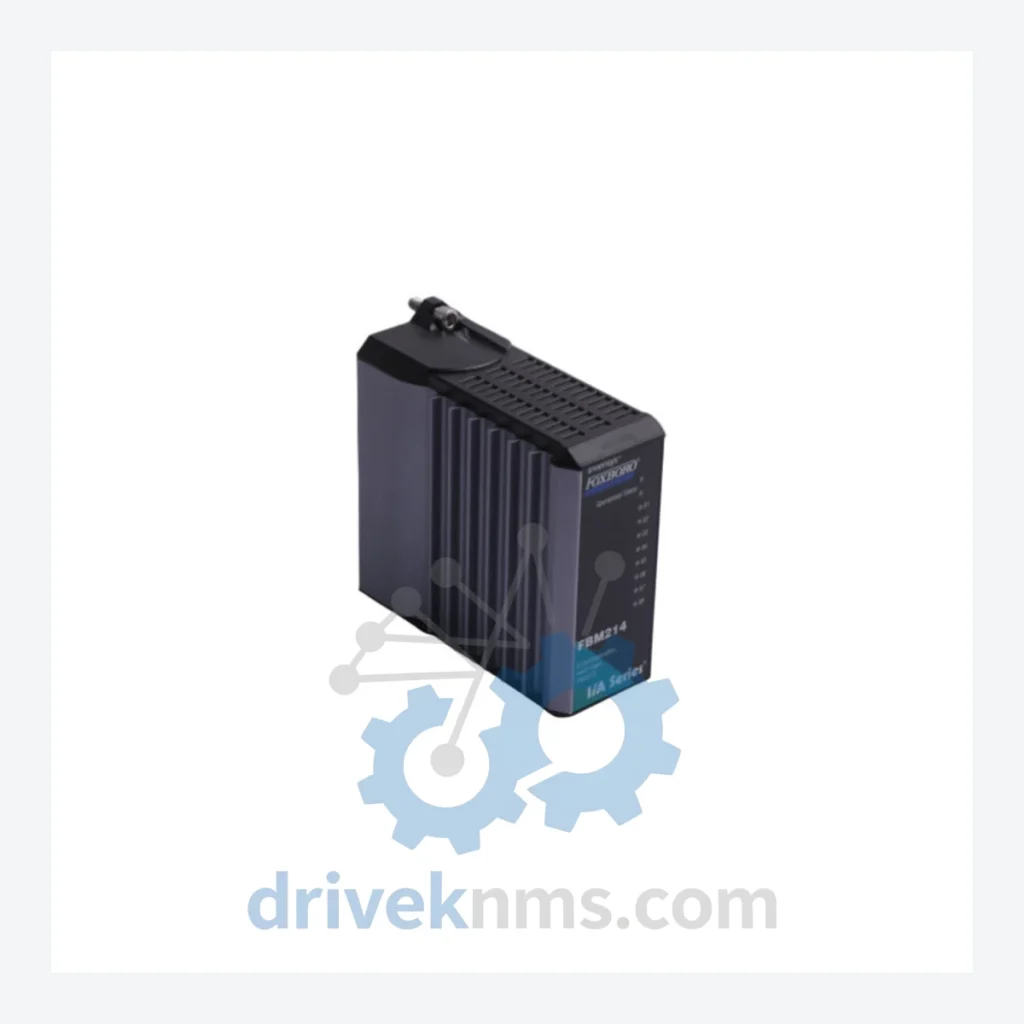
Model: FBM214 P0922VT
Product Overview
Commercial availability is handled through direct RFQ, model verification and export-oriented follow-up rather than public cart checkout.
Datasheet Preview
Use attached product manuals when available. If the manual is not public yet, request the full file directly through RFQ.
Commercial Path
Product pages on DRIVEKNMS are designed to verify model, brand and series first, then move the buyer into one clean quotation path.
Technical Dossier
The Foxboro FBM (Field Bus Module) series is a core component family within the Foxboro I/A Series Distributed Control System (DCS), one of the most widely deployed process automation platforms in global heavy industry. FBM modules are installed across petrochemical complexes, nuclear power stations, crude oil refineries, LNG terminals, and pharmaceutical manufacturing facilities. The I/A Series architecture, introduced in the 1980s and continuously evolved through the 2000s, established the FBM family as the field I/O backbone connecting field instruments to the Nodebus and Fieldbus communication infrastructure. Installations of this platform number in the thousands globally, with many sites operating equipment that has been in continuous service for 20+ years. The FBM214 P0922VT specifically functions as an input interface module within this ecosystem, handling signal conditioning and data acquisition from field devices.
The FBM series was introduced alongside the Foxboro I/A Series DCS platform in 1987. The original architecture relied on a 10 Mbps Nodebus (a proprietary token-passing network) to connect Field Control Processors (FCPs) with FBM I/O modules mounted in field enclosures. Early FBM generations (FBM01–FBM10x) addressed analog and discrete I/O using 4–20 mA and 24 VDC signal standards. The mid-generation expansion (FBM200 series) introduced enhanced signal processing, HART pass-through capability, and improved diagnostic registers accessible via the DCS configuration environment (Foxboro Control Software / FoxCAE). The FBM214 belongs to this expanded 200-series generation, designed for higher-density input interfacing with improved noise immunity. Later revisions introduced P-suffix hardware variants (e.g., P0922VT) indicating specific PCB revision levels and component sourcing changes for regulatory compliance (RoHS). Compatibility between FBM generations requires careful verification: Nodebus termination, baseplate type (ZCP270, ZCP265), and FCP firmware version all affect interoperability. Sites migrating from legacy FCM (Fieldbus Communication Module) architectures to modern FCP280 controllers must audit FBM compatibility matrices before substitution.
The following SKUs represent verified, commonly deployed modules within the Foxboro FBM series. Modules are categorized by primary function:
Analog Input Modules
Analog Output Modules
Discrete Input Modules
Discrete Output Modules
Communication & Pulse Modules
Power & Baseplate Infrastructure
Foxboro formally transitioned the I/A Series platform toward the Foxboro Evo DCS beginning in 2014, with the FBM200 series entering a managed obsolescence phase. Many FBM modules, including the FBM214 P0922VT, are no longer manufactured by Schneider Electric (current Foxboro brand owner) and are available exclusively through the secondary market. DriveKNMS maintains a dedicated inventory of tested FBM modules sourced from decommissioned plant equipment, authorized surplus channels, and controlled refurbishment programs. For sites operating I/A Series DCS under long-term maintenance agreements, DriveKNMS provides: verified OEM-equivalent replacements with full traceability documentation, cross-reference support for P-suffix hardware variants (e.g., P0922VT vs. P0926GU compatibility verification), emergency same-day dispatch for critical process uptime requirements, and multi-year supply agreements for planned maintenance shutdowns (turnarounds). Customers in the chemical, nuclear, and refining sectors with active I/A Series installations are encouraged to submit their full BOM (Bill of Materials) for a consolidated availability and pricing assessment.
FBM modules present specific test challenges due to their integrated Nodebus communication ASICs, multi-channel ADC/DAC arrays, and optically isolated I/O stages. DriveKNMS applies a structured test protocol for all FBM inventory: (1) Visual inspection for PCB corrosion, capacitor degradation, and connector pin integrity; (2) Powered functional test using a Foxboro I/A Series test bench with live FCP and Nodebus segment to verify module registration, channel-level I/O response, and HART communication pass-through; (3) Thermal cycling verification for modules destined for high-ambient-temperature installations; (4) Firmware/hardware revision logging to ensure P-suffix variant documentation matches physical PCB markings; (5) Final burn-in test at rated voltage for a minimum of 4 hours before dispatch. All tested units are issued a DriveKNMS inspection certificate with test date, technician ID, and pass/fail channel log.
Related Paths
Foxboro SPEC-200 Series: Comprehensive Module Range and Technical Overview The Foxboro SPEC-200 is a panel-mounted analog control system developed by…
Foxboro P0400DA Analog Input Module – Obsolete FBM Series Spare Part When a Foxboro I/A Series DCS analog input module…
Foxboro I/A Series FBM Modules: Comprehensive Module Range and Technical Overview The Foxboro I/A Series (Intelligent Automation Series) represents one…