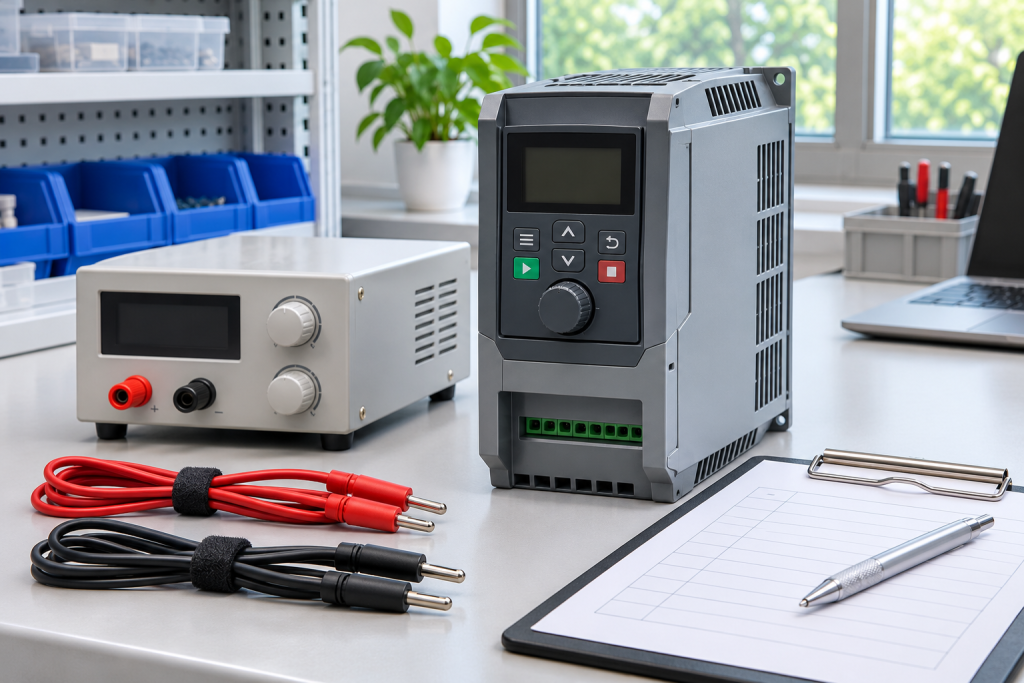
A drive that lights its display on a service bench has passed one narrow observation: some control electronics can operate under the test conditions. It has not demonstrated motor performance, power-stage condition, or machine safety. For an Altivar ATV320 spare, getting that distinction right begins before power is applied, with the identity of the control-power terminal.
The markings P24 and +24 look similar enough to invite an assumption. They are not interchangeable labels. A receiving inspection should use the manufacturer’s exact documentation, a qualified technician, and a defined test scope instead of treating any terminal marked with 24 as a convenient supply connection.
What Schneider actually documents
Schneider Electric’s ATV320 external control-power FAQ explains that an external 24 VDC supply can power the display and permit programming through P24. It describes P24 as having input and output roles depending on the supply arrangement, while +24 serves the digital-input supply function and is not intended as the input for powering the control block. This is a terminal-function distinction, not a complete bench-test procedure.
The ATV320 installation manual remains the authority for applicable connection, isolation, and safety requirements. Confirm the precise product variant and manual revision before preparing a test. Do not transfer a diagram from another Altivar family just because the terminals or enclosure look familiar.
Start the receiving record with identity
For a proposed ATV320U22N4C compact drive, photograph the full nameplate and document the unit actually received. Compare the code with the purchase order and the installed application requirement. Keep the supplier’s description, the physical identity, and the test record linked to the same serial-numbered item.
Then document condition before any electrical work. Note enclosure damage, missing covers, terminal damage, contamination, or unclear markings. A unit with uncertain terminal identification should be held for clarification. A photograph from a catalog cannot resolve a damaged label on the supplied item, and a readable display cannot compensate for a mechanical defect.
Separate the requested configuration from whatever settings happen to be present. A used drive may contain another machine’s parameters. Record that fact without treating those parameters as an approved baseline. The customer controls owner, not the bench technician or purchasing department, should authorize the application configuration.
Define the purpose of a control-power check
A useful control-electronics inspection can have modest objectives: identify the device, confirm access to the expected interface, preserve an authorized parameter record, and document visible diagnostic information. Write those objectives into the work instruction. If motor operation is outside scope, say so prominently in the report.
The test arrangement itself belongs in the evidence. Record the approved procedure, equipment identification, calibration status where relevant, and whether the unit was isolated from a machine. Qualified personnel must address stored energy and all possible power sources according to the manufacturer and site rules. This article does not provide wiring steps or authorize energized access.
A supplier report saying only “powered on” is incomplete for decision-making. Ask what was powered, which functions were observed, what was not tested, and whether the result refers to the exact delivered drive. That clarification often matters more than a longer list of unsupported check marks.
Keep configuration work reversible and accountable
Before any authorized parameter change, retain the original readable record and identify its origin. A factory-default set, an unknown used-unit set, and a customer-approved application set are different artifacts. Label them accordingly. Store the approved target with its revision and owner so a later technician can explain why it was selected.
After approved programming, compare the resulting record against the intended baseline and document exceptions. A successful transfer message alone is not the acceptance criterion. The report should state which relevant settings were checked and which application functions remain to be validated during commissioning.
Do not resolve an unexpected stop or enable indication by bypassing a protective circuit. Control power, run commands, and safety functions interact with the machine design, but they are not interchangeable troubleshooting shortcuts. Stop the test when behavior falls outside the approved instruction and ask the responsible engineer to review the condition.
A three-level release decision
The first release level is identity and physical condition: the received item matches the order and is suitable to proceed with assessment. The second is documented control-electronics evidence under defined bench conditions. The third is application acceptance, including any required power-stage, motor, load, communication, and safety validation.
These levels need not be performed by the same organization. A supplier may provide the first two while the plant owns commissioning. What matters is that the handover does not silently promote a limited bench result into a complete replacement approval. Keep outstanding checks visible in the maintenance system until the responsible person closes them.
For procurement, specify the evidence you need rather than demanding an undefined “fully tested” label. Include the exact drive code, expected condition, accessories, documentation, and acceptance boundaries. A quotation that clearly excludes a load test can still be useful when the plant has an appropriate controlled commissioning plan.
Send the nameplate and required assessment scope through the DriveKNMS inquiry page. Explain whether the requirement is an unconfigured spare, an approved parameter-loaded unit, or another agreed delivery state. Do not assume one state from the product name alone.
Frequently Asked Questions
Are P24 and +24 equivalent supply inputs?
No. Schneider assigns different functions to them. Consult the exact ATV320 documentation and an approved procedure; similar markings do not justify substituting one connection for another.
Does control-power operation test the motor power stage?
No. A display or programming session establishes only the observations recorded under those conditions. Power-stage and application performance require separate, appropriate assessment.
Should a used drive’s existing parameters be retained?
Preserve a readable record before authorized changes, but do not assume the settings are suitable for your machine. Use an approved application baseline and keep its ownership clear.
What should an acceptance report say when no motor test was performed?
State that limitation explicitly, identify the tested unit and procedure, and list the remaining commissioning checks. Clear boundaries are more useful than an unqualified pass label.
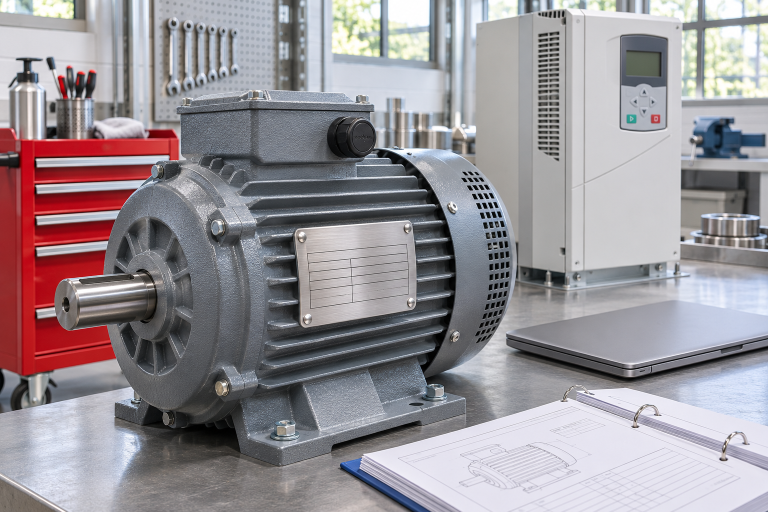
Image: AI-generated editorial illustration, not an exact product photograph or installation reference.
© 2026 DriveKNMS. All rights reserved. Official Website: https://driveknms.com Inquiry: sale@driveknms.com | WhatsApp/Tel: +86 18359293191