One failed servo amplifier can force a decision about an entire machine. Production wants the axis back, engineering wants a sustainable platform, and purchasing sees both legacy replacements and newer drives advertised as alternatives. Those are three different objectives. Combining them into a single urgent part-number request often hides the work that determines whether the machine will run again.
For Mitsubishi MR-J2S installations, a useful starting point is to separate temporary continuity from planned renewal. The right choice may be a verified like-for-like spare, a supported staged upgrade, or a broader amplifier-and-motor project. It is not determined by the power rating alone.
A documented renewal route is not a universal adapter
Mitsubishi’s MELSERVO renewal guidance states that the MR-J2S series was discontinued in August 2015. It describes different renewal arrangements for general-purpose and SSCNET interfaces. This is established lifecycle information, not an October 2026 discontinuation announcement.
The manufacturer’s J2-Super/J2M to J4 transition handbook describes supported staged renewal: an amplifier-first step followed by a motor replacement, or simultaneous replacement. Its renewal-tool guidance does not permit assuming a motor-only first step. The listed models, tools, cables and restrictions must be checked for the specific axis.
The engineering implication is straightforward: specify the retained equipment as carefully as the new equipment. An interface converter, mounting kit or retained motor is part of a documented arrangement. None should be treated as a general promise that every old and new combination will work.
Start with the machine’s remaining duty
A machine due for a funded replacement within a short operating horizon presents a different decision from a machine expected to carry several more production campaigns. Establish the planned retirement date, the credibility of that plan, the cost of an extended outage and the availability of engineering resources. A distant aspiration to modernize should not be recorded as an approved migration schedule.
A like-for-like route can provide continuity while that project is prepared. For example, an installed MR-J2S-350A should be identified explicitly when reviewing a Mitsubishi MR-J2S-350A replacement amplifier. The reference narrows the supply request; it does not certify the incoming unit’s condition, guarantee stock or eliminate motor and application checks.
Give a bridge spare an exit condition. That might be the acceptance of a replacement axis, completion of a planned machine overhaul, or removal of the last dependent machine. Without an exit condition, an emergency purchase can quietly become the permanent maintenance strategy.
Define the retained boundary for a staged project
List the controller, command interface, amplifier, motor, encoder connection, power cables, braking arrangement and mechanical coupling. For each item, mark retain, replace or unresolved. This is more useful than a drawing that merely labels one box “old drive” and another “new drive.” It makes missing responsibilities visible before quotations are compared.
The suffix on the amplifier matters because it helps identify the command arrangement. A general-purpose interface project should not inherit the parts list from an SSCNET example. Similarly, a conversion plan for one motor family should not be extended to another motor because its rated output looks similar. Obtain the current approved combination from the relevant supplier or machine builder.
Separate the hardware supply package from the engineering work package. The first covers the exact amplifier, approved adapters, cables and installation accessories. The second covers parameter conversion review, machine logic changes where required, mechanical checks and acceptance testing. A low hardware price is not a completed migration budget.
Choose acceptance criteria before the shutdown
Write down the performance the axis must demonstrate after renewal. For a positioning axis, that may include homing behavior, travel limits, position repeatability and recovery after a controlled power interruption. For an axis handling a load, the approved test must also address how the machine secures that load during stopping and loss of power. The machine risk assessment governs the details.
Use an offline preparation stage wherever practical. Keep controlled copies of the original machine project and settings, identify the approved conversion tools, and record changes instead of simply overwriting the old files. Arrange for an authorized engineer to review converted settings. A conversion utility reduces transcription work; it does not perform the machine’s operational acceptance.
Set a rollback decision point before production pressure makes it ambiguous. State who can stop the commissioning attempt, what evidence is required to continue, and whether restoration of the original arrangement is physically and procedurally possible. Keep the removed equipment identified until the renewed axis is formally accepted.
Compare offers on equal terms
Request a deviation list, not just a confirmation that the proposed drive is “equivalent.” Ask which existing components remain, which accessories are included, which checks the supplier has performed and which responsibilities stay with the site. Confirm the current lifecycle and support position of the proposed destination platform separately; an older migration handbook is not a current availability guarantee.
For a legacy spare, ask for condition evidence and a defined test scope. For a renewal package, ask for the combination reference and a complete bill of materials. In both cases, make delivery promises subject to a current written quotation rather than assuming a general website listing represents available inventory.
Frequently asked questions
Can an MR-J4 amplifier always run an existing MR-J2S motor?
No. Supported renewal arrangements exist, but they depend on the exact models and prescribed tools or connections. Confirm the particular combination rather than applying a family-level statement to every axis.
Is buying another MR-J2S always a bad decision?
No. A verified bridge spare may be reasonable when it protects a defined operating period. It becomes weak planning when nobody has established the remaining duty, acceptance requirements or exit from legacy support.
Can matching kilowatts establish a replacement?
No. The command interface, motor and feedback compatibility, electrical supply, mechanical installation and machine functions still need review. Equal output power is only one input to that decision.
Should the motor or amplifier be changed first?
Follow the documented renewal arrangement for the exact equipment. The cited handbook describes amplifier-first staged renewal or simultaneous replacement; do not invent a motor-first route from that guidance.
For a scoped comparison, send DriveKNMS the amplifier and motor nameplates, controller reference and intended renewal boundary. Include quantity, condition expectations and shutdown timing so the quotation can distinguish continuity hardware from a complete migration package.
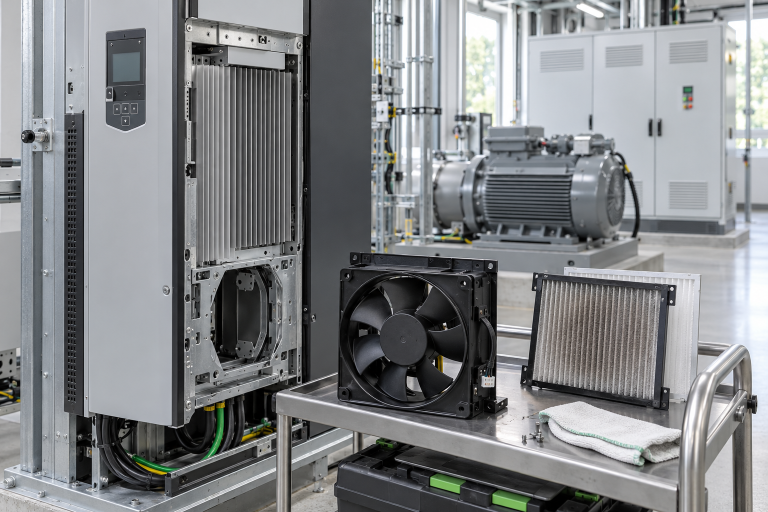
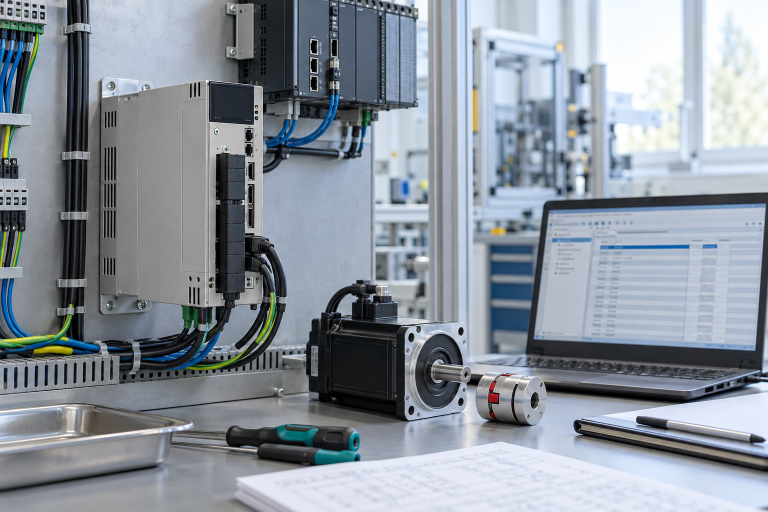
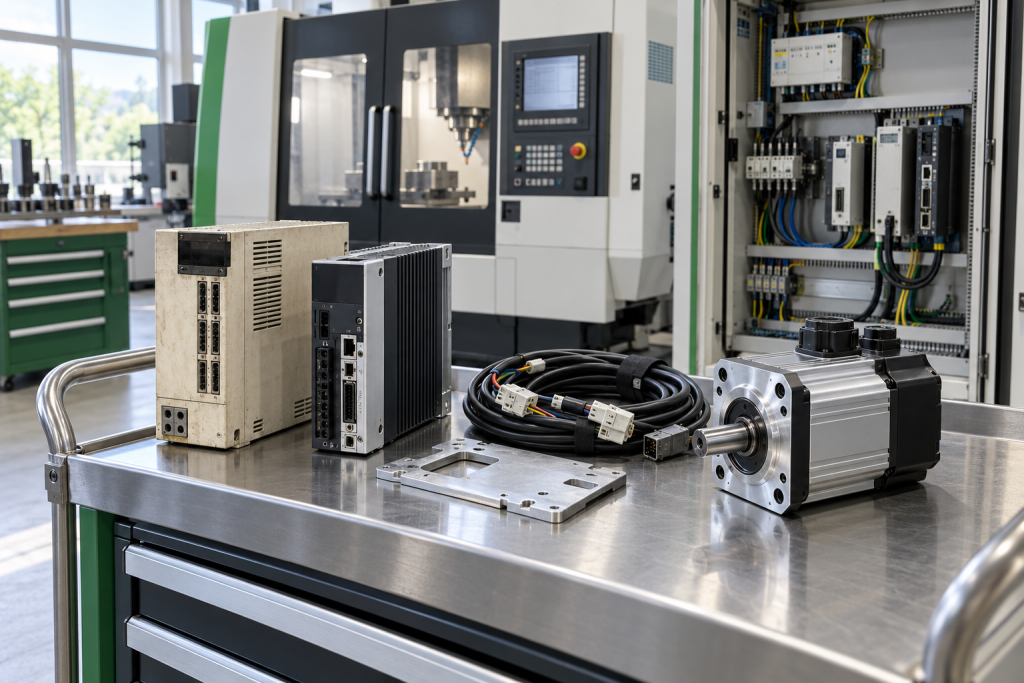
Image: AI-generated editorial illustration, not an exact product photograph or installation reference.
© 2026 DriveKNMS. All rights reserved. Official Website: https://driveknms.com Inquiry: sale@driveknms.com | WhatsApp/Tel: +86 18359293191