A replacement servo amplifier can be healthy, correctly wired and still behave differently from the unit it replaced. One reason is easy to overlook: the settings in the amplifier may not be the only settings controlling the axis. A machine controller can hold another parameter set, and the engineering project can contain a third version. “We have a backup” is not enough until the team knows which copy governs each setting.
For plants maintaining Yaskawa SGDV equipment, parameter ownership is a recovery-planning issue. The question is not simply whether a file can be downloaded. It is whether the recovered configuration belongs to the correct axis, matches the actual hardware and remains the intended configuration after the controller starts communicating.
Start with three separate records
Keep the amplifier parameter export, the machine-controller project and the machine builder’s approved commissioning record distinguishable. They may overlap, but they serve different purposes. An export records what a tool retrieved; a project records engineering intent; a signed commissioning record documents what was accepted for a particular machine condition.
The distinction matters after years of maintenance. A technician may have adjusted an axis during a troubleshooting event without updating the central project. Conversely, an offline project may include a change that was never commissioned. A filename containing “final” does not resolve either situation.
Build a small ownership table for the affected axis. For each relevant setting group, record the authoritative source, how it reaches the amplifier, who may change it and how a difference is detected. Mark uncertainty explicitly. Do not assume that every controller or every SGDV interface follows the same startup sequence.
Why the communication variant changes the recovery plan
Yaskawa’s MP2000 SVB motion-module manual is an example of controller-side documentation that must be considered alongside the SERVOPACK documentation. Its scope is a specific controller and motion-module arrangement, not every installation carrying the SGDV family name. Identify the communication architecture before deciding which recovery instructions apply.
A sourcing request for the SGDV-260D11A servo amplifier should therefore include the full label information and the associated controller and motor details. The product-page address is not an engineering definition of the hardware; this is a servo-amplifier enquiry, not a request for a motor.
The same discipline applies when checking an SGDV-5R4D11A020000 replacement candidate. Retain the suffix rather than shortening the request to SGDV. These two references are examples of equipment requiring exact identification, not a statement that they can replace one another.
Compare before writing
The first useful recovery activity is an offline comparison, not an immediate download. Preserve the available original exports and project copies as read-only evidence. Record their dates, tool versions, machine identity and the circumstances in which they were collected. Work from copies so investigation does not destroy the only known configuration.
Compare the records at the level needed for the machine: axis assignment, motor and feedback configuration, motion limits, control mode and any application-specific behavior. A difference is a question to investigate, not automatically a setting to overwrite. Machine-builder modifications and commissioned changes need their own explanation.
Separate standard motion settings from safety-related functions and validation. An ordinary parameter file should not be assumed to restore the complete machine safety configuration. Follow the machine builder’s instructions and applicable manufacturer procedures, with qualified personnel responsible for the safety review.
Where the controller writes configuration to the drive, the recovery plan must account for that behavior. A successful local download can be temporary if another source subsequently writes a different approved or obsolete set. Establish this from the exact system documentation and controlled observation, not from a general rule about the product family.
Define a recovery rehearsal that cannot become an uncontrolled motion test
A rehearsal should have an agreed boundary. Use an approved isolated test arrangement or a planned machine intervention with the required energy controls. Do not use production movement as a convenient way to discover whether an unidentified backup is correct. Motion, stored mechanical energy and connected loads make that an unacceptable shortcut.
Record what the rehearsal actually demonstrates. Being able to open a project proves file accessibility. Connecting to an amplifier proves a communication path. Neither alone proves that the machine can return to production. Acceptance requires the site-defined functional checks and any necessary safety validation.
After a successful authorized recovery, capture the accepted configuration again and reconcile it with the controller project and maintenance record. Document who approved the final state. This closes the gap that often causes the next replacement to become a repeat investigation.
Frequently asked recovery questions
Is a parameter export from the old amplifier sufficient?
It is valuable, but it may not contain controller logic, every machine-level setting or safety-related configuration. Identify its scope and compare it with the applicable controller project and the machine’s accepted commissioning information.
Can I use a backup from an identical neighboring machine?
Not without an engineering review. Similar machines can differ in mechanics, feedback, tuning, axis assignment and approved limits. Treat the neighboring file as a comparison aid, not as automatic authorization to overwrite the affected axis.
Why do settings seem to change after a controller restart?
One possible cause is a controller-managed configuration transfer, but other causes are possible. Check the documented startup behavior and compare timestamped records. Do not conclude that the replacement amplifier is faulty solely from this symptom.
What information should accompany an SGDV spare enquiry?
Provide the complete amplifier designation, label photographs, controller and motor references, interface details, quantity and condition expectations. Identify any firmware or configuration constraints already established by the machine builder rather than asking the supplier to infer them.
Specify the hardware and the recovery evidence together
DriveKNMS can discuss sourcing against a clearly identified SGDV requirement. Send the full part number and the evidence your maintenance team needs to accept the spare. Keep parameter recovery and machine validation under the responsible engineering process; availability of a matching-looking unit is only one part of a controlled return to service.
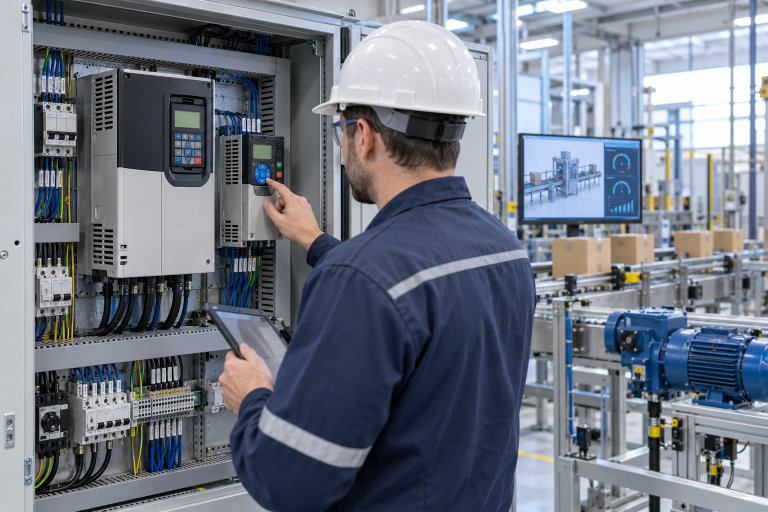
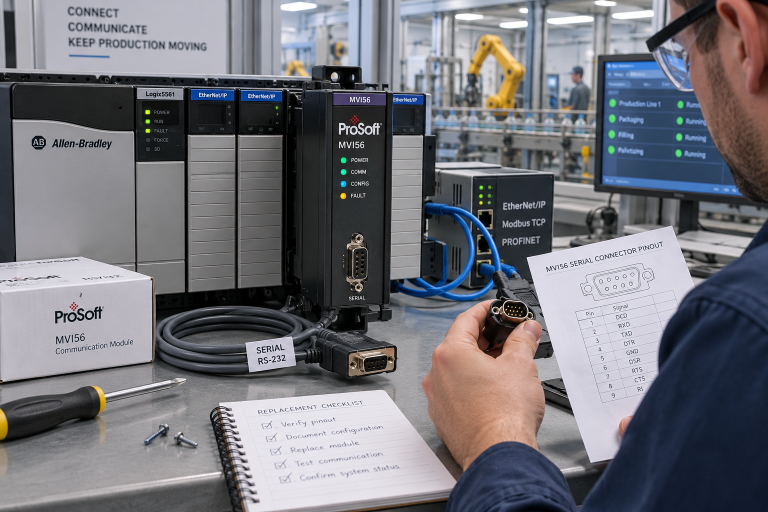
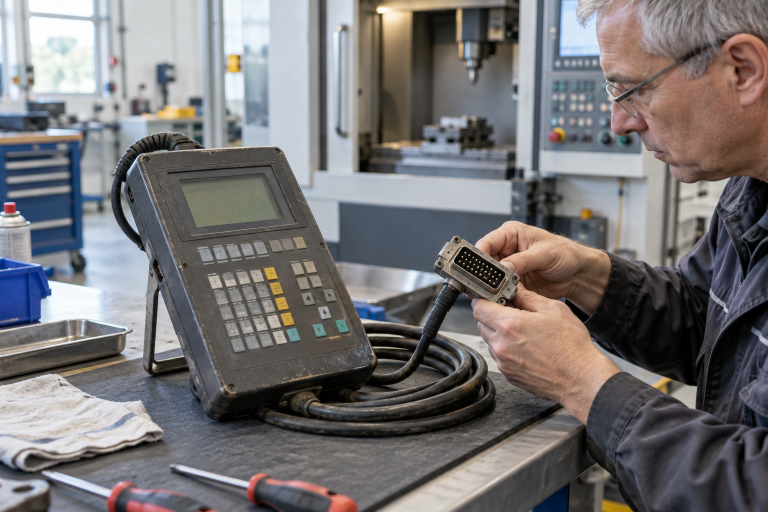
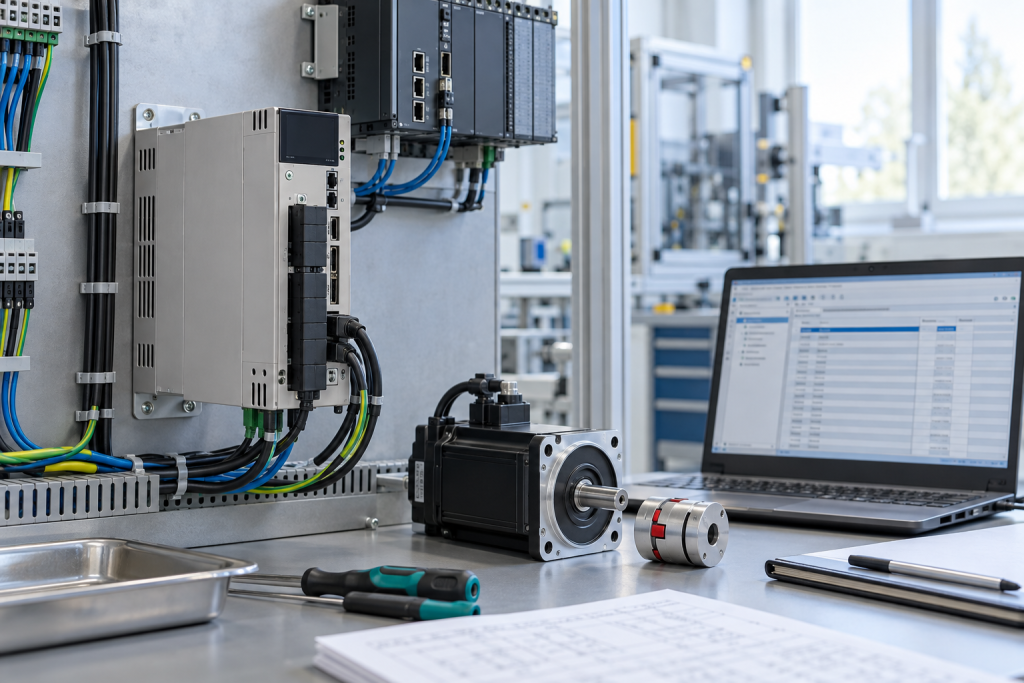
Image: AI-generated servo-maintenance illustration, not an exact product or commissioning reference.
© 2026 DriveKNMS. All rights reserved. Official Website: https://driveknms.com Inquiry: sale@driveknms.com | WhatsApp/Tel: +86 18359293191