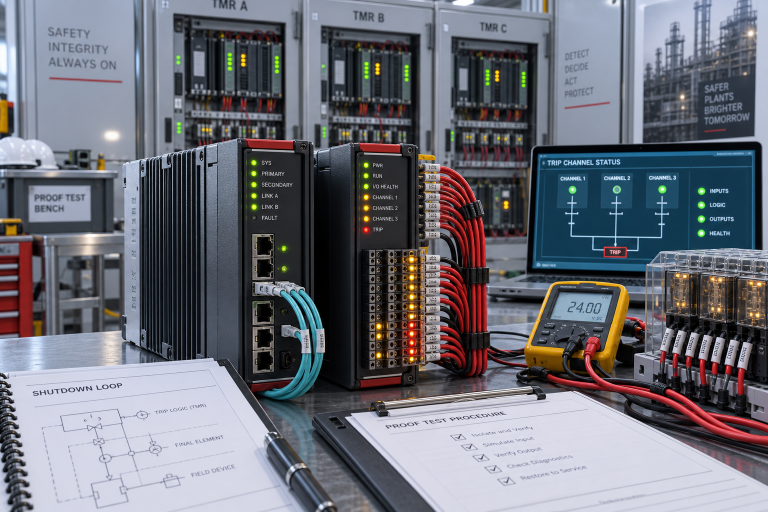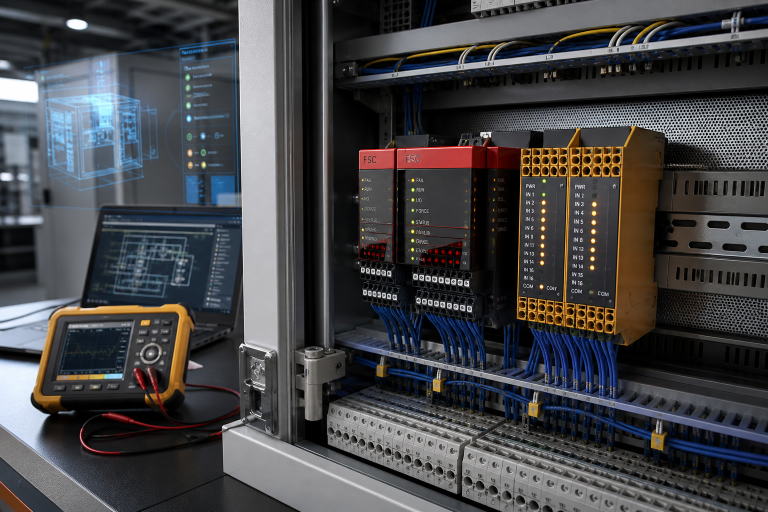
A unit restart can be delayed by a DCS controller fault, an analog input gap, or a missing piece of cabinet evidence. Ovation and WDPF spare planning should connect the module number to the process loop and restart test before a buyer compares stock.
DriveKNMS readers often support power and process systems where older Westinghouse and Emerson platforms remain critical. The best spare request shows the control function, not only the product family.
Define The Cabinet Role First
Record cabinet location, controller role, rack position, connected I/O, power, network path, diagnostic state, alarm history, and the unit consequence of losing the module.
When controller recovery is the issue, the live Westinghouse 4256A88G01 / 4256A88G04 Ovation PLC controller is the product match that should anchor the RFQ.
If the restart is held by field measurements, the Westinghouse 5X00070G02 WDPF analog input module should be discussed with loop and terminal evidence.
Analog Inputs Need Process Context
A module may pass a bench test but still fail the restart if scaling, wiring, transmitter power, or process permissives were not checked.
Ask suppliers for actual photos, condition, tested status, connector condition, accessory scope, and any unknowns around revision or compatibility.
Procurement should state whether the order supports an immediate unit restart, outage stores coverage, or longer-term lifecycle planning.
Acceptance Should Follow The Restart Path
After replacement, verify controller recognition, I/O diagnostics, analog values, operator displays, alarm clearance, and the approved restart procedure.
If the unit remains blocked, review power, rack seating, terminal wiring, loop power, signal scaling, network status, and project configuration.
Store photos, loop records, diagnostic captures, and restart approval with the spare file.
RFQ Evidence That Helps Engineering And Purchasing
Send controller labels, analog input labels, cabinet photos, loop list, network or power evidence, condition requirement, and restart deadline.
An Ovation or WDPF RFQ should identify the unit function and restart test, not only the part number.
For substitutes, require review of revision, connector fit, diagnostics, loop behavior, configuration impact, and rollback plan.
A useful spare-parts request should read like a short engineering file. It needs the installed part identity, revision or suffix, cabinet position, connected accessories, process duty, observed fault, acceptable condition, and the field test that will decide whether the item can be accepted.
That discipline matters more on older PLC, DCS, SIS, HMI, motion, and remote I/O platforms because the same family name can hide several incompatible details. Firmware, terminal base, communication option, cable style, memory, channel type, mounting depth, and project configuration can all change the outcome.
Photographs remain one of the fastest ways to reduce ambiguity. Front labels, side labels, connector faces, LED state, terminal screws, cable tags, slot numbers, rack power, and adjacent modules often reveal details that never appear in a one-line purchase request.
Condition language should be written plainly. Factory sealed, new surplus, refurbished, repaired exchange, tested used, and untested used parts are different risk levels. Ask what was tested, which accessories are included, and what evidence will be provided before shipment.
The supplier can confirm hardware, condition, test scope, packaging, and dispatch limits. The plant still owns project loading, firmware review, parameter transfer, loop checks, proof testing, network validation, and final operating approval.
Receiving inspection should repeat the same evidence check. Compare approved photos with the delivered item, inspect connectors and terminals, confirm accessory scope, record packaging condition, and decide whether the part is ready for stores, bench test, or immediate installation.
For urgent downtime, define the fallback before the purchase order is released. If the first spare fails acceptance, the team should know whether to reinstall the original item, try a repaired exchange, isolate a noncritical function, or move to a controlled migration decision.
This evidence also strengthens lifecycle planning. Scarce offers, unclear test records, missing accessories, and repeated substitutions are practical signs that the installed platform needs better inventory coverage or a funded modernization path.
Good sourcing does not slow the work. It shortens vague follow-up, lets suppliers quote exact stock and condition, and gives maintenance a cleaner handoff when the module reaches the site.
If the spare is bought for inventory, keep the same records with the stores item. A critical spare without photos, revision notes, and test expectations simply postpones uncertainty to the next outage.
Multi-site groups should standardize the RFQ evidence format while allowing local acceptance rules. A batch line, turbine train, safety loop, utility pump, robot cell, and remote station do not all carry the same operating risk.
Finally, record what was not verified. Firmware, backup files, calibration, addressing, scaling, communication schedules, and field proof tests should be listed clearly so nobody mistakes hardware arrival for system readiness.
For the next review cycle, turn this evidence into a short critical-spares score. Rank each item by downtime impact, substitution difficulty, test complexity, installed population, and the quality of available documentation. That score helps purchasing decide which spare deserves immediate action and which one can wait for the next planned maintenance budget.
FAQ
What must match on an Ovation or WDPF spare?
Match model, cabinet role, rack position, connector scope, revision concerns, diagnostics, and restart test method.
Why include analog input evidence?
Because controller recovery does not help if a key permissive or measurement loop remains unavailable.
What should procurement send?
Send labels, cabinet photos, loop list, diagnostics, condition requirement, and the outage deadline.
What proves recovery?
Recognized hardware, healthy diagnostics, valid analog values, clear alarms, and approved unit restart testing.
Send DriveKNMS the Ovation or WDPF labels, cabinet photos, loop evidence, diagnostics, and restart deadline. We can help prepare a focused DCS spare RFQ.
© 2026 DriveKNMS. All rights reserved. Official Website: https://driveknms.com Inquiry: sale@driveknms.com | WhatsApp/Tel: +86 18359293191