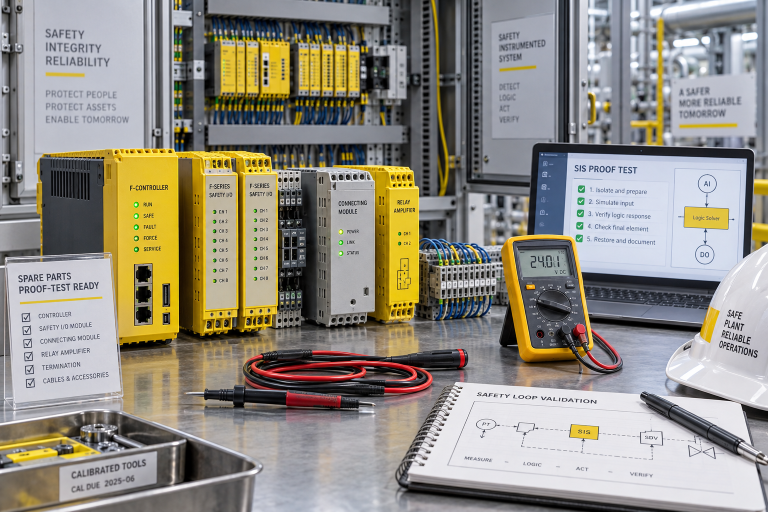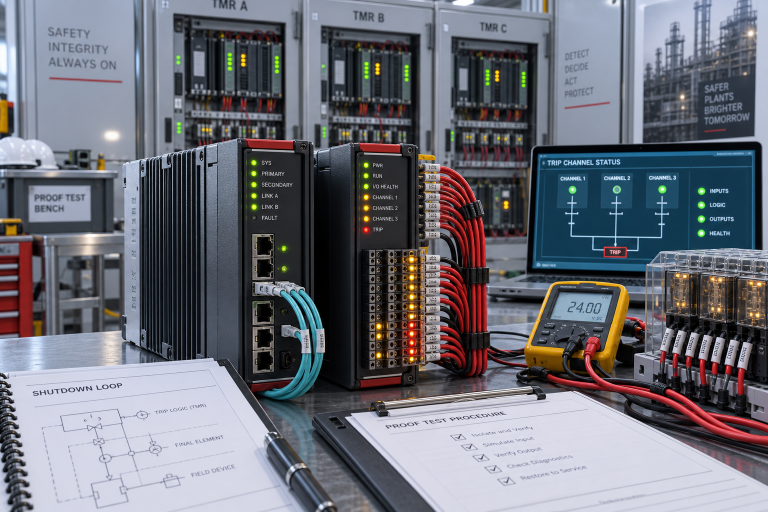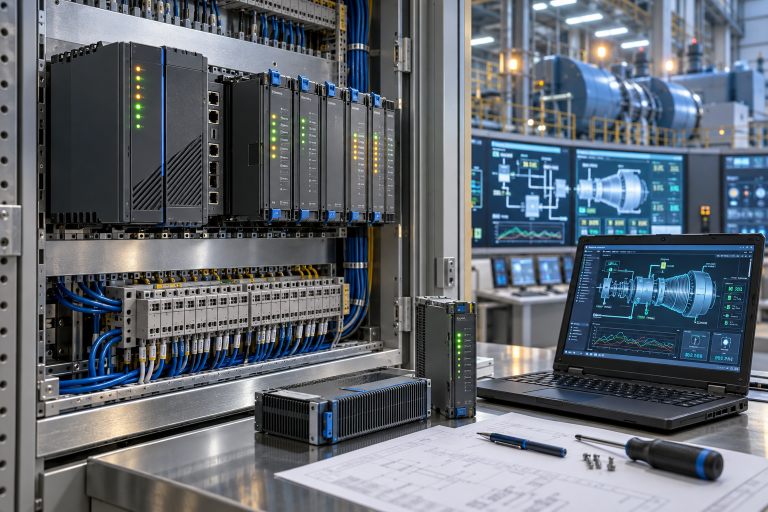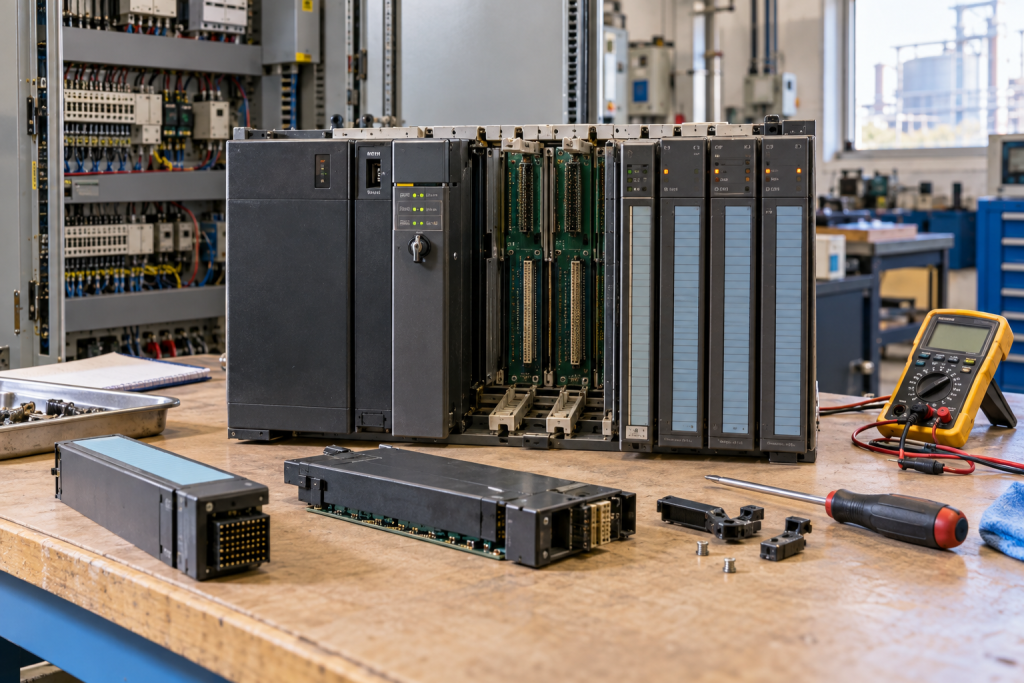
The shutdown clock changes how people diagnose a PLC-5 rack. A weak power supply, a processor fault, and an overloaded 1771 output can all present as a dead or unstable chassis, yet each requires a different spare and a different restart test. When the purchase request says only “PLC-5 module urgently required,” the most important engineering distinctions have already been lost.
Rockwell Automation classifies many PLC-5 and 1771 products as discontinued and provides lifecycle search tools for exact catalog numbers. That makes installed evidence more valuable, not less. The goal is to know which item can restore the rack today while preserving enough information for a controlled migration later.
Freeze The Rack State Before Removing Anything
Photograph the entire chassis while it is still energized if site rules allow. Capture slot order, processor LEDs, power-supply indicators, I/O status, wiring arms, jumpers, keying bands, communication cables, battery condition, and every temporary tag. Record the chassis model, rack addressing, remote-I/O configuration, network role, and the machines or process areas controlled by each group.
Do not move several suspect modules at once. Mark the original slot and connector relationship, then preserve the failed state in the work order. A good record allows the next shift to distinguish a verified action from an assumption made under time pressure.
Processor Recovery Starts With A Usable Program
The Allen-Bradley 1785-LT/B PLC-5 processor is only one part of the recovery package. Confirm the processor catalog number, series, memory arrangement, communication ports, battery status, and whether the latest program can be opened with the available engineering software. Note forces, data-table values that must be restored, communication channel settings, and any password or ownership constraints.
A backup file with no date, no checksum, and no relationship to the running controller is not a recovery plan. Before the outage, perform a controlled upload or comparison where permitted, archive the file with the asset record, and document the steps required to place a replacement processor into the correct mode without unexpectedly starting equipment.
Power Problems Can Masquerade As Processor Problems
A 1771-P7/D rack power supply should be matched by full catalog identity, series, input requirements, connector condition, and installed load. Measure incoming voltage and inspect the chassis power connector before condemning the supply. Heat discoloration, loose terminals, contamination, and poor cabinet ventilation can shorten the life of both the original and the replacement.
After installation, check supply stability with the rack populated and during the machine states that create the highest I/O load. A no-load bench test is useful condition evidence, but it does not reproduce a marginal chassis connector or field circuit that pulls the rack down during operation.
Output Modules Need A Field-Load Check
For a 1771-OB digital output module, the catalog number does not describe the health of the connected load. Record output voltage, commons, fuse arrangement, wiring-arm identity, channel assignment, leakage concerns, and the device controlled by each critical point. A shorted solenoid or damaged cable can destroy confidence in a perfectly good replacement.
Test the field load separately when safe, then use a controlled I/O checkout after replacement. Verify commanded state, measured voltage, device response, interlock behavior, alarm feedback, and fail-safe state. Operators should know which outputs will be inhibited and what constitutes permission to resume automatic operation.
Use The Shutdown To Improve The Next Failure Response
Create a one-page rack map that stays with the asset: chassis and power supply, processor and memory, network modules, slot-by-slot I/O, wiring-arm numbers, backup location, battery replacement date, and tested spare locations. Add photos of the exact labels and connector faces. This is more useful during a night callout than a broad family brochure.
The RFQ should state whether the plant needs direct replacement, repair exchange, or a migration-compatible solution. Include quantity, condition expectations, photos, series restrictions, delivery deadline, and the test evidence required. If a substitute is offered, pause the purchase until controls engineering reviews program, communication, wiring, and restart implications.
A Five-Minute Pre-Order Review
Before the purchase order is issued, read the request aloud as if you were the technician receiving the part at 2 a.m. Can that person identify the correct rack and slot, find the approved program, understand which wiring arm moves, know the field load risk, and see the restart test? If not, the request is still a search note rather than a recovery package.
This review also exposes false economy. A cheaper unverified module may save money on the invoice while consuming the entire shutdown window. For PLC-5 assets, evidence quality is part of spare value because replacement opportunities and experienced support are becoming less forgiving.
FAQ
What information is essential for a PLC-5 processor inquiry?
Send the full 1785 catalog number, series and revision, rack role, communication ports, memory details, program-backup status, photos, quantity, and required condition.
Can a 1771 power supply be accepted after a simple bench power-up?
A bench power-up is helpful, but final acceptance should include connector inspection and stable operation with the actual rack load and field conditions.
Why record the wiring arm for a 1771 output module?
The wiring arm, keying, commons, and field load are part of the installed interface. They can reveal incompatibility or a field fault that the module number alone cannot.
What should be tested before automatic restart?
Confirm processor mode and program, network communications, representative inputs, controlled output operation, interlocks, alarms, and operator authorization.
Send DriveKNMS the PLC-5 rack photo, 1785 and 1771 labels, slot map, program-backup status, field-load notes, acceptable condition, and shutdown deadline for a structured spare inquiry.
© 2026 DriveKNMS. All rights reserved. Official Website: https://driveknms.com Inquiry: sale@driveknms.com | WhatsApp/Tel: +86 18359293191