
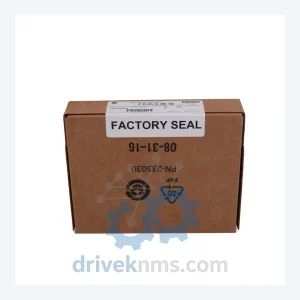
Allen-Bradley 1756-OB16E Digital Output Module – ControlLogix 16-Point Spare Part
Allen-Bradley 1756-OB16E is listed for ControlLogix RFQ review. Confirm quantity, condition and destination before quotation.
RFQ-ready industrial model
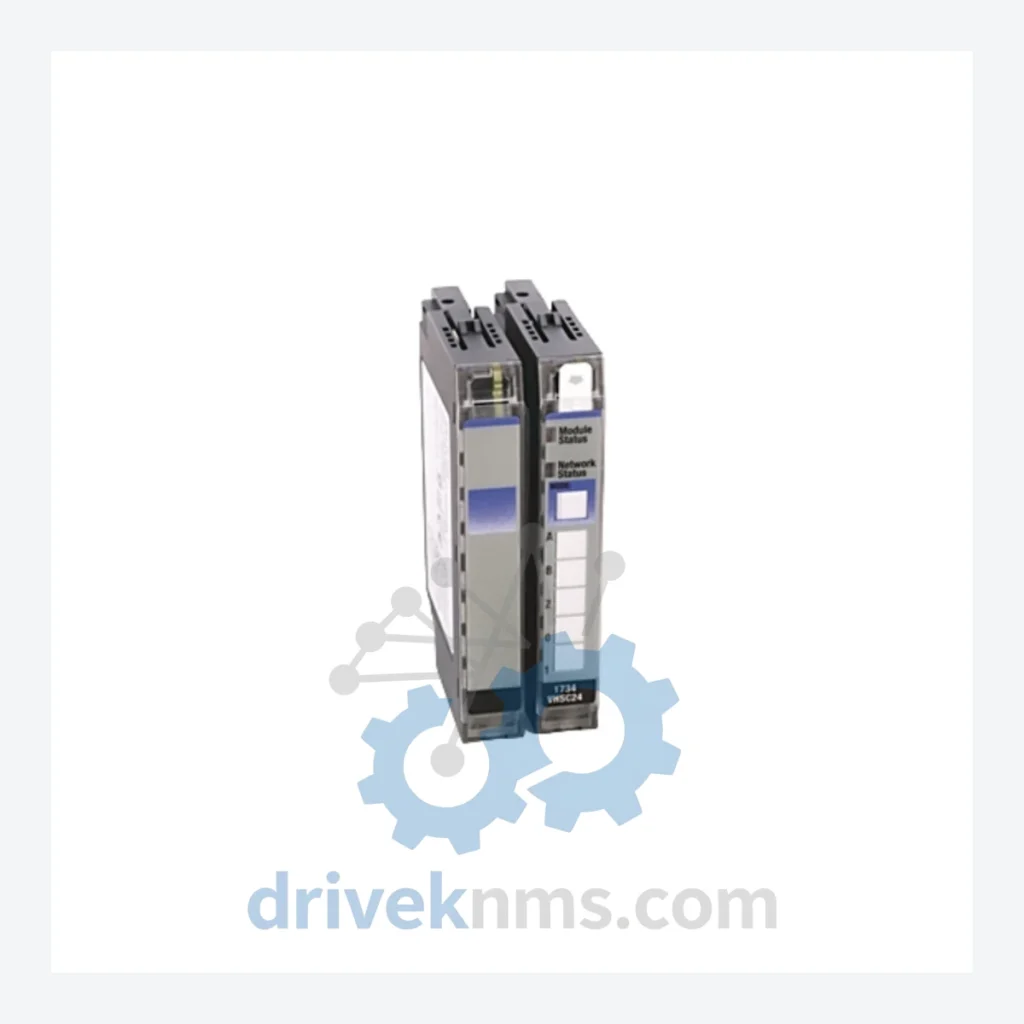
Model: 1734-VHSC24
Product Overview
Commercial availability is handled through direct RFQ, model verification and export-oriented follow-up rather than public cart checkout.
Datasheet Preview
Use attached product manuals when available. If the manual is not public yet, request the full file directly through RFQ.
Commercial Path
Product pages on DRIVEKNMS are designed to verify model, brand and series first, then move the buyer into one clean quotation path.
Technical Dossier
The Allen-Bradley 1734 POINT I/O series, developed by Rockwell Automation, is a distributed I/O platform engineered for modular, node-level installation in industrial control architectures. Deployed extensively across global heavy industry — including petrochemical refineries, nuclear power generation facilities, offshore oil & gas platforms, pulp and paper mills, and continuous-process chemical plants — the 1734 series occupies a critical position in the installed base of ControlLogix, CompactLogix, and SoftLogix-based control systems.
Its defining characteristic is the single-module, single-network-node architecture: each module mounts directly on a DIN rail with an integrated communication adapter, eliminating the need for a dedicated backplane chassis. This design reduces panel footprint, simplifies wiring, and enables granular I/O expansion at the field level. The series supports multiple network protocols including EtherNet/IP, DeviceNet, ControlNet, PROFIBUS DP, and FOUNDATION Fieldbus, making it interoperable across heterogeneous plant networks.
With an installed base spanning decades of continuous industrial operation, the 1734 POINT I/O series remains one of the most widely maintained distributed I/O platforms in the Rockwell Automation ecosystem. Many installations in long-lifecycle industries (nuclear, refining, water treatment) continue to operate original hardware commissioned in the early 2000s, creating sustained demand for both active and end-of-life replacement modules.
The 1734 POINT I/O platform was introduced by Rockwell Automation in the late 1990s as a response to industry demand for distributed, node-level I/O that could be installed close to field devices without requiring a centralized chassis. The architecture has evolved through three identifiable generations:
Generation 1 (1998–2005): Initial release targeted DeviceNet and ControlNet networks. Modules in this generation — including early 1734-IB8, 1734-OB8, and 1734-IA8 variants — established the single-module node concept. Communication adapters (1734-ADN for DeviceNet, 1734-ACNR for ControlNet) were required as the first module in each node. Firmware was non-field-upgradeable on most early units.
Generation 2 (2005–2015): Introduction of EtherNet/IP support via the 1734-AENT and 1734-AENTR adapters marked the most significant architectural shift. This generation expanded the catalog to include specialty modules: high-speed counter modules (1734-VHSC24, 1734-VHSC5), analog combination modules, and HART-enabled analog I/O. Firmware became field-upgradeable via RSLogix 5000 / Studio 5000. The 1734-EP24DC power supply module was introduced to support extended node configurations.
Generation 3 / Current (2015–present): Focus shifted to cybersecurity hardening, CIP Security support, and integration with Rockwell's FactoryTalk ecosystem. The 1734-AENTR (dual-port EtherNet/IP adapter with Device Level Ring support) became the standard adapter for high-availability topologies. Several Generation 1 modules reached End of Life (EOL) status, with Rockwell issuing Product Discontinuation Notices (PDN). Compatibility between generations is maintained at the network protocol level but requires careful firmware version management in mixed-generation nodes.
Compatibility Note: Modules from different generations can coexist within the same EtherNet/IP node provided the adapter firmware supports the module's electronic keying parameters. Mismatched keying configurations are a common source of faults in mixed-generation installations and must be validated in RSLogix/Studio 5000 prior to deployment.
High-Speed Counter Modules
1734-VHSC24: Very High-Speed Counter, 24V DC, single/dual channel, up to 1 MHz count rate, quadrature encoder input support, used for position feedback and velocity measurement in motion-adjacent applications.
1734-VHSC5: Very High-Speed Counter, 5V DC (TTL/RS-422), single/dual channel, up to 1 MHz, designed for encoder interfaces requiring differential line driver signals.
Digital Input Modules
1734-IB8: 8-point 24V DC sourcing digital input module, standard response time, general-purpose discrete sensing.
1734-IB8S: 8-point 24V DC safety-rated digital input, SIL 2 capable, used in safety instrumented systems integrated with GuardLogix controllers.
1734-IA8: 8-point 120V AC digital input module, for legacy AC field device interfaces.
1734-IV8: 8-point 24V DC sinking digital input, NPN-compatible for sensors with sinking output configuration.
1734-IB4D8: 4-point diagnostic digital input, 24V DC, with open-wire and short-circuit detection per channel.
Digital Output Modules
1734-OB8: 8-point 24V DC sourcing digital output, 0.5A per point, standard discrete control.
1734-OB8S: 8-point 24V DC safety-rated digital output, SIL 2 capable, dual-channel safety output pairs.
1734-OA8: 8-point 120/240V AC triac output module, for AC load switching in legacy installations.
1734-OW4: 4-point relay output module, Form A contacts, 2A per point, for high-current or mixed-voltage load switching.
Analog Input Modules
1734-IE2C: 2-channel analog current input, 4–20 mA, 16-bit resolution, for process variable measurement (pressure, flow, level transmitters).
1734-IE2V: 2-channel analog voltage input, ±10V / 0–10V selectable, 16-bit resolution.
1734-IE4C: 4-channel analog current input, 4–20 mA, 16-bit resolution, higher channel density for process-intensive nodes.
1734-IR2: 2-channel RTD/resistance input module, supports PT100, PT1000, Ni120, and custom resistance curves, for temperature measurement via resistance sensors.
Analog Output Modules
1734-OE2C: 2-channel analog current output, 4–20 mA, 16-bit resolution, for control valve positioners and variable-speed drive setpoint signals.
1734-OE2V: 2-channel analog voltage output, ±10V / 0–10V selectable, 16-bit resolution.
Communication Adapters
1734-AENT: Single-port EtherNet/IP adapter, supports up to 63 modules per node, standard linear/star topology.
1734-AENTR: Dual-port EtherNet/IP adapter with Device Level Ring (DLR) support, for high-availability ring topologies.
1734-ADN: DeviceNet adapter, for legacy DeviceNet network integration.
1734-ACNR: ControlNet adapter with redundant media support.
Power Supply Modules
1734-EP24DC: 24V DC expansion power supply, extends node power budget for large module configurations exceeding the adapter's internal power capacity.
A significant portion of the 1734 POINT I/O installed base consists of modules that have reached Rockwell Automation's End of Life (EOL) or End of Support (EOS) status. Generation 1 modules — particularly early revisions of the 1734-ADN, 1734-IA8, and first-production 1734-IB8 — are no longer manufactured and are unavailable through standard distribution channels.
- Discontinued catalog numbers with active PDN (Product Discontinuation Notice) status
- Low-revision hardware required for keying-locked legacy systems that cannot accept current-revision replacements
- Modules with specific firmware revision requirements for compatibility with older RSLogix 5000 project files
- Complete node assemblies (adapter + I/O modules + power supply) for rapid system restoration
The 1734 POINT I/O series presents specific quality verification challenges due to its distributed node architecture and the diversity of module types — from simple discrete I/O to high-speed counter and analog modules with precision signal conditioning circuits.
DriveKNMS applies the following test procedures to 1734 series modules prior to shipment:
Visual and Physical Inspection: Examination of connector pins, backplane interface contacts, DIN rail locking mechanism, and module housing for mechanical damage, corrosion, or evidence of field repair. Modules with non-OEM component substitutions are rejected.
Power-On Functional Test: Each module is installed in a live 1734 node with a 1734-AENTR adapter connected to a Studio 5000 test environment. Module identity, revision, and electronic keying data are read and verified against the catalog specification. Fault indicators are monitored during power-up sequencing.
Channel-Level I/O Verification: For digital modules: each input channel is stimulated with a calibrated 24V DC signal source; each output channel is loaded and switching verified. For analog modules: input channels are driven with a precision current/voltage source across the full measurement range; output channels are measured with a calibrated multimeter. For the 1734-VHSC24 specifically: counter inputs are driven with a calibrated pulse generator at frequencies from 1 Hz to 1 MHz; quadrature encoder simulation is applied to verify A/B/Z channel decoding and count accumulation accuracy.
Communication Integrity Test: Module is verified to establish a Class 1 I/O connection with a ControlLogix test controller. Connection establishment time, packet error rate, and requested packet interval (RPI) compliance are logged.
Burn-In: Modules are operated under load for a minimum of 24 hours at ambient temperature prior to final inspection and packaging.
Continue The Model Path
Move from this exact model into the matching system hub, brand archive, model-family archive or lifecycle sourcing route before sending a final RFQ list.
Related Paths
Allen-Bradley 1756-OB16E is listed for ControlLogix RFQ review. Confirm quantity, condition and destination before quotation.
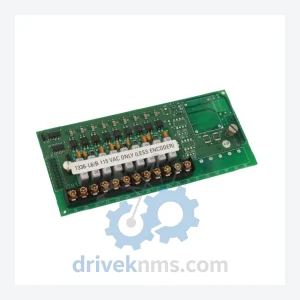
Allen-Bradley 1336-L6/B is listed for Controller Cards RFQ review. Confirm quantity, condition and destination before quotation.
Allen-Bradley 1786-BNC is listed for Controller Cards RFQ review. Confirm quantity, condition and destination before quotation.