
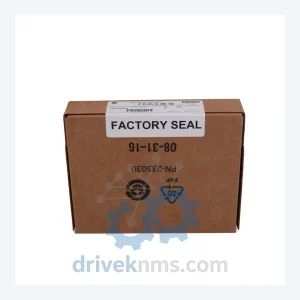
Allen-Bradley 1756-OB16E Digital Output Module – ControlLogix 16-Point Spare Part
Allen-Bradley 1756-OB16E is listed for ControlLogix RFQ review. Confirm quantity, condition and destination before quotation.
RFQ-ready industrial model
Model: 1440-RMA00-04RC
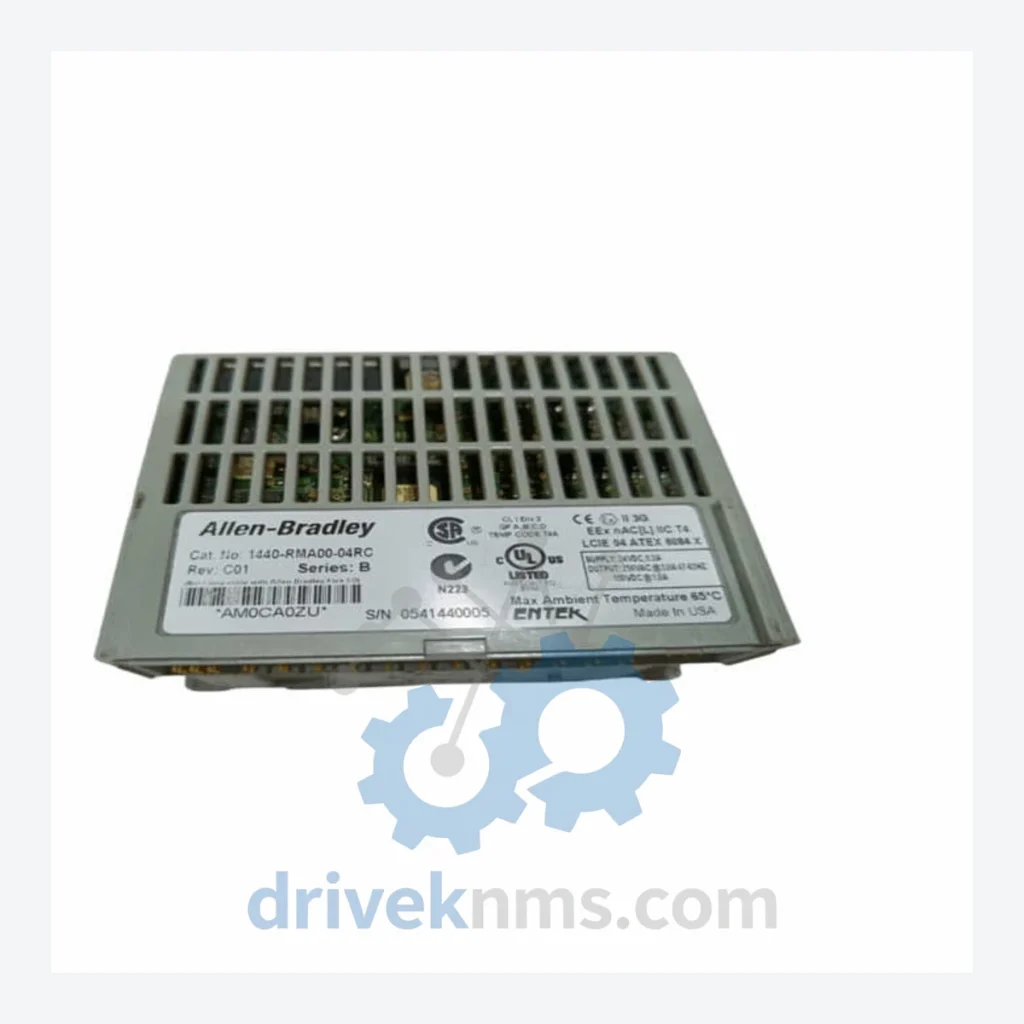
Product Overview
Commercial availability is handled through direct RFQ, model verification and export-oriented follow-up rather than public cart checkout.
Datasheet Preview
Use attached product manuals when available. If the manual is not public yet, request the full file directly through RFQ.
Commercial Path
Product pages on DRIVEKNMS are designed to verify model, brand and series first, then move the buyer into one clean quotation path.
Technical Dossier
The Allen-Bradley 1440 Dynamix Series is Rockwell Automation's dedicated platform for continuous online vibration monitoring in heavy industrial environments. Deployed extensively in petrochemical refineries, nuclear power stations, offshore platforms, LNG terminals, and rotating machinery-intensive facilities, the 1440 Series provides real-time machinery health data integrated directly into the PlantPAx DCS and ControlLogix/CompactLogix ecosystems. Its modular architecture allows plant engineers to configure multi-channel vibration, speed, temperature, and process variable acquisition within a single DIN-rail or panel-mount chassis, eliminating the need for standalone condition monitoring hardware. The series is certified for use in Class I Division 2 hazardous locations and complies with API 670 machinery protection standards, making it the reference platform for turbomachinery protection in critical process industries worldwide.
The 1440 Dynamix Series was introduced by Rockwell Automation in the mid-2000s as a successor to standalone vibration analyzers, designed to bridge the gap between traditional machinery protection systems (such as Bently Nevada 3500) and programmable automation controllers. The first-generation modules communicated via DeviceNet, enabling integration with legacy SLC 500 and PLC-5 platforms. As ControlLogix became the dominant Rockwell architecture, the 1440 Series transitioned to EtherNet/IP as its primary backplane and network protocol, enabling deterministic data transfer rates suitable for API 670-compliant overspeed and high-vibration trip functions.
The second-generation architecture introduced the Dynamix 1444 Series for higher-channel-density applications, but the 1440 platform remained the standard for distributed, per-machine monitoring nodes. Compatibility challenges arise when integrating 1440 modules into Studio 5000 Logix Designer projects originally configured under RSLogix 5000 v16–v18; firmware alignment between the module and the controller is mandatory. Many 1440 modules have entered the mature/end-of-life phase, with Rockwell Automation issuing Product Discontinuation Notices (PDNs) for select catalog numbers. Long-term maintenance support, including refurbished and tested spare units, is therefore critical for plants operating on 20–30 year asset lifecycles.
The following catalog numbers represent verified, commonly deployed 1440 Series modules. SKUs are organized by functional category:
Relay Output & Monitoring Modules
Vibration Input & Accelerometer Modules
Speed & Tachometer Modules
Process Variable & Temperature Modules
Communication & Gateway Modules
Power Supply Modules
A significant portion of the 1440 Series catalog has been issued Product Discontinuation Notices by Rockwell Automation, with last-time-buy windows now closed for several catalog numbers including select VSE and RMA variants. Plants operating DCS and machinery protection systems built on the 1440 platform face a sourcing gap that standard distribution channels cannot fill.
The 1440 Series modules employ a proprietary backplane communication protocol over EtherNet/IP with time-stamped data acquisition. Standard bench testing is insufficient to validate module integrity. DriveKNMS applies a structured test protocol specific to the 1440 architecture:
Continue The Model Path
Move from this exact model into the matching system hub, brand archive, model-family archive or lifecycle sourcing route before sending a final RFQ list.
Related Paths
Allen-Bradley 1756-OB16E is listed for ControlLogix RFQ review. Confirm quantity, condition and destination before quotation.
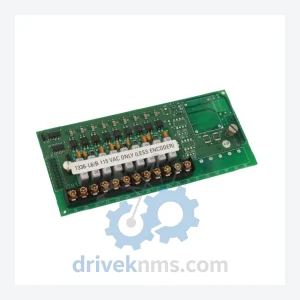
Allen-Bradley 1336-L6/B is listed for Controller Cards RFQ review. Confirm quantity, condition and destination before quotation.
Allen-Bradley 1786-BNC is listed for Controller Cards RFQ review. Confirm quantity, condition and destination before quotation.