
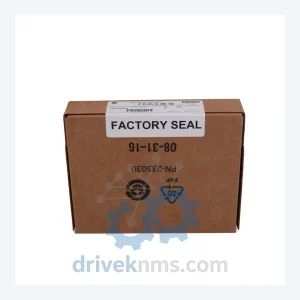
Allen-Bradley 1756-OB16E Digital Output Module – ControlLogix 16-Point Spare Part
Allen-Bradley 1756-OB16E is listed for ControlLogix RFQ review. Confirm quantity, condition and destination before quotation.
RFQ-ready industrial model
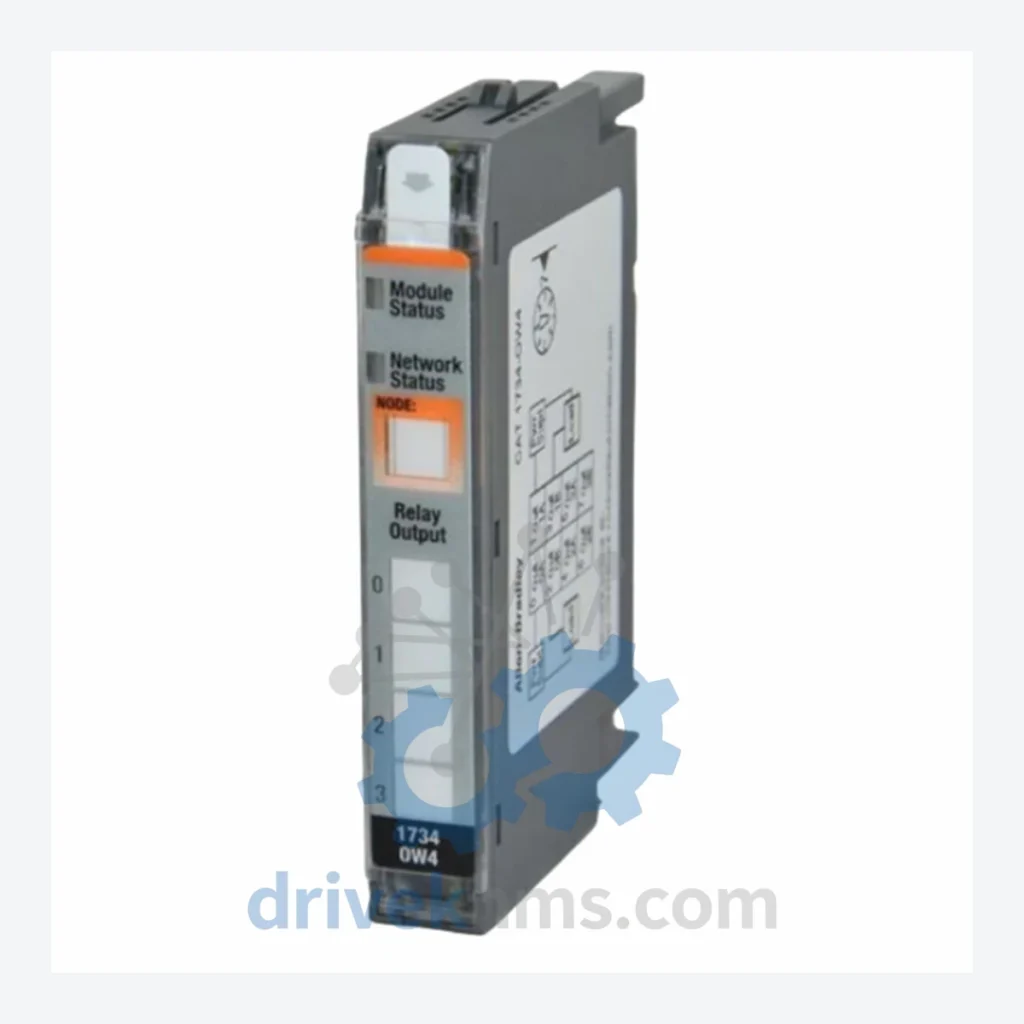
Model: 1734-OW4
Product Overview
Commercial availability is handled through direct RFQ, model verification and export-oriented follow-up rather than public cart checkout.
Datasheet Preview
Use attached product manuals when available. If the manual is not public yet, request the full file directly through RFQ.
Commercial Path
Product pages on DRIVEKNMS are designed to verify model, brand and series first, then move the buyer into one clean quotation path.
Technical Dossier
RFQ support for obsolete parts: Send the model number, required quantity and destination so DriveKNMS can confirm sourcing options before quotation.
| Parameter | Detail |
|---|---|
| Manufacturer | Allen-Bradley (Rockwell Automation) |
| Part Number | 1734-OW4 |
| Series | POINT I/O |
| Module Type | Relay Output Module |
| Number of Outputs | 4 relay outputs |
| Output Type | Relay (normally open contacts) |
| Compatible Backplane | 1734 POINT I/O adapter base units |
| Compatible Controllers | ControlLogix, CompactLogix, SLC 500 (via adapter), legacy POINT I/O networks |
| Communication | Via POINT I/O adapter (DeviceNet, EtherNet/IP, ControlNet depending on adapter) |
| Discontinuation Status | Discontinued – no longer available through standard Rockwell Automation distribution channels |
| Country of Origin | United States |
Note: Electrical parameters such as contact ratings and operating voltage are not listed here to avoid inaccuracy. Please contact us for verified datasheet documentation.
The Allen-Bradley 1734 POINT I/O platform was deployed extensively across discrete manufacturing, automotive assembly, food processing, and material handling facilities throughout the 1990s and 2000s. Its modular architecture made it a preferred choice for machine builders and system integrators who needed flexible, rack-based I/O expansion without committing to a full PLC chassis.
The 1734-OW4 specifically handles relay output switching — a function that sits at the intersection of control logic and physical actuation. Conveyors, solenoid valves, motor starters, and safety interlocks frequently depend on this module. When it fails, the downstream effect is immediate and visible on the production floor.
Rockwell Automation's discontinuation of this module does not eliminate the installed base. Thousands of machines worldwide still run on 1734 POINT I/O backplanes, and the cost of replacing the entire control architecture — including new PLCs, rewiring, software migration, and operator retraining — is a project that most plant managers cannot justify on short notice. The 1734-OW4 is not a convenience item. For facilities that depend on it, it is a structural component of their production infrastructure.
Plant managers facing pressure to retire aging control systems often underestimate the cost-effectiveness of a structured spare parts strategy. The following approach has been used by maintenance teams to defer multi-million dollar system replacements by a decade or more:
3. Separate run spare from emergency spare inventory. One unit should be staged at the machine. Additional units should be held in a climate-controlled parts room, logged in your CMMS, and inspected annually for storage-related degradation.
4. Document firmware and configuration baselines. Before any module swap, ensure your RSLogix or Studio 5000 project file is backed up and version-controlled. A drop-in replacement is only truly drop-in if the configuration is preserved.
5. Negotiate a long-term supply agreement with a verified obsolete parts distributor. Spot-buying discontinued parts in a crisis is the most expensive procurement strategy available. Establishing a relationship with a supplier who holds sourcing status — and can commit to future availability — is a measurable risk reduction.
Q: How are RFQ terms confirmed?
A: Quantity, required condition, documentation needs, destination and sourcing route are confirmed during RFQ review before quotation.
Every 1734-OW4 unit shipped by DriveKNMS passes through a structured 5-step quality process before dispatch. This process was developed specifically for discontinued industrial hardware, where the risks of latent component degradation are higher than for current-production parts.
Step 1 – Electrolytic Capacitor Inspection: Capacitors are the most age-sensitive passive components in any I/O module. Each unit is inspected for bulging, leakage, and ESR deviation. Units with suspect capacitors are quarantined.
Step 2 – Firmware Version Verification: Where applicable, firmware revision is confirmed against known-compatible versions for the target control platform. Mismatched firmware is a documented source of intermittent faults in legacy I/O systems.
Step 4 – Functional Output Test: Each relay output channel is exercised through a switching sequence to confirm contact integrity and coil response.
Step 5 – Packaging for Long-Term Storage: Units not immediately shipped are repackaged in anti-static, moisture-barrier packaging with desiccant. Storage conditions are logged.
Q: How do I know the unit is genuine and not a counterfeit?
A: All units are sourced through verified industrial surplus and decommissioning channels. Physical markings, catalog labels, and board-level construction are inspected against known-genuine references. We do not source from unverified online marketplaces. If you require additional traceability documentation, request it at the time of order.
Continue The Model Path
Move from this exact model into the matching system hub, brand archive, model-family archive or lifecycle sourcing route before sending a final RFQ list.
Related Paths
Allen-Bradley 1756-OB16E is listed for ControlLogix RFQ review. Confirm quantity, condition and destination before quotation.
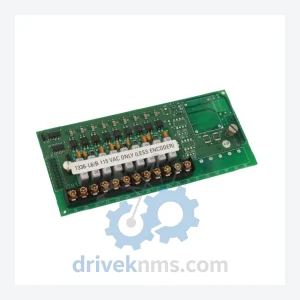
Allen-Bradley 1336-L6/B is listed for Controller Cards RFQ review. Confirm quantity, condition and destination before quotation.
Allen-Bradley 1786-BNC is listed for Controller Cards RFQ review. Confirm quantity, condition and destination before quotation.