
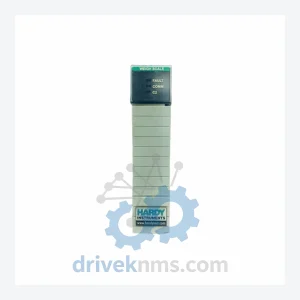
HARDY 1746-WS Weigh Scale Module – Obsolete SLC 500 Spare Part
Hardy Process Solutions 1746-WS is listed for SLC 500 RFQ review. Confirm quantity, condition and destination before quotation.
RFQ-ready industrial model
Model: 1746-OW4
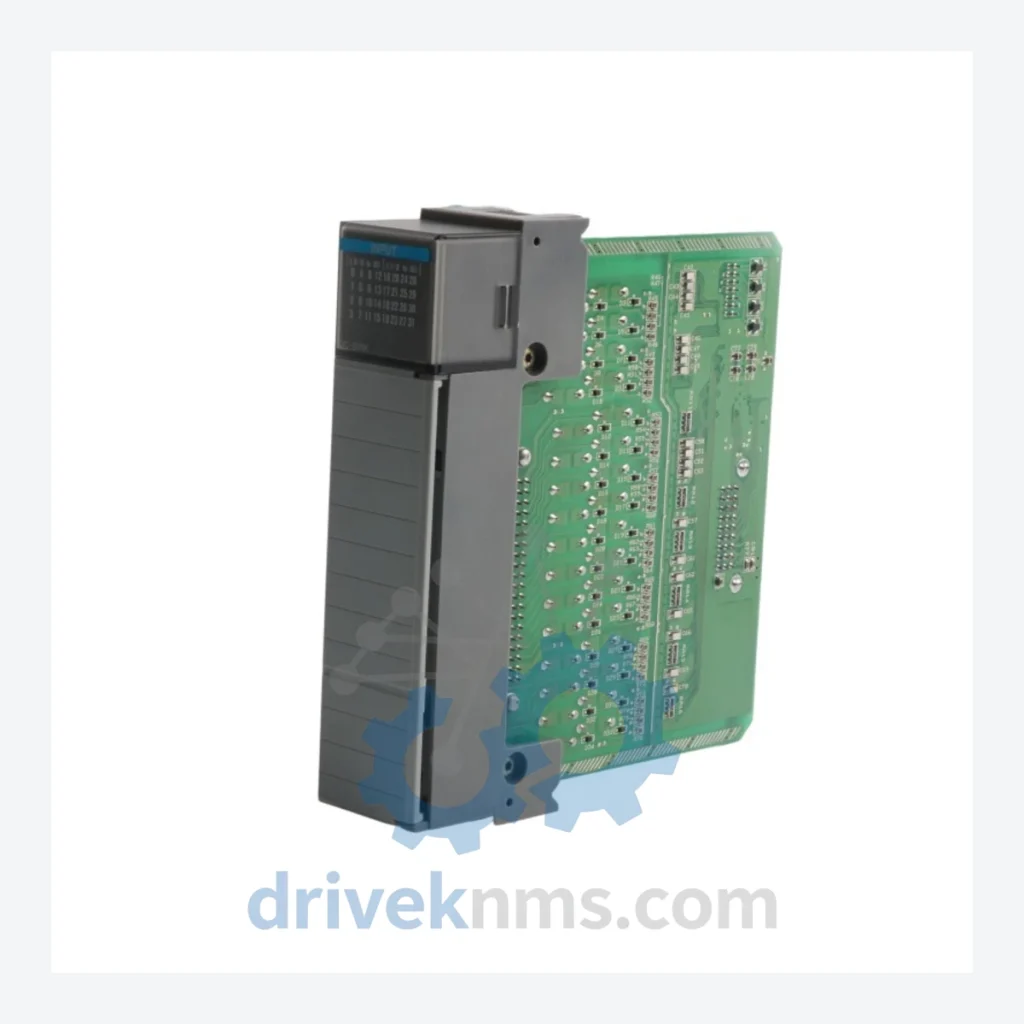
Product Overview
Commercial availability is handled through direct RFQ, model verification and export-oriented follow-up rather than public cart checkout.
Datasheet Preview
Use attached product manuals when available. If the manual is not public yet, request the full file directly through RFQ.
Commercial Path
Product pages on DRIVEKNMS are designed to verify model, brand and series first, then move the buyer into one clean quotation path.
Technical Dossier
The SLC 500 platform was introduced by Allen-Bradley in the late 1980s as a successor to the SLC 100 and SLC 150 fixed-format controllers. The 1746 series defined the modular expansion chassis format, allowing users to configure systems from 4-slot to 13-slot backplanes (1746-A4 through 1746-A13). Early CPU modules such as the 1747-L20 and 1747-L30 used DH-485 as the primary network protocol. Subsequent generations introduced DH+ (Data Highway Plus) and RS-232 DF1 communication, followed by EtherNet/IP-capable processors in the SLC 5/05 (1747-L553) generation.
The platform reached end-of-life (EOL) announcement from Rockwell Automation in 2012, with final production dates extending through 2022 for select modules. As of 2026, the SLC 500 is fully discontinued and classified as an obsolete product line. Rockwell's official migration path directs users toward the CompactLogix (1769 series) and ControlLogix (1756 series) platforms. However, due to the scale of installed base and the cost of full system migration, a significant portion of industrial facilities continue to operate SLC 500 systems under lifecycle extension strategies, relying on the secondary market for spare parts and repair services.
Compatibility considerations: 1746 I/O modules are chassis-slot compatible across all SLC 500 backplane generations. However, CPU firmware versions affect instruction set availability. Mixing 1746 modules across different chassis generations requires verification of backplane power budgets (1746-P2 vs. 1746-P4 vs. 1746-P7 ratings).
The following SKUs represent verified, commonly sourced modules within the Allen-Bradley 1746 SLC 500 product family. Modules are grouped by functional category.
CPU / Controller Modules
Discrete Input (DI) Modules
Discrete Output (DO) Modules
Analog Input (AI) Modules
Analog Output (AO) Modules
Communication & Specialty Modules
Power Supply & Chassis
Each 1746 module processed by DriveKNMS undergoes a structured inspection and functional test protocol before being classified as available inventory.
Physical inspection covers connector pin condition, backplane edge connector integrity, capacitor condition (visual inspection for bulge/leakage on electrolytic capacitors), and relay contact resistance measurement for output modules including the 1746-OW4 and 1746-OW16. Relay modules are cycled a minimum of 50 times under rated load to verify contact reliability.
Functional testing for discrete I/O modules is performed using a dedicated SLC 500 test chassis with a known-good 1747-L553 CPU. Each input channel is stimulated at rated voltage and verified for correct bit-level response in the processor image table. Each output channel is activated and verified for correct switching under resistive load.
Analog modules (1746-NI, 1746-NO, 1746-NT, 1746-NR series) are tested using calibrated signal sources and measurement instruments. Input accuracy is verified against published specifications (±0.1% full scale for 16-bit modules). Output linearity is verified across the full engineering range. Thermocouple and RTD modules are tested with precision decade resistance boxes and thermocouple simulators.
Communication modules and specialty function modules (1746-BAS, 1746-HSCE, 1746-QS) are tested under live PLC program execution to verify correct data exchange and function block operation.
All tested units are assigned a condition grade (Tested/Functional, Refurbished, or As-Removed) and documented with test date and technician ID prior to shipment.
Continue The Model Path
Move from this exact model into the matching system hub, brand archive, model-family archive or lifecycle sourcing route before sending a final RFQ list.
Related Paths
Hardy Process Solutions 1746-WS is listed for SLC 500 RFQ review. Confirm quantity, condition and destination before quotation.
ProSoft Technology 2150-AGA 1747-KE is listed for SLC 500 RFQ review. Confirm quantity, condition and destination before quotation.
ProSoft Technology MVI46-GSC is listed for SLC 500 RFQ review. Confirm quantity, condition and destination before quotation.