
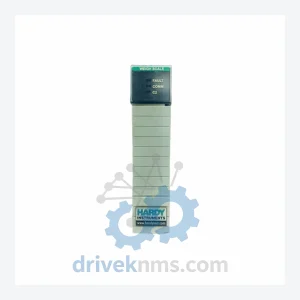
HARDY 1746-WS Weigh Scale Module – Obsolete SLC 500 Spare Part
Hardy Process Solutions 1746-WS is listed for SLC 500 RFQ review. Confirm quantity, condition and destination before quotation.
RFQ-ready industrial model
Model: 1747-L542
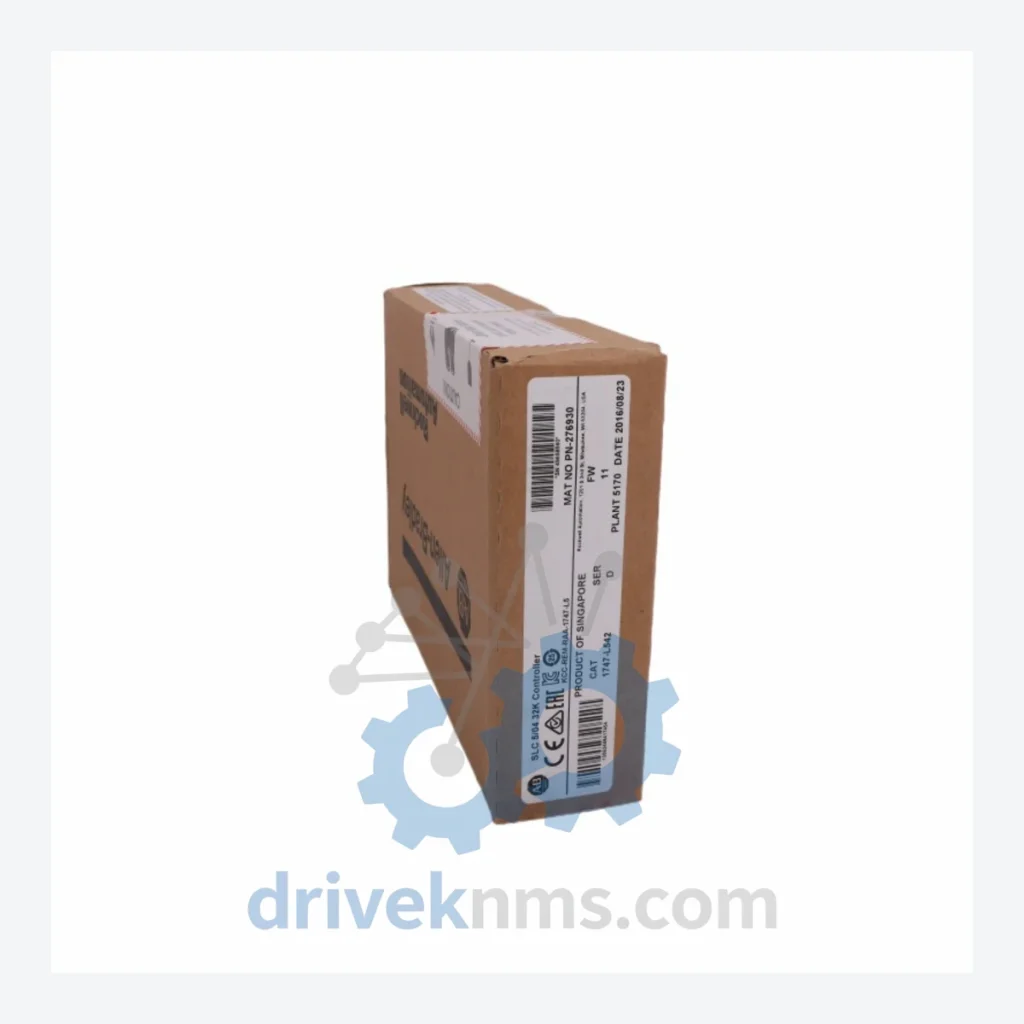
Product Overview
Commercial availability is handled through direct RFQ, model verification and export-oriented follow-up rather than public cart checkout.
Datasheet Preview
Use attached product manuals when available. If the manual is not public yet, request the full file directly through RFQ.
Commercial Path
Product pages on DRIVEKNMS are designed to verify model, brand and series first, then move the buyer into one clean quotation path.
Technical Dossier
The Allen-Bradley SLC 500 (Small Logic Controller 500) series, manufactured by Rockwell Automation, is one of the most widely deployed programmable logic controller platforms in global heavy industry. Installed across petrochemical refineries, nuclear power auxiliary systems, pulp and paper mills, automotive assembly lines, and water treatment facilities, the SLC 500 platform has accumulated decades of field-proven reliability. Its modular rack-based architecture — supporting fixed and modular hardware configurations — made it the standard mid-range PLC choice from the early 1990s through the 2010s. The 1747-L542 is a 20 KB user memory CPU module within the SLC 5/04 processor family, supporting DH+ and RS-232 communications, and remains a critical spare part for facilities operating legacy SLC 500 infrastructure.
The SLC 500 platform was introduced by Allen-Bradley (now Rockwell Automation) in 1991 as a successor to the SLC 100 and SLC 150 fixed controllers. The architecture evolved through five distinct processor generations:
SLC 5/01 (1747-L511, 1747-L514) — The original fixed-memory processors with 1K and 4K user memory respectively, supporting only DH-485 communications. These were positioned for standalone machine control with no network expansion capability.
SLC 5/02 (1747-L524) — Introduced 4K user memory with DH-485 and expanded I/O addressing. Widely used in conveyor and packaging line control through the mid-1990s.
SLC 5/03 (1747-L531, 1747-L532, 1747-L533) — A significant architectural step, adding RS-232 (DF1) communications, online editing capability, and 8K–16K user memory. This generation introduced the ability to interface with SCADA systems via serial protocols.
SLC 5/04 (1747-L541, 1747-L542, 1747-L543) — Added native DH+ network support alongside RS-232, enabling integration into larger Allen-Bradley DH+ networks alongside PLC-5 systems. The 1747-L542 (20K memory) is the mid-tier model of this generation and the most commonly specified for process control applications requiring network connectivity.
SLC 5/05 (1747-L551, 1747-L552, 1747-L553) — The final and most capable generation, adding native Ethernet/IP support. Introduced in the late 1990s, this generation bridged legacy SLC infrastructure with modern Ethernet-based plant networks.
CPU / Processor Modules
1747-L511: SLC 5/01 CPU, 1K user memory, DH-485 only
1747-L514: SLC 5/01 CPU, 4K user memory, DH-485 only
1747-L524: SLC 5/02 CPU, 4K user memory, DH-485 + expanded I/O
1747-L531: SLC 5/03 CPU, 8K user memory, DH-485 + RS-232 DF1
1747-L532: SLC 5/03 CPU, 12K user memory, DH-485 + RS-232 DF1
1747-L533: SLC 5/03 CPU, 16K user memory, online edit capable
1747-L541: SLC 5/04 CPU, 16K user memory, DH+ + RS-232
1747-L542: SLC 5/04 CPU, 20K user memory, DH+ + RS-232, mid-tier
1747-L543: SLC 5/04 CPU, 32K user memory, DH+ + RS-232, high-capacity
1747-L551: SLC 5/05 CPU, 16K user memory, Ethernet/IP + RS-232
1747-L552: SLC 5/05 CPU, 32K user memory, Ethernet/IP + RS-232
1747-L553: SLC 5/05 CPU, 64K user memory, Ethernet/IP, max capacity
Digital Input (DI) Modules
1746-IA16: 16-point 120VAC digital input module, standard density
1746-IB16: 16-point 24VDC sinking digital input module
1746-IB32: 32-point 24VDC sinking digital input, high-density rack
Digital Output (DO) Modules
1746-OA16: 16-point 120/240VAC triac output module
1746-OB16: 16-point 24VDC sourcing transistor output module
1746-OW16: 16-point relay output module, isolated contacts
Analog Input/Output (AI/AO) Modules
1746-NI4: 4-channel analog input, 4–20mA / 0–10V configurable
1746-NO4I: 4-channel analog current output, 4–20mA isolated
Communication Adapter Modules
1747-SDN: DeviceNet scanner module for SLC 500 rack
1747-SCNR: ControlNet scanner module, coax and fiber media
Power Supply Modules
1746-P1: 2A power supply, 120/240VAC input, for 4-slot chassis
1746-P2: 5A power supply, 120/240VAC input, for 7–13 slot chassis
1746-P4: 10A power supply, 120/240VAC input, high-load configurations
With the SLC 500 series formally discontinued, procurement of replacement modules — particularly CPU processors such as the 1747-L542 — requires specialist sourcing channels. DriveKNMS maintains a dedicated inventory of new-surplus, refurbished, and tested-used SLC 500 modules to support facilities that cannot justify a full migration project.
All sourced units are cross-referenced against Rockwell Automation's catalog revision history to ensure firmware and hardware revision compatibility with the target rack configuration. Customers are advised to specify the existing processor series revision (Series A, B, C) when ordering CPU replacements to ensure backplane compatibility.
Backplane Communication Verification: Each module is seated in a reference SLC 500 chassis and powered through a known-good 1746-P2 supply. Backplane data transfer integrity is verified at the hardware level before any software-level test is initiated.
CPU Functional Test (for 1747-L5xx processors): A standardized ladder logic test program is downloaded via RSLogix 500. The test exercises all instruction sets including timer, counter, math, comparison, and communication instructions. DH+ and RS-232 port functionality is verified using loopback and network node tests.
I/O Module Channel-Level Test: All digital and analog I/O channels are individually stimulated and verified. Analog modules are calibrated against a traceable reference standard. Relay output modules are tested for contact resistance and isolation.
Memory Retention Test: CPU modules are programmed, power-cycled, and re-read to confirm battery-backed SRAM retention. Battery voltage is measured and replacement batteries are installed where voltage is below threshold.
Final Inspection: Connector pins, backplane edge connectors, and module housings are inspected for corrosion, mechanical damage, and counterfeit indicators before packaging.
Continue The Model Path
Move from this exact model into the matching system hub, brand archive, model-family archive or lifecycle sourcing route before sending a final RFQ list.
Related Paths
Hardy Process Solutions 1746-WS is listed for SLC 500 RFQ review. Confirm quantity, condition and destination before quotation.
ProSoft Technology 2150-AGA 1747-KE is listed for SLC 500 RFQ review. Confirm quantity, condition and destination before quotation.
ProSoft Technology MVI46-GSC is listed for SLC 500 RFQ review. Confirm quantity, condition and destination before quotation.