
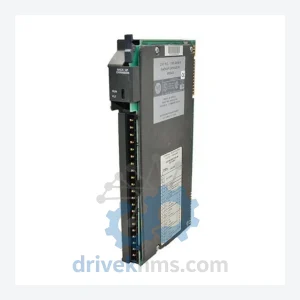
Allen-Bradley 1785-BEM Backup Communications Expansion Module – PLC-5 Series
Allen-Bradley 1785-BEM is listed for PLC-5 RFQ review. Confirm quantity, condition and destination before quotation.
RFQ-ready industrial model
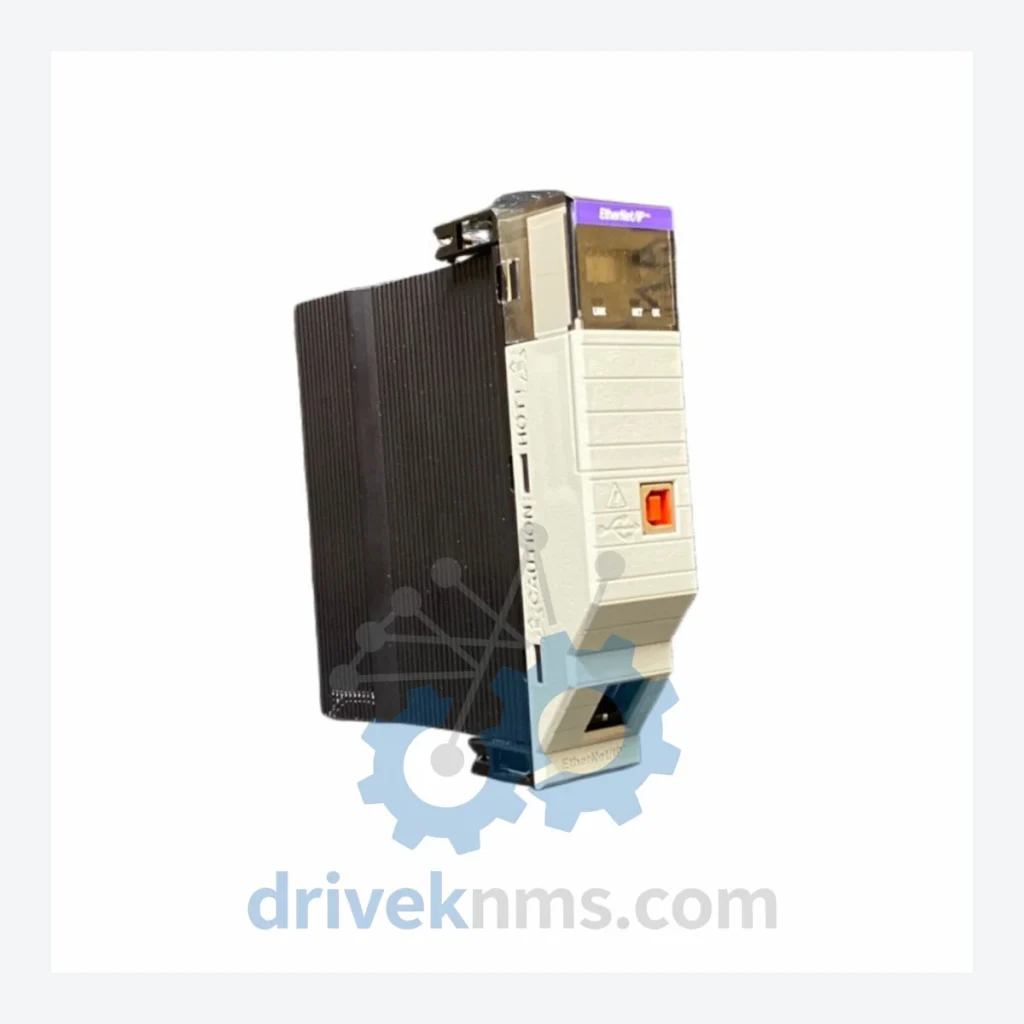
Model: 1756-EN2T/D
Product Overview
Commercial availability is handled through direct RFQ, model verification and export-oriented follow-up rather than public cart checkout.
Datasheet Preview
Use attached product manuals when available. If the manual is not public yet, request the full file directly through RFQ.
Commercial Path
Product pages on DRIVEKNMS are designed to verify model, brand and series first, then move the buyer into one clean quotation path.
Technical Dossier
RFQ support for obsolete parts: Send the model number, required quantity and destination so DriveKNMS can confirm sourcing options before quotation.
| Parameter | Detail |
|---|---|
| Part Number | 1756-EN2T/D |
| Series | D (Discontinued / Legacy Revision) |
| Brand | Allen-Bradley / Rockwell Automation |
| Product Family | ControlLogix 1756 |
| Module Type | EtherNet/IP Communication Bridge Module |
| Network Protocol | EtherNet/IP (CIP over Ethernet) |
| Ethernet Ports | 2 × RJ-45 (10/100 Mbps) |
| Backplane Interface | ControlLogix 1756 chassis backplane |
| Supported Topologies | Linear, Ring (DLR), Star |
| Operating Temperature | 0°C to 60°C |
| Power Consumption (Backplane) | Refer to original Rockwell documentation for Series D rating |
| Discontinuation Status | Series D production discontinued; superseded by later series revisions |
| Compatible Chassis | 1756-A4, 1756-A7, 1756-A10, 1756-A13, 1756-A17 and compatible variants |
| Compatible Controllers | 1756-L6x, 1756-L7x, 1756-L8x series Logix controllers |
The Allen-Bradley 1756-EN2T/D occupies a critical position in ControlLogix architectures deployed throughout the 2000s and early 2010s. It serves as the primary EtherNet/IP bridge between the controller backplane and the plant network — handling I/O messaging, HMI communications, and peer-to-peer controller links simultaneously. There is no software workaround when this module fails. The controller loses network visibility entirely.
Facilities running Series D hardware face a specific compatibility constraint: later series revisions introduced firmware and hardware changes that, in some configurations, require corresponding updates to the controller firmware and project files. For a plant that has not budgeted for a controls engineering project, swapping in a non-Series-D replacement is not always a transparent operation. A like-for-like Series D replacement eliminates that risk entirely — the system comes back online without touching a single line of ladder logic or a single I/O configuration.
The 1756-EN2T/D is commonly found in the following legacy system environments:
For these environments, the cost of a controlled Series D replacement is a fraction of the cost of an uncontrolled failure followed by an emergency platform migration.
The decision to retire a ControlLogix-based line is rarely driven by the controller itself becoming incapable. It is driven by the inability to source replacement modules when they fail. A structured spare parts strategy directly addresses this root cause and can defer a capital expenditure project by a decade or more.
1. Conduct a single-point-of-failure audit. Identify every communication module, power supply, and I/O module in your ControlLogix chassis that has no on-hand spare. The 1756-EN2T/D is consistently one of the highest-risk items on that list due to its network-critical role and its discontinued Series D status.
3. Lock firmware baselines. Document the exact firmware version running on every 1756-EN2T/D in your system. When sourcing replacements, verify the replacement unit can be flashed to that version before installation. This prevents the compatibility issues that arise when mixing series revisions.
Plants that implement these five measures consistently report the ability to sustain legacy ControlLogix infrastructure well beyond the 15-year mark without a platform migration.
Sourcing discontinued hardware from the secondary market carries real risk. DriveKNMS applies a 5-step inspection protocol to every 1756-EN2T/D unit before it leaves our facility:
Q: How do I know the unit is genuine and not counterfeit?
A: All units sourced by DriveKNMS are inspected for authenticity markers including PCB markings, label formatting, and component population consistent with genuine Rockwell Automation manufacturing. We do not source from unverified channels. Buyers may request inspection photos and firmware readout prior to purchase.
Continue The Model Path
Move from this exact model into the matching system hub, brand archive, model-family archive or lifecycle sourcing route before sending a final RFQ list.
Related Paths
Allen-Bradley 1785-BEM is listed for PLC-5 RFQ review. Confirm quantity, condition and destination before quotation.

Allen-Bradley OCM-DPR-85-D-ST is listed for Communication Modules RFQ review. Confirm quantity, condition and destination before quotation.
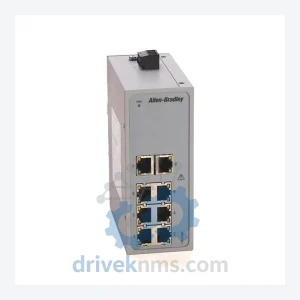
Allen-Bradley 1783-US08T is listed for Stratix 2000 RFQ review. Confirm quantity, condition and destination before quotation.