
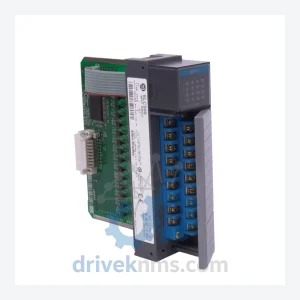
Allen-Bradley 1746-IO12 Combination I/O Module – Obsolete SLC 500 Spare Part
Allen-Bradley 1746-IO12 is listed for SLC 500 RFQ review. Confirm quantity, condition and destination before quotation.
RFQ-ready industrial model
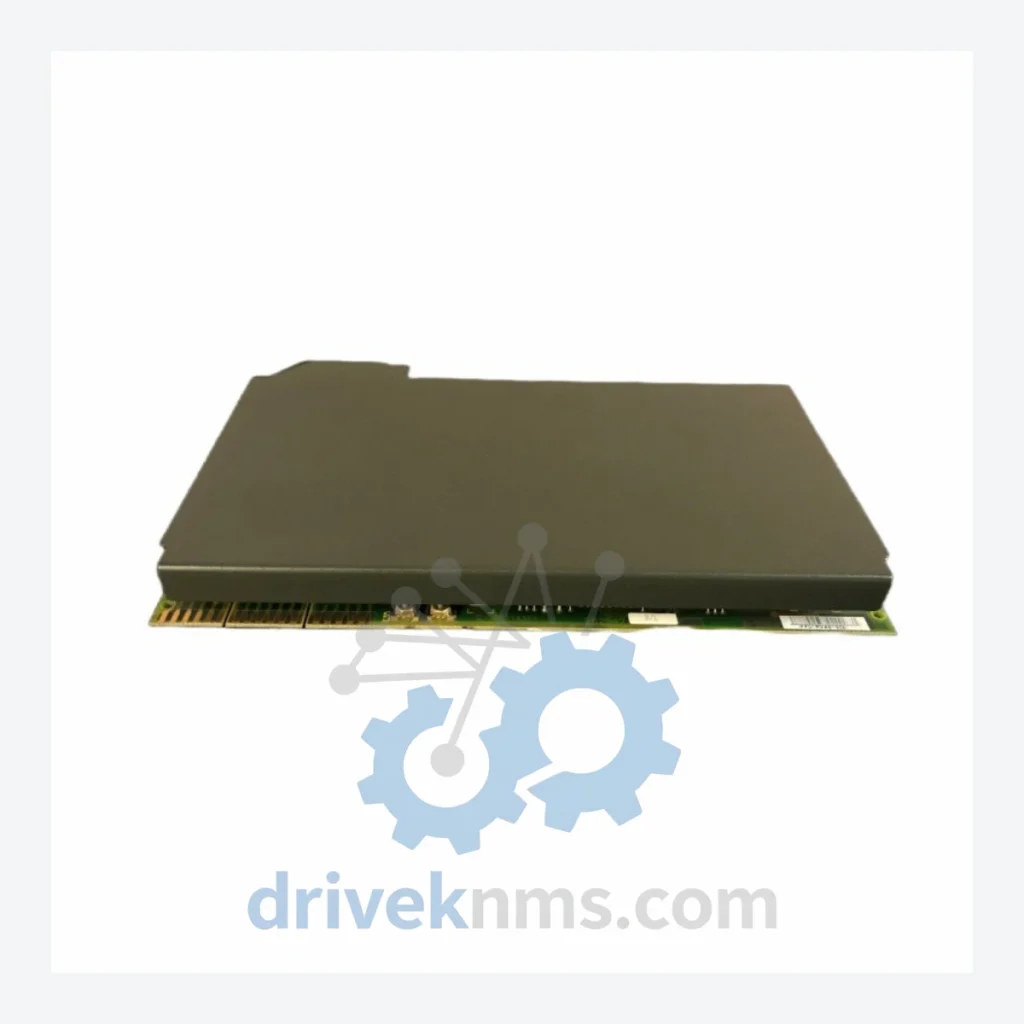
Model: 1771-QRC
Product Overview
Commercial availability is handled through direct RFQ, model verification and export-oriented follow-up rather than public cart checkout.
Datasheet Preview
Use attached product manuals when available. If the manual is not public yet, request the full file directly through RFQ.
Commercial Path
Product pages on DRIVEKNMS are designed to verify model, brand and series first, then move the buyer into one clean quotation path.
Technical Dossier
The Allen-Bradley 1771 series is the foundational I/O platform of the Rockwell Automation PLC-5 programmable controller family. Deployed across heavy industrial sectors including petrochemical refineries, nuclear power generation facilities, offshore oil platforms, pulp and paper mills, and automotive assembly lines, the 1771 backplane architecture represents one of the most widely installed legacy DCS/PLC infrastructures globally. Installed base estimates place active 1771 rack systems in the tens of thousands of facilities worldwide, with many sites operating equipment commissioned in the 1980s and 1990s that remains in continuous service. The platform's modular design — standardized 1771 I/O chassis, keyed module slots, and a parallel backplane bus — enabled high-density I/O configurations that defined industrial automation standards for two decades.
The 1771 I/O system was introduced by Allen-Bradley in the late 1970s as a companion platform to the PLC-2 and later the PLC-5 processor families. The original architecture used a parallel backplane operating at TTL logic levels, with modules communicating via a shared data highway. Early revisions (Series A/B) established the physical form factor: single-slot and double-slot modules in a 1771-A1B through 1771-A4B chassis range supporting 4 to 16 I/O slots.
Through the 1980s, the platform expanded to include analog I/O, specialty function modules (PID, motion, ASCII), and communication adapters for Data Highway Plus (DH+) and Remote I/O (RIO) networks. The 1771-KA series adapters bridged 1771 I/O racks to DH+ networks, enabling distributed architectures across large plant floors. By the 1990s, the 1771 platform reached maturity with the introduction of enhanced analog modules (12-bit and 16-bit resolution), HART-capable I/O, and high-speed counter modules.
Rockwell Automation formally announced the 1771 platform's end-of-life transition beginning in the mid-2000s, directing users toward the ControlLogix (1756) and CompactLogix (1769) platforms. However, the migration cycle in heavy industry is measured in decades, not years. As of 2026, a substantial installed base remains active, and the demand for 1771 spare parts — particularly for obsolete and long-lead modules — continues to be significant. Compatibility between 1771 Series A and Series B/C modules requires attention to backplane voltage requirements and keyswitch settings; mixing series generations without verification can result in module damage or incorrect operation.
The following SKUs represent the core of the 1771 module range, organized by functional category. Each entry reflects a verified, commonly sourced part number within the Allen-Bradley 1771 ecosystem.
Analog Input Modules (AI)
Analog Output Modules (AO)
Digital Input Modules (DI)
Digital Output Modules (DO)
Communication & Adapter Modules
Specialty & Function Modules
The 1771 backplane uses a parallel bus architecture with module-specific keyswitch configurations. Quality verification for 1771 modules requires more than a visual inspection — backplane communication integrity, analog signal accuracy, and digital I/O point-level verification must all be confirmed before a module is classified as serviceable.
DriveKNMS applies the following test protocol to all 1771 modules processed through our facility:
Continue The Model Path
Move from this exact model into the matching system hub, brand archive, model-family archive or lifecycle sourcing route before sending a final RFQ list.
Related Paths
Allen-Bradley 1746-IO12 is listed for SLC 500 RFQ review. Confirm quantity, condition and destination before quotation.
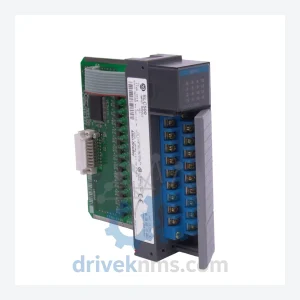
Allen-Bradley 1746-ITV16 is listed for SLC 500 RFQ review. Confirm quantity, condition and destination before quotation.
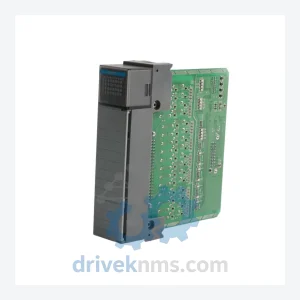
Allen-Bradley 1746-OW4 is listed for SLC 500 RFQ review. Confirm quantity, condition and destination before quotation.