
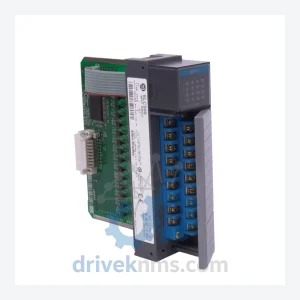
Allen-Bradley 1746-IO12 Combination I/O Module – Obsolete SLC 500 Spare Part
Allen-Bradley 1746-IO12 is listed for SLC 500 RFQ review. Confirm quantity, condition and destination before quotation.
RFQ-ready industrial model
Model: 1786-CP
Product Overview
Commercial availability is handled through direct RFQ, model verification and export-oriented follow-up rather than public cart checkout.
Datasheet Preview
Use attached product manuals when available. If the manual is not public yet, request the full file directly through RFQ.
Commercial Path
Product pages on DRIVEKNMS are designed to verify model, brand and series first, then move the buyer into one clean quotation path.
Technical Dossier
The Allen-Bradley 1786 ControlNet series is a deterministic, repeatable industrial network platform developed by Rockwell Automation for mission-critical process control environments. Deployed extensively in chemical processing plants, nuclear power facilities, petroleum refineries, and large-scale manufacturing operations, the 1786 series provides scheduled and unscheduled data transfer over a coaxial or fiber-optic backbone. Its time-division multiple access (TDMA) protocol guarantees predictable I/O scan times, making it the preferred fieldbus for safety-instrumented systems and high-availability DCS architectures worldwide. The series supports data rates of 5 Mbps and network segments of up to 1,000 meters (coax) or 3,000 meters (fiber), with up to 99 nodes per segment. It integrates natively with Rockwell's Logix platform (ControlLogix, CompactLogix) and legacy PLC-5 and SLC 500 systems via bridge modules.
ControlNet was introduced by Rockwell Automation in the mid-1990s as a deterministic alternative to DeviceNet and Data Highway Plus (DH+). The 1786 product family standardized the physical layer components — taps, repeaters, cables, and media access units — that form the ControlNet backbone infrastructure.
Early Generation (1995–2002): Initial deployments used RG-6 coaxial cable with BNC-style taps. The 1786-TPS (single-port tap) and 1786-TPR (right-angle tap) defined the physical topology. Network Access Cables such as the 1786-CP and 1786-CP-T provided the programming and configuration interface between a PC and the ControlNet node.
Mid Generation (2002–2012): Fiber-optic repeaters (1786-RPFRL, 1786-RPFRXL) were introduced to extend segment distances and provide electrical isolation in high-EMI environments such as arc furnace facilities and offshore platforms. Redundant media modules (1786-RPCD) enabled dual-cable redundancy for fault-tolerant topologies.
The following SKUs represent the core 1786 ControlNet product range. Each module is classified by function:
Network Access Cables & PC Interface
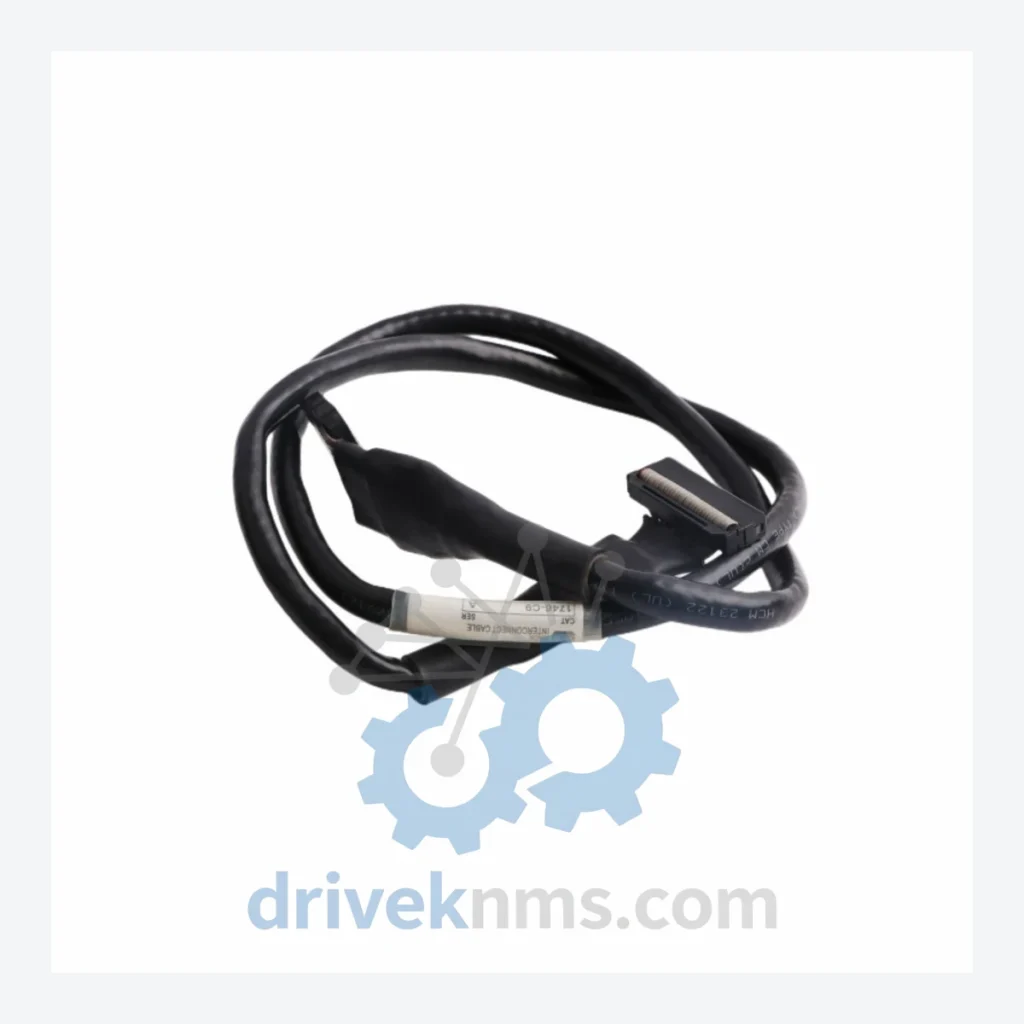
1786-CP: ControlNet network access cable, PC-to-network programming interface, standard length.
1786-CP-T: ControlNet network access cable with T-style BNC connector for inline tap connection.
1786-CPCNL: ControlNet cable assembly, null-modem configuration for node-to-node diagnostics.
Physical Layer Taps
1786-TPS: Single-port coaxial tap, standard BNC, for trunk-to-drop connection on coax segments.
1786-TPYR: Y-style tap, dual-port, supports simultaneous connection of two drop cables to one trunk point.
1786-TPR: Right-angle BNC tap for space-constrained panel installations.
1786-TPYRL: Y-style right-angle tap, long-body variant for high-density wiring trays.
Repeaters — Coaxial
1786-RPA: ControlNet coaxial repeater, extends segment length, DIN-rail mount, 24 VDC powered.
1786-RPCD: Dual-cable redundant coaxial repeater, supports A/B media redundancy topology.
1786-RPACD: Coaxial repeater with built-in diagnostics, LED status per channel.
Repeaters — Fiber Optic
1786-RPFRL: Fiber-optic repeater, long-distance, multimode fiber, ST connectors, up to 3 km segment extension.
1786-RPFRXL: Extended-range fiber repeater, single-mode fiber, for inter-building or hazardous-area isolation.
1786-RPFM: Fiber-to-coax media converter repeater, bridges fiber backbone to coaxial drop segments.
Terminators & Accessories
1786-XT: ControlNet coaxial segment terminator, 75-ohm, required at each end of every trunk segment.
1786-BNC: BNC barrel connector for coaxial cable splicing and segment extension.
1786-XTLO: Low-profile terminator for installations with restricted connector clearance.
As the 1786 ControlNet series transitions into its sustaining and end-of-life phase, procurement of specific tap variants, fiber repeaters, and legacy network access cables becomes increasingly difficult through standard distribution channels. Rockwell Automation has issued Product Discontinuation Notices (PDNs) for several 1786 SKUs, including select repeater and tap configurations.
ControlNet physical layer components require specialized validation procedures distinct from standard PLC module testing. DriveKNMS applies the following QC protocols to all 1786 series inventory:
Coaxial Impedance Verification: All taps and terminators are tested for 75-ohm impedance compliance using a calibrated TDR (Time Domain Reflectometer) to detect cable faults, impedance mismatches, and connector degradation.
Repeater Signal Integrity Testing: Coaxial and fiber repeaters are bench-tested under simulated network load conditions. Output signal amplitude, jitter, and propagation delay are measured against Rockwell's published specifications (ControlNet Specification, Edition 2.0).
Fiber Optic Power Budget Validation: Fiber repeater modules (1786-RPFRL, 1786-RPFRXL) are tested with an optical power meter to confirm transmit power and receive sensitivity within the specified link budget.
Network Access Cable Continuity: All 1786-CP and 1786-CP-T cables undergo pin-by-pin continuity and isolation testing. Shield integrity is verified to prevent ground loop interference in live network environments.
Functional Network Simulation: Where applicable, repeaters and taps are validated in a live ControlNet test bench running RSNetWorx for ControlNet software to confirm node detection, scheduled bandwidth allocation, and error-free communication.
Continue The Model Path
Move from this exact model into the matching system hub, brand archive, model-family archive or lifecycle sourcing route before sending a final RFQ list.
Related Paths
Allen-Bradley 1746-IO12 is listed for SLC 500 RFQ review. Confirm quantity, condition and destination before quotation.
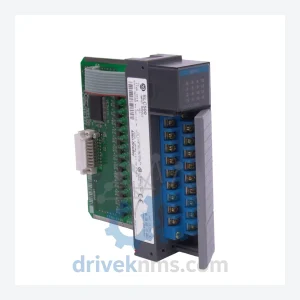
Allen-Bradley 1746-ITV16 is listed for SLC 500 RFQ review. Confirm quantity, condition and destination before quotation.
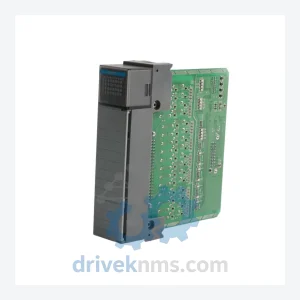
Allen-Bradley 1746-OW4 is listed for SLC 500 RFQ review. Confirm quantity, condition and destination before quotation.