
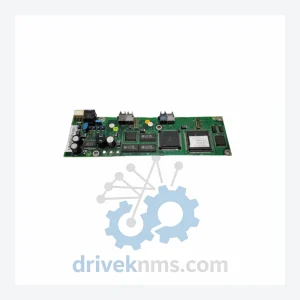
ABB NAMC-11C
ABB NAMC-11C is listed for Controller Cards RFQ review. Confirm quantity, condition and destination before quotation.
RFQ-ready industrial model
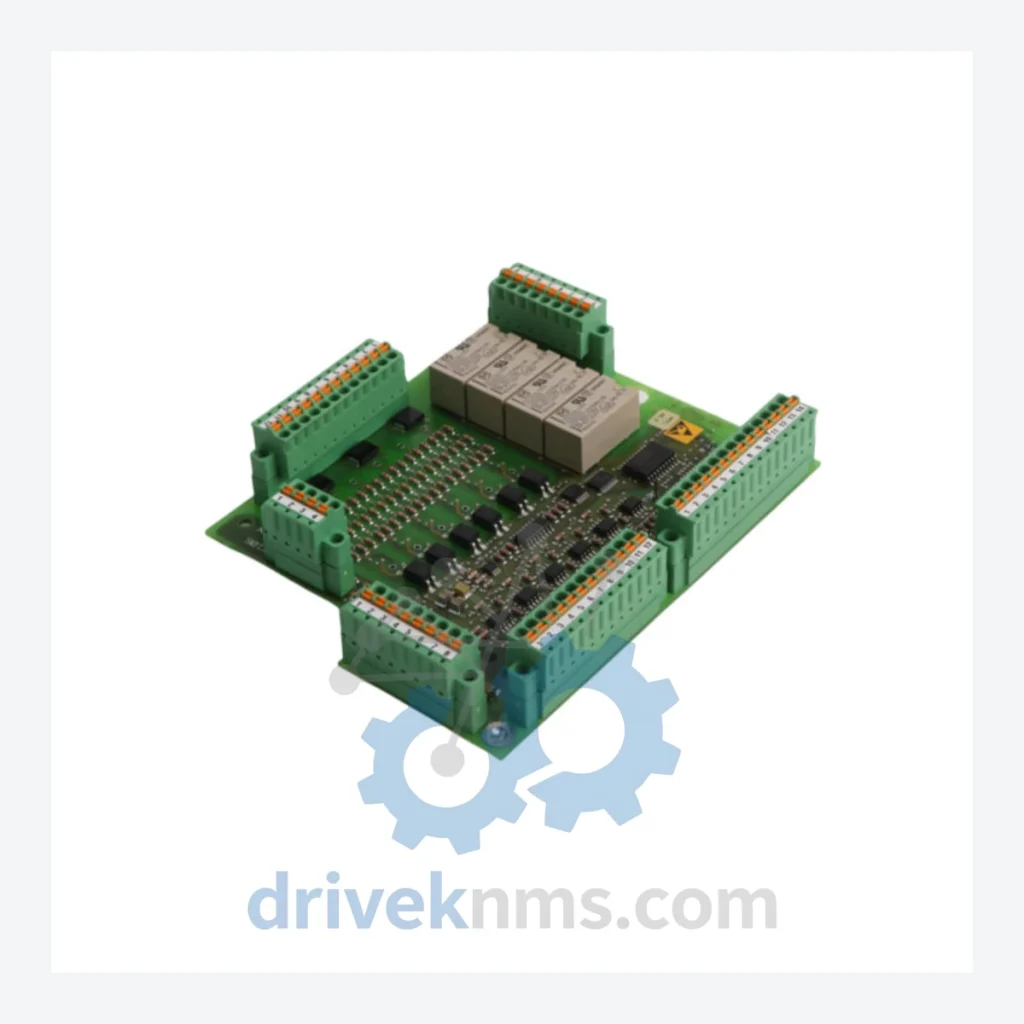
Model: 3BHE015619R0001 XVD825A01
Product Overview
Commercial availability is handled through direct RFQ, model verification and export-oriented follow-up rather than public cart checkout.
Datasheet Preview
Use attached product manuals when available. If the manual is not public yet, request the full file directly through RFQ.
Commercial Path
Product pages on DRIVEKNMS are designed to verify model, brand and series first, then move the buyer into one clean quotation path.
Technical Dossier
The XVD825 board family was introduced as part of ABB's transition from analog excitation regulators (e.g., UNITROL-D, UNITROL-F) to fully digital, microprocessor-based excitation platforms in the mid-1990s. Early variants interfaced with VME-bus backplane architectures common in the UNITROL 1000 and UNITROL 2000 generations. As ABB migrated to the AC800PEC controller platform (based on the PowerPC architecture), the XVD825 series was re-engineered to support high-speed serial backplane communication, replacing parallel bus structures. The A01 revision (3BHE015619R0001) represents the production-stable variant optimized for UNITROL 5000/6000 integration, featuring improved EMC shielding, extended operating temperature range (−20°C to +70°C), and conformal coating for humid industrial environments. Compatibility constraints are significant: XVD825A01 boards are not interchangeable with earlier XVD8xx variants without firmware and backplane configuration verification. Replacement with successor modules (e.g., XVD826 or XVD830 series) requires engineering assessment of I/O mapping and excitation parameter migration.
The following SKUs represent the documented XVD825 series and closely related interface modules within the ABB UNITROL / AC800PEC ecosystem. Each entry reflects a distinct hardware revision or functional variant:
3BHE015619R0001 XVD825A01: Interface board, UNITROL 5000/6000, analog signal conditioning, A01 revision
3BHE015619R0002 XVD825A02: Interface board, revised analog front-end, improved noise rejection
3BHE015619R0003 XVD825A03: Interface board, extended I/O channel count variant
3BHE004573R0001 XVD821A01: Analog input board, 8-channel differential, UNITROL 5000 compatible
3BHE004573R0002 XVD821A02: Analog input board, revised gain stage, 16-bit ADC
3BHE006836R0001 XVD822A01: Digital I/O interface board, 24 VDC logic, UNITROL backplane
3BHE006836R0002 XVD822A02: Digital I/O board, extended isolation voltage, 500 VAC
3BHE009868R0001 XVD823A01: Pulse encoder interface board, HTL/TTL compatible
3BHE009868R0002 XVD823A02: Pulse encoder board, dual-channel, fault detection logic
3BHE012345R0001 XVD824A01: Communication interface board, PROFIBUS-DP, UNITROL 6000
3BHE012345R0002 XVD824A02: Communication board, Modbus RTU / PROFIBUS dual-protocol
3BHE018721R0001 XVD826A01: Next-generation interface board, successor to XVD825A01
3BHE018721R0002 XVD826A02: XVD826 revised, enhanced EMC, RoHS compliant
3BHE022100R0001 XVD830A01: High-density interface board, UNITROL 6080, 32-channel AI
3BHE022100R0002 XVD830A02: XVD830 revised, extended temperature, conformal coat
3BHE025500R0001 XVD835A01: Fiber optic interface board, UNITROL 6080 high-speed link
3BHE025500R0002 XVD835A02: Fiber optic board, dual redundant channel variant
XVD825 series boards present specific test challenges due to their mixed analog/digital architecture and backplane-dependent signal routing. DriveKNMS applies a structured verification protocol for all XVD825 units prior to dispatch: (1) Visual inspection for PCB delamination, capacitor bulge, and connector pin integrity; (2) Powered functional test using an ABB-compatible UNITROL backplane test fixture, verifying all analog input channels against calibrated reference signals; (3) Digital I/O verification across all logic channels at rated voltage (24 VDC); (4) Backplane communication bus test confirming correct node addressing and data throughput; (5) Insulation resistance measurement between signal commons and chassis ground; (6) Final burn-in at elevated temperature (55°C, 4 hours) to screen early-life failures. Units passing all stages are issued a DriveKNMS test certificate with date, technician ID, and measured parameters.
Continue The Model Path
Move from this exact model into the matching system hub, brand archive, model-family archive or lifecycle sourcing route before sending a final RFQ list.
Related Paths
ABB NAMC-11C is listed for Controller Cards RFQ review. Confirm quantity, condition and destination before quotation.
ABB LZ02 is listed for H&B Contronic LZ Series RFQ review. Confirm quantity, condition and destination before quotation.
ABB LL02 is listed for Controller Cards RFQ review. Confirm quantity, condition and destination before quotation.