
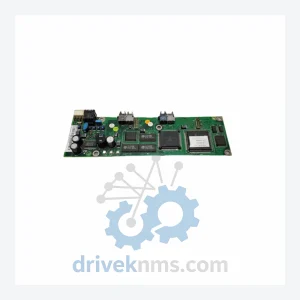
ABB NAMC-11C
ABB NAMC-11C is listed for Controller Cards RFQ review. Confirm quantity, condition and destination before quotation.
RFQ-ready industrial model
Model: 3HAC062339-004 3HAC062339-006 lRB7600 3HAC064662-001 DSQC3037 3HAC023195-001
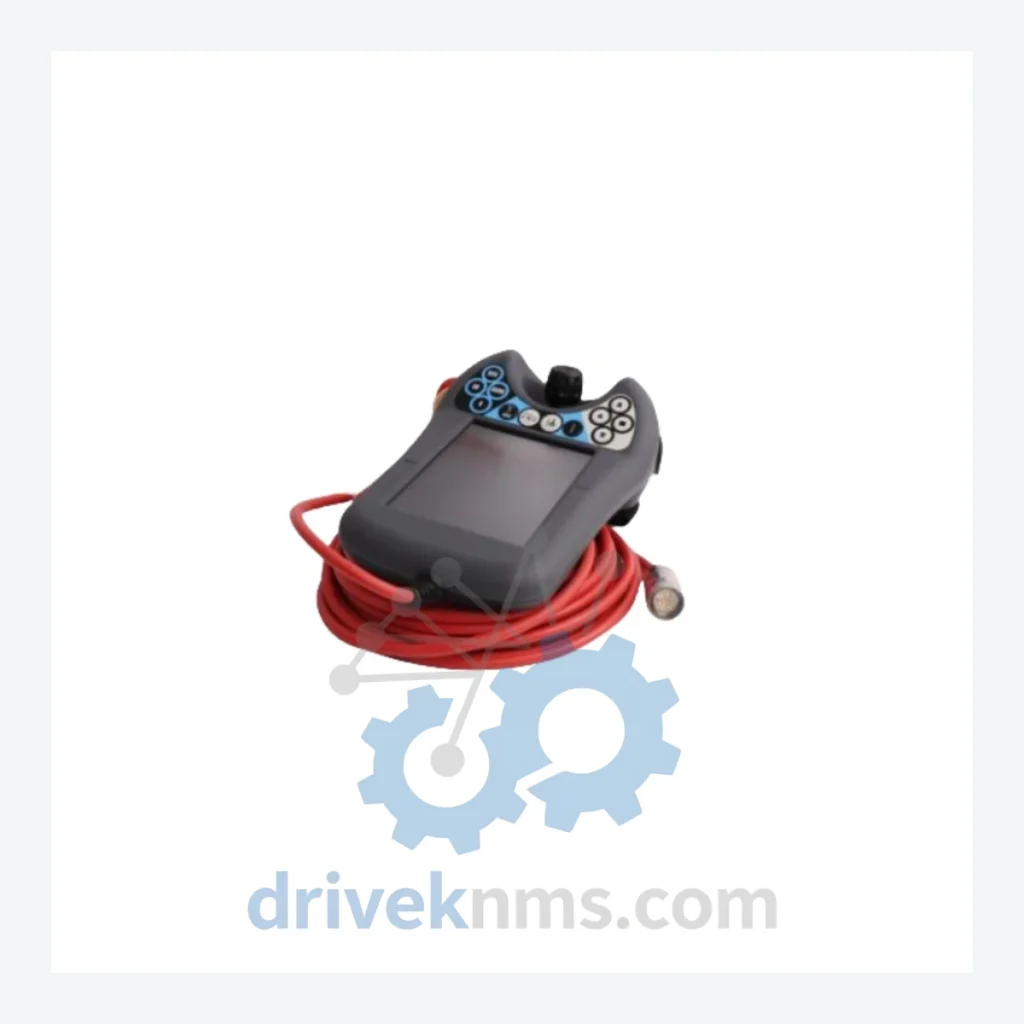
Product Overview
Commercial availability is handled through direct RFQ, model verification and export-oriented follow-up rather than public cart checkout.
Datasheet Preview
Use attached product manuals when available. If the manual is not public yet, request the full file directly through RFQ.
Commercial Path
Product pages on DRIVEKNMS are designed to verify model, brand and series first, then move the buyer into one clean quotation path.
Technical Dossier
The ABB DSQC3037 is a core drive control unit deployed within the ABB IRC5 robot controller platform, specifically engineered for high-payload industrial robots including the IRB7600 series. The IRB7600 is a heavy-duty 6-axis articulated robot with payload capacities ranging from 150 kg to 500 kg, widely installed in automotive body-in-white welding lines, foundry handling, heavy press tending, and nuclear decommissioning operations. The DSQC3037 unit governs axis computer functions and interfaces directly with the robot's drive modules, I/O systems, and fieldbus communication layers. Its associated cable assemblies — including the GTPU (Gyro and Teach Pendant Unit) harness variants — are critical for maintaining signal integrity between the controller cabinet and the manipulator arm across extended operational cycles in harsh industrial environments.
The ABB IRC5 controller architecture, introduced in 2004, replaced the S4C+ platform and brought a modular, distributed drive topology. The DSQC3037 axis computer module represents a mid-generation refinement within the IRC5 ecosystem, succeeding earlier axis computers such as the DSQC540 and DSQC627 used in S4C+ and early IRC5 configurations. Key architectural transitions include:
S4C+ Era (pre-2004): Centralized axis control via DSQC540/DSQC508. Limited fieldbus options; proprietary ABB backplane communication. IRC5 Generation 1 (2004–2012): Introduction of distributed drive modules (DSQC661, DSQC662). Axis computer functions consolidated into DSQC627/DSQC633. IRC5 Generation 2 / Compact IRC5 (2012–present): DSQC3037 introduced as the axis computer for high-payload robots including IRB7600. Enhanced EtherNet/IP and DeviceNet support. Improved thermal management for foundry and press environments. OmniCore Transition (2020–present): ABB's OmniCore C30/C90/V250XT controllers begin replacing IRC5 for new installations. DSQC3037 remains the active spare for all legacy IRC5-based IRB7600 fleets, which represent the majority of installed base globally.
Compatibility note: DSQC3037 is not backward-compatible with S4C+ backplanes. Firmware version alignment between the axis computer and the main computer (DSQC1000/DSQC1018) is mandatory during replacement procedures.
The following SKUs represent verified components within the ABB DSQC3037 ecosystem and IRB7600 spare parts catalog. Each entry reflects a distinct functional role within the IRC5 controller or IRB7600 manipulator assembly.
Axis Computer & Drive Control Units
3HAC062339-004: DSQC3037 axis computer unit, IRC5 controller, IRB7600 variant, revision 04.
3HAC062339-006: DSQC3037 axis computer unit, IRC5 controller, IRB7600 variant, revision 06 — updated firmware baseline.
3HAC064662-001: Drive module assembly for IRB7600 high-payload axis configuration.
3HAC023195-001: GTPU cable assembly, 2 m / 10 m, gyro and teach pendant signal harness for IRB7600.
IRC5 Controller I/O and Communication Modules
DSQC652 (3HAC025917-001): 24 VDC digital I/O module, 16 DI / 16 DO, IRC5 standard I/O board.
DSQC643 (3HAC025338-001): Analog I/O module, 4 AI / 4 AO, IRC5 controller.
DSQC688 (3HAC026254-001): DeviceNet master/slave fieldbus adapter, IRC5.
DSQC1006 (3HAC044075-001): EtherNet/IP adapter module, IRC5 controller.
DSQC663 (3HAC026253-001): PROFIBUS DP adapter, IRC5 fieldbus communication.
DSQC1000 (3HAC036060-001): Main computer unit, IRC5 single cabinet controller.
DSQC1018 (3HAC060720-001): Main computer unit, IRC5 dual cabinet controller, IRB7600 configuration.
Power Supply and Safety Modules
DSQC661 (3HAC026253-001): Drive power unit, IRC5 axis 1–3, IRB7600.
DSQC662 (3HAC026254-001): Drive power unit, IRC5 axis 4–6, IRB7600.
DSQC400 (3HAC12928-1): Safety module, emergency stop and safeguard monitoring, IRC5.
3HAC044168-001: Capacitor bank module, IRC5 drive section, energy buffer for axis braking.
3HAC031670-001: Transformer unit, IRC5 controller cabinet, 400 V / 480 V input variants.
Teach Pendant and HMI Components
3HAC028357-001: FlexPendant teach pendant unit, IRC5, standard configuration.
3HAC031683-001: FlexPendant cable assembly, 10 m, IRC5 controller to pendant.
DSQC3037 axis computer modules and associated IRB7600 drive components undergo a structured verification protocol prior to dispatch. The test sequence addresses the specific failure modes documented in ABB service bulletins for this module class:
Visual and mechanical inspection: PCB surface examination for capacitor bulge, trace corrosion, and connector pin deformation. Backplane connector integrity check against ABB torque specifications. Power-on functional test: Module energized within an IRC5 test rig. Boot sequence verified against expected LED status codes per ABB IRC5 troubleshooting documentation. Axis communication verification: Serial Measurement Board (SMB) communication loop tested across all six axis channels. Resolver signal integrity confirmed at rated frequency. Firmware revision audit: Installed firmware version logged and cross-referenced against ABB RobotWare compatibility matrix. Mismatched firmware flagged and updated where applicable. GTPU cable continuity test: All signal conductors in 3HAC023195-001 and related cable assemblies tested for continuity, insulation resistance, and shield integrity. Burn-in cycle: Modules subjected to 24-hour operational cycle under simulated load conditions prior to final packaging.
Continue The Model Path
Move from this exact model into the matching system hub, brand archive, model-family archive or lifecycle sourcing route before sending a final RFQ list.
Related Paths
ABB NAMC-11C is listed for Controller Cards RFQ review. Confirm quantity, condition and destination before quotation.
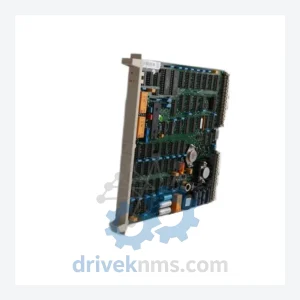
ABB LL02 is listed for Controller Cards RFQ review. Confirm quantity, condition and destination before quotation.
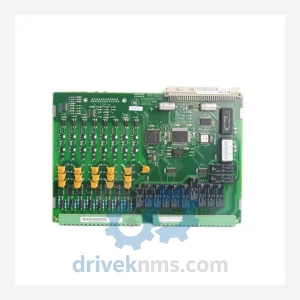
ABB LZ02 is listed for H&B Contronic LZ Series RFQ review. Confirm quantity, condition and destination before quotation.