
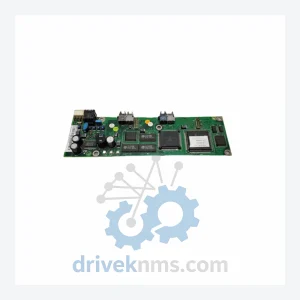
ABB NAMC-11C
ABB NAMC-11C is listed for Controller Cards RFQ review. Confirm quantity, condition and destination before quotation.
RFQ-ready industrial model
Model: AIBP-51 64517023A
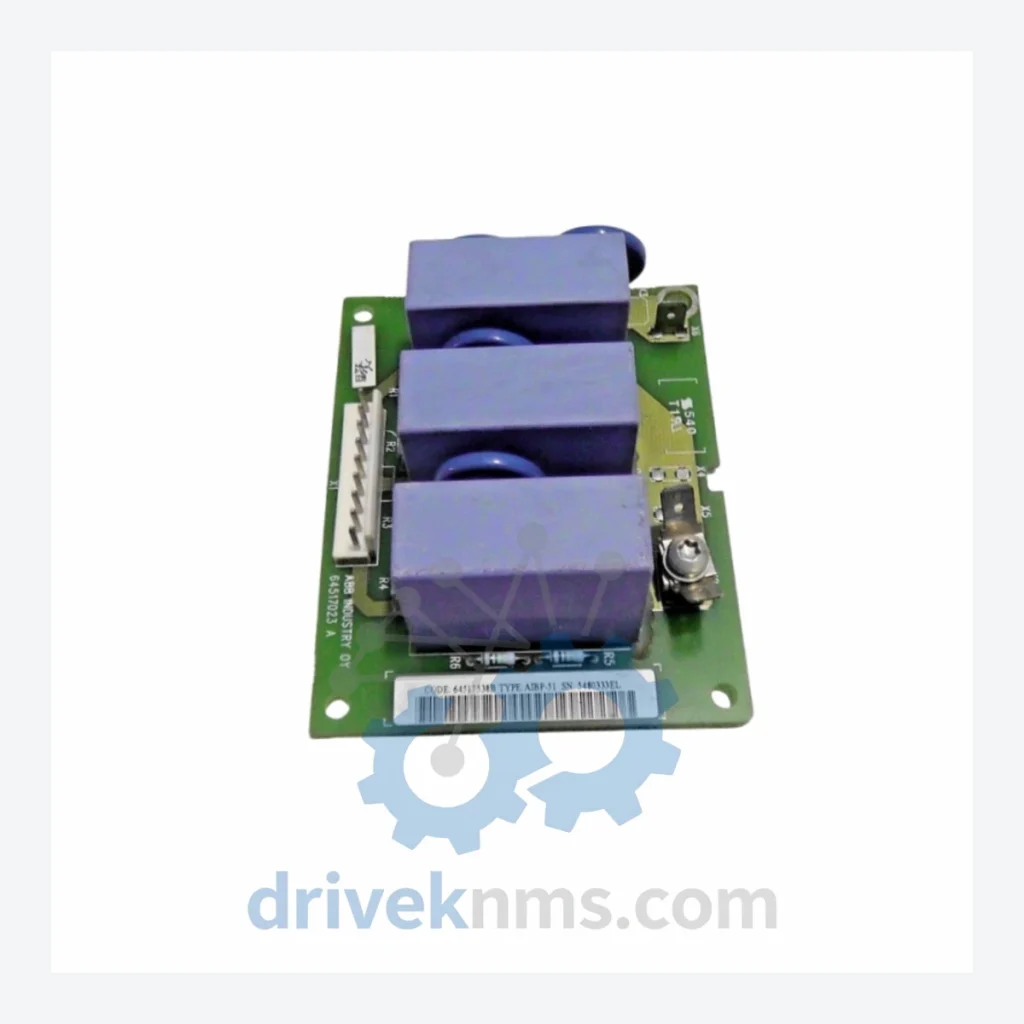
Product Overview
Commercial availability is handled through direct RFQ, model verification and export-oriented follow-up rather than public cart checkout.
Datasheet Preview
Use attached product manuals when available. If the manual is not public yet, request the full file directly through RFQ.
Commercial Path
Product pages on DRIVEKNMS are designed to verify model, brand and series first, then move the buyer into one clean quotation path.
Technical Dossier
The AIBP module family was developed as part of ABB's broader drive system integration strategy, designed to interface with ABB ACS and DCS series frequency converters and programmable controllers. Early AIBP variants focused on analog input buffering and signal isolation, operating within the 24 VDC auxiliary power domain standard to ABB's modular drive cabinets. Subsequent revisions introduced enhanced EMC shielding, extended temperature tolerance ranges, and improved backplane bus compatibility to align with evolving IEC 61131 and IEC 61800 standards.
As ABB consolidated its drive product lines through the 2000s and 2010s, several AIBP variants transitioned from active production to managed availability status. The AIBP-51 64517023A, for example, is a mature-lifecycle component: it remains in active deployment across legacy installations but is no longer manufactured in volume. Compatibility considerations are critical — AIBP modules are designed for specific backplane slot assignments and bus voltage levels; substitution with non-series components without engineering validation risks signal integrity failures and drive trip events.
The following SKUs represent verified components within the ABB AIBP series and associated interface module family. Each entry reflects a distinct functional role within drive and automation panel assemblies:
AIBP-51 64517023A: Analog input buffer/interface module for ABB frequency converter systems, signal isolation and conditioning.
AIBP-01: Analog input board, primary variant, 4-channel differential analog input processing.
AIBP-02: Analog input board, extended channel configuration, 8-channel analog input with 12-bit resolution.
AIBP-11: Analog input/output combination module, 4AI + 2AO, used in closed-loop speed control applications.
AIBP-21: Digital input expansion board, 16-channel 24 VDC DI, for drive command and status monitoring.
AIBP-22: Digital input/output module, 8DI + 8DO relay output, for drive interlock and permissive logic.
AIBP-31: Pulse encoder interface board, HTL/TTL encoder feedback input for closed-loop vector control.
AIBP-41: Fieldbus communication adapter interface board, PROFIBUS-DP slave protocol support.
AIBP-42: Fieldbus adapter, Modbus RTU/TCP interface for legacy SCADA integration.
AIBP-43: DeviceNet communication module, CAN-based network interface for distributed I/O architectures.
AIBP-51 64517023A: Frequency converter analog interface board, mature lifecycle, signal buffering and galvanic isolation.
AIBP-61: Power supply interface module, 24 VDC auxiliary power distribution and monitoring board.
AIBP-71: Relay output expansion module, 8-channel relay DO, rated 250 VAC / 2A per channel.
AIBP-81: Thermistor/PTC input module, motor thermal protection interface for ABB ACS drive series.
AIBP-91: Safe torque off (STO) interface module, functional safety input board, SIL 2 rated.
AIBP-101: Multi-encoder interface board, supports SSI, EnDat, and resolver feedback protocols.
AIBP-111: Analog output expansion board, 4-channel 4–20 mA / 0–10 V configurable AO for process feedback.
ABB AIBP modules incorporate multi-layer PCB designs with precision analog front-end circuitry and optocoupler-based galvanic isolation stages. Standard visual inspection and continuity testing are insufficient for validating the functional integrity of these components. DriveKNMS applies a structured test protocol specific to the AIBP series:
Continue The Model Path
Move from this exact model into the matching system hub, brand archive, model-family archive or lifecycle sourcing route before sending a final RFQ list.
Related Paths
ABB NAMC-11C is listed for Controller Cards RFQ review. Confirm quantity, condition and destination before quotation.
ABB LL02 is listed for Controller Cards RFQ review. Confirm quantity, condition and destination before quotation.
ABB LZ02 is listed for H&B Contronic LZ Series RFQ review. Confirm quantity, condition and destination before quotation.