
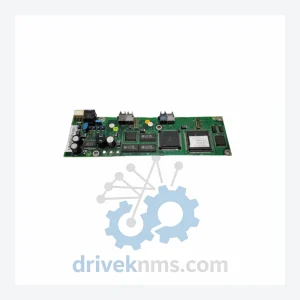
ABB NAMC-11C
ABB NAMC-11C is listed for Controller Cards RFQ review. Confirm quantity, condition and destination before quotation.
RFQ-ready industrial model
Model: CP320
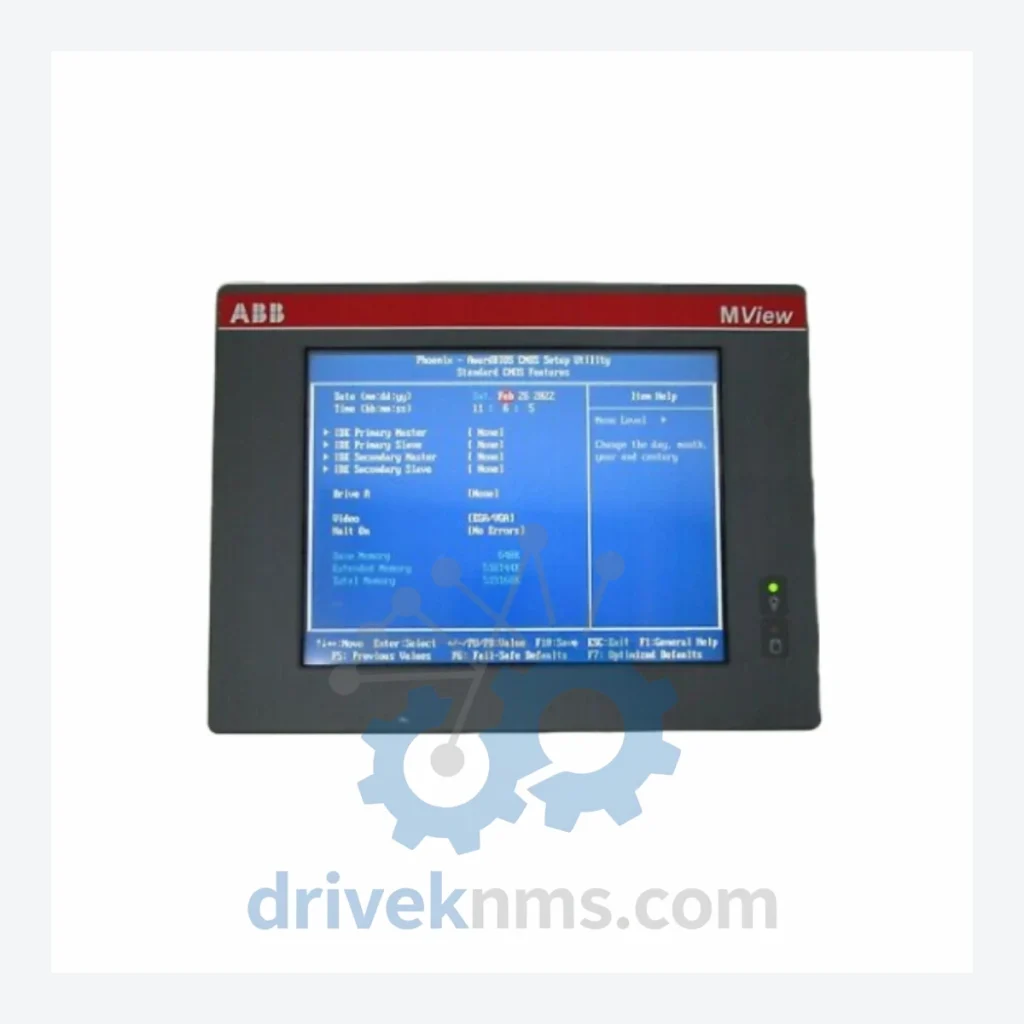
Product Overview
Commercial availability is handled through direct RFQ, model verification and export-oriented follow-up rather than public cart checkout.
Datasheet Preview
Use attached product manuals when available. If the manual is not public yet, request the full file directly through RFQ.
Commercial Path
Product pages on DRIVEKNMS are designed to verify model, brand and series first, then move the buyer into one clean quotation path.
Technical Dossier
The ABB CP320 series represents a core operator panel and control processor platform deployed across heavy industrial environments including petrochemical refineries, nuclear power auxiliary systems, offshore platforms, and large-scale chemical processing facilities. Built on ABB's established Advant/Master and later System 800xA architecture lineage, CP320 units serve as the human-machine interface (HMI) and local control panel backbone in distributed control system (DCS) installations where panel-level processing, display, and I/O aggregation are required in a single ruggedized unit. The series is characterized by its compact DIN-rail or panel-mount form factor, wide operating temperature tolerance, and compatibility with ABB's proprietary PROFIBUS DP and MasterBus 300 communication layers. Installed base across global heavy industry remains substantial, making long-term spare parts availability a critical operational concern for plant maintenance engineers and procurement teams.
The CP320 platform traces its origins to ABB's Advant Controller family introduced in the late 1980s, where operator station panels required dedicated local processing capability independent of the central controller. Early CP320 variants operated on proprietary ABB backplane buses with RS-232 and RS-485 serial interfaces, supporting monochrome display outputs and limited I/O point counts. Through the 1990s, successive hardware revisions introduced PROFIBUS DP slave capability, expanded onboard RAM from 256 KB to 2 MB, and transitioned from EPROM-based firmware to flash memory for field-upgradeable software. The mid-2000s generation aligned CP320 hardware with System 800xA integration requirements, adding OPC DA/UA gateway functionality and Ethernet 10/100 ports alongside legacy serial interfaces to support parallel migration projects. Compatibility between early-generation CP320 backplanes and later firmware revisions is constrained: units manufactured before 1998 do not support PROFIBUS DP baud rates above 1.5 Mbit/s, and hardware revision C and below cannot run firmware versions above 4.x. Plants operating mixed-generation CP320 populations must maintain firmware version discipline to avoid bus arbitration conflicts. The series entered the mature/end-of-active-development phase circa 2015, with ABB transitioning new projects to the CP600 and CP635 panel families. CP320 remains supported under ABB's Extended Lifecycle Program (ELP) with spare parts and repair services, but new feature development has ceased.
The following SKUs represent verified models within the ABB CP320 operator panel and associated module range. Each entry reflects a distinct hardware configuration or accessory within the series ecosystem.
CP320: Base operator panel unit, 320×240 STN LCD, PROFIBUS DP slave, 24 VDC supply.
CP320-1: Standard panel variant with integrated RS-232/RS-485 serial ports, no Ethernet.
CP320-2: Enhanced variant with 10/100 Ethernet port and expanded 2 MB onboard RAM.
CP320-3: High-temperature rated variant, operating range –20°C to +70°C, conformal coated PCB.
CP320-4: ATEX Zone 2 certified variant for use in potentially explosive atmospheres.
CP320-5: Stainless steel front bezel variant for hygienic/washdown environments (food, pharma).
CP320-6: Extended I/O variant with 8 DI / 4 DO onboard discrete I/O points.
CP320-7: Redundant power input variant, dual 24 VDC feeds with automatic switchover.
CP320-8: OPC UA gateway-enabled variant, System 800xA integration certified.
CP320-9: Compact panel variant, reduced 240×180 display, space-constrained cabinet installations.
CP320-A: Replacement front panel assembly, touch membrane and LCD subassembly only.
CP320-B: Main CPU board replacement module, compatible with CP320 through CP320-7 housings.
CP320-C: Power supply board replacement module, 24 VDC input regulation and protection circuit.
CP320-D: Communication interface board, PROFIBUS DP + RS-485 dual-port expansion card.
CP320-E: Ethernet interface expansion module, 10/100 RJ45, firmware 5.x and above required.
CP320-F: Backplane connector repair kit, includes ZIF socket, ribbon cable, and mounting hardware.
CP320-MEM-2M: 2 MB flash memory upgrade module for pre-2000 CP320 base units.
CP320-BAT: Lithium backup battery module, retains SRAM data during power loss, 5-year rated life.
CP320 modules present specific test challenges due to their integrated backplane bus architecture and the tight coupling between the display subsystem, CPU, and communication interfaces. DriveKNMS applies a structured test protocol to all CP320 units prior to dispatch. Power-on verification confirms stable 5 VDC and 3.3 VDC rail outputs within ±2% tolerance under full load. PROFIBUS DP bus participation is verified using a Softing PB-T3 bus analyzer, confirming correct GSD file response, baud rate negotiation at 12 Mbit/s, and absence of CRC errors over a 500-cycle test sequence. RS-232 and RS-485 serial ports are loopback-tested at 9600, 19200, and 115200 baud. LCD display uniformity is assessed under controlled lighting for dead pixel clusters, backlight intensity degradation, and touch membrane registration accuracy (where applicable). Onboard SRAM retention is verified by writing a known data pattern, removing power for 30 minutes, and confirming data integrity on restart—validating backup battery health. Ethernet-equipped variants undergo ping response, ARP table population, and OPC DA tag browse tests against a reference System 800xA emulation environment. Each unit ships with a printed test certificate referencing the specific test sequence, pass/fail results, firmware version, and technician ID.
Continue The Model Path
Move from this exact model into the matching system hub, brand archive, model-family archive or lifecycle sourcing route before sending a final RFQ list.
Related Paths
ABB NAMC-11C is listed for Controller Cards RFQ review. Confirm quantity, condition and destination before quotation.
ABB LL02 is listed for Controller Cards RFQ review. Confirm quantity, condition and destination before quotation.
ABB LZ02 is listed for H&B Contronic LZ Series RFQ review. Confirm quantity, condition and destination before quotation.