
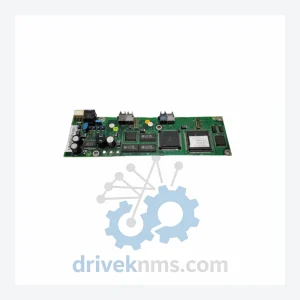
ABB NAMC-11C
ABB NAMC-11C is listed for Controller Cards RFQ review. Confirm quantity, condition and destination before quotation.
RFQ-ready industrial model
Model: GJR2370800R0200 88FN02C-E
Product Overview
Commercial availability is handled through direct RFQ, model verification and export-oriented follow-up rather than public cart checkout.
Datasheet Preview
Use attached product manuals when available. If the manual is not public yet, request the full file directly through RFQ.
Commercial Path
Product pages on DRIVEKNMS are designed to verify model, brand and series first, then move the buyer into one clean quotation path.
Technical Dossier
This is not a commodity listing. It is an asset protection decision.
RFQ support for obsolete parts: Send the model number, required quantity and destination so DriveKNMS can confirm sourcing options before quotation.
Note: Electrical parameters not independently verified. Specifications are based on manufacturer documentation where available. DriveKNMS does not fabricate technical data.
The ABB MasterPiece and Advant Controller platforms were deployed extensively across power generation, pulp and paper, chemical processing, and water treatment facilities throughout the 1990s and 2000s. Many of these installations remain operational today — not because replacement is impossible, but because the cost and risk of replacement are prohibitive.
The GJR2370800R0200 (88FN02C-E) module occupies a defined functional role within these architectures. When it fails, there is no modern equivalent that installs without engineering intervention. The choice facing plant management is binary: locate a verified replacement unit, or initiate a system migration that disrupts production for weeks or months.
The practical approach adopted by experienced maintenance engineers includes three elements: identifying the two or three modules with the highest failure probability in their installed base, securing at least one verified spare for each, and establishing a relationship with a supplier capable of sourcing additional units on short notice. DriveKNMS operates specifically within this supply chain segment.
Obsolete hardware sourced from secondary markets carries inherent risk. DriveKNMS applies a structured 5-step inspection protocol to every unit before it is offered for sale:
Step 1 – Visual and Physical Inspection: Each unit is examined for physical damage, corrosion on connector pins and PCB traces, and evidence of prior field repairs or unauthorized modifications.
Step 2 – Electrolytic Capacitor Assessment: Aged electrolytic capacitors are a primary failure mode in legacy industrial modules. Units are inspected for capacitor bulging, leakage, and ESR degradation. Units with compromised capacitors are either reconditioned with manufacturer-equivalent components or removed from inventory.
Step 3 – Firmware and Label Verification: Where applicable, firmware revision markings and hardware revision labels are cross-referenced against known production records to confirm the unit matches the specified part number and revision level.
Step 4 – Connector and Pin Integrity Check: All edge connectors and backplane pins are inspected for oxidation, mechanical deformation, and contact resistance issues. Affected contacts are treated or the unit is rejected.
Step 5 – Functional Verification: Where test infrastructure permits, units undergo powered functional checks prior to packaging.
Units that do not pass all five stages are not listed for sale.
Drop-in replacement: The GJR2370800R0200 installs directly into the existing backplane slot without hardware modification. No rewiring, no rack changes.
No reprogramming required: The module operates within the existing control program. Replacement does not require PLC or DCS software changes, eliminating the need for a controls engineer on-site during the swap.
Avoids engineering reconstruction costs: A like-for-like replacement preserves the validated control logic, safety interlocks, and process tuning that took years to develop. Migrating to a new platform means rebuilding and re-validating all of that from scratch — a process that is rarely completed without introducing new risk.
Q: How do I know the unit is genuine and not counterfeit?
A: All units are inspected against known physical and labeling characteristics of authentic ABB production. We do not source from unverified liquidation channels. Provenance documentation is available on request for units where chain-of-custody records exist.
Q: Should I buy more than one unit?
A: For any module that is confirmed obsolete and installed in a production-critical system, holding a minimum of one additional spare is standard practice. If your facility runs multiple identical systems, proportional sparing is advisable. Given that secondary market availability of the GJR2370800R0200 is finite and declining, procurement decisions made today carry lower cost and lower risk than the same decision made after a failure event.
Continue The Model Path
Move from this exact model into the matching system hub, brand archive, model-family archive or lifecycle sourcing route before sending a final RFQ list.
Related Paths
ABB NAMC-11C is listed for Controller Cards RFQ review. Confirm quantity, condition and destination before quotation.
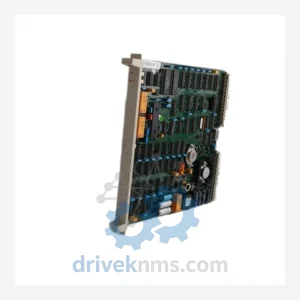
ABB LL02 is listed for Controller Cards RFQ review. Confirm quantity, condition and destination before quotation.
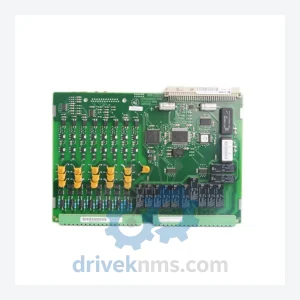
ABB LZ02 is listed for H&B Contronic LZ Series RFQ review. Confirm quantity, condition and destination before quotation.