
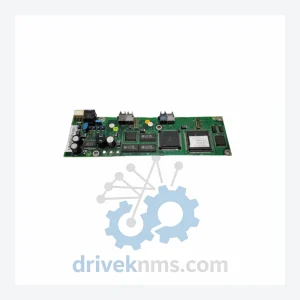
ABB NAMC-11C
ABB NAMC-11C is listed for Controller Cards RFQ review. Confirm quantity, condition and destination before quotation.
RFQ-ready industrial model
Model: GJR2393200R1210 88TK05D-E
Product Overview
Commercial availability is handled through direct RFQ, model verification and export-oriented follow-up rather than public cart checkout.
Datasheet Preview
Use attached product manuals when available. If the manual is not public yet, request the full file directly through RFQ.
Commercial Path
Product pages on DRIVEKNMS are designed to verify model, brand and series first, then move the buyer into one clean quotation path.
Technical Dossier
The ABB Advant Controller 160 (AC160) is a distributed control system platform deployed extensively across global heavy industry, including petrochemical refineries, nuclear power auxiliary systems, offshore platforms, pulp and paper mills, and large-scale water treatment facilities. Built on ABB's proprietary Advant Fieldbus (AF100) and Station Bus architecture, the AC160 series established a benchmark for deterministic process control in the 1990s and 2000s. Installed base counts in the tens of thousands of nodes across Europe, Asia-Pacific, and the Middle East. The platform's modular backplane design allows mixed I/O configurations within a single rack, making it a preferred choice for brownfield expansions where legacy signal compatibility is mandatory. The GJR2393200R1210 88TK05D-E is a Station Bus Coupler module that bridges the AC160 rack backplane to the AF100 station bus, enabling peer-to-peer communication between controllers and I/O stations without a central arbitration node.
The AC160 platform was introduced by ABB in the early 1990s as part of the broader Advant Open Control System (OCS) family, which also included the AC110, AC450, and AC410 controllers. The AC160 targeted mid-range process applications requiring high I/O density and deterministic scan times below 10 ms.
Generation 1 (1992–1997): Initial releases used the AF100 fieldbus at 1 Mbit/s token-passing protocol. Processor modules were based on Motorola 68000-series CPUs. Backplane communication was parallel, limiting rack depth to 8 slots. Station Bus Couplers in this generation carried part numbers in the GJR239xxxx R0xxx revision range.
Generation 2 (1997–2004): Revised CPU modules introduced faster scan cycles and expanded memory. The AF100 bus speed remained at 1 Mbit/s but firmware revisions improved error recovery. The 88TK05D-E coupler family, including GJR2393200R1210, belongs to this generation. Compatibility with Generation 1 I/O racks was maintained via firmware bridging, making mixed-generation installations common in long-lifecycle plants.
Generation 3 / Migration Path (2004–present): ABB introduced the AC800F and later AC800M as the designated successors to the AC160. Migration kits allow AC160 I/O modules to be reused under AC800F supervision via AF100 gateway adapters. However, the majority of installed AC160 systems remain in service under extended lifecycle support agreements, as full migration carries significant engineering and shutdown costs. This makes the availability of original spare parts — including the GJR2393200R1210 — a critical operational requirement for plant maintenance teams.
The following SKUs represent verified, commonly stocked modules within the ABB Advant AC160 platform. Modules are classified by functional category.
Station Bus Couplers & Communication Adapters
GJR2393200R1210 (88TK05D-E): Station Bus Coupler; connects AC160 rack to AF100 fieldbus network node.
GJR2393200R0210 (88TK05D): Station Bus Coupler, earlier hardware revision; functionally equivalent to R1210 with older firmware baseline.
GJR2391500R0001 (88TK01A): AF100 Bus Terminator module; required at each physical end of the AF100 segment.
GJR2391600R0001 (88TK02A): AF100 Optical Fiber Modem; converts electrical AF100 signal to fiber for long-distance or noise-immune runs.
CPU / Controller Modules
GJR5253100R0278 (PM646): AC160 Processor Module; 32-bit CPU, 1 MB user program memory, dual AF100 ports.
GJR5253100R0202 (PM645B): AC160 Processor Module, earlier variant; 512 KB program memory, single AF100 port.
GJR5253000R0100 (PM644): AC160 Processor Module, base variant; used in smaller standalone controller configurations.
Digital Input (DI) Modules
GJR5251400R0101 (DI620): 16-channel 24 VDC Digital Input module; 4 ms input filter, individually isolated channels.
GJR5251400R0201 (DI621): 16-channel 48 VDC Digital Input module; suited for legacy 48 V field wiring systems.
GJR5251500R0101 (DI630): 32-channel 24 VDC Digital Input module; high-density I/O for large discrete signal counts.
Digital Output (DO) Modules
GJR5251600R0101 (DO620): 16-channel 24 VDC Digital Output module; 0.5 A per channel, short-circuit protected.
GJR5251700R0101 (DO630): 32-channel 24 VDC Digital Output module; transistor outputs, grouped common return.
Analog Input (AI) Modules
GJR5252100R0101 (AI620): 8-channel Analog Input module; 4–20 mA / 0–10 V selectable, 12-bit resolution.
GJR5252100R0201 (AI621): 8-channel Analog Input module with HART pass-through; supports HART revision 5/6 field devices.
GJR5252200R0101 (AI630): 16-channel Analog Input module; 4–20 mA, multiplexed architecture, 10 ms scan per channel.
Analog Output (AO) Modules
GJR5252300R0101 (AO620): 4-channel Analog Output module; 4–20 mA, 12-bit resolution, loop-powered field side.
GJR5252400R0101 (AO630): 8-channel Analog Output module; 4–20 mA, suitable for valve positioner and speed reference applications.
Power Supply Modules
GJR2391100R0001 (SD821): AC160 24 VDC Rack Power Supply; 5 A output, 100–240 VAC input, DIN rail or rack mount.
GJR2391200R0001 (SD822): AC160 Redundant Power Supply module; hot-swap capable, used in high-availability rack configurations.
ABB formally transitioned the AC160 platform to end-of-active-development status in the mid-2000s, with standard spare parts support progressively narrowing through the 2010s. As of 2026, many AC160 modules — including specific hardware revisions of the GJR2393200R1210 — are no longer available through ABB's standard distribution channels.
AC160 modules present specific test challenges due to their backplane bus architecture and AF100 communication protocol. Standard bench power-up is insufficient to verify station bus coupler functionality. DriveKNMS applies the following test protocol to all AC160 modules prior to dispatch:
Visual and mechanical inspection: Backplane connector pin integrity, capacitor condition assessment, conformal coating check on PCB assemblies exposed to industrial environments.
Powered functional test: Each module is installed in a live AC160 test rack running a verified firmware baseline. For Station Bus Couplers (including GJR2393200R1210), the AF100 bus token-passing sequence is verified using a protocol analyzer to confirm correct node address assignment and error-free frame transmission over a minimum 30-minute soak period.
I/O channel verification: For AI, AO, DI, and DO modules, each channel is individually stimulated and measured against factory specification tolerances. Out-of-tolerance channels are flagged and the module is either repaired to specification or quarantined.
Firmware revision logging: Hardware revision and firmware version are recorded on the dispatch documentation to allow the receiving engineer to confirm compatibility with the target rack configuration before installation.
Continue The Model Path
Move from this exact model into the matching system hub, brand archive, model-family archive or lifecycle sourcing route before sending a final RFQ list.
Related Paths
ABB NAMC-11C is listed for Controller Cards RFQ review. Confirm quantity, condition and destination before quotation.
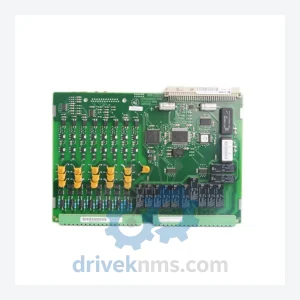
ABB LZ02 is listed for H&B Contronic LZ Series RFQ review. Confirm quantity, condition and destination before quotation.
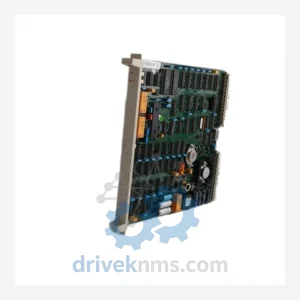
ABB LL02 is listed for Controller Cards RFQ review. Confirm quantity, condition and destination before quotation.