
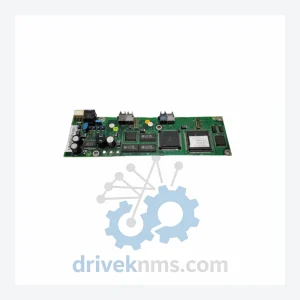
ABB NAMC-11C
ABB NAMC-11C is listed for Controller Cards RFQ review. Confirm quantity, condition and destination before quotation.
RFQ-ready industrial model
Model: HESG447440R001
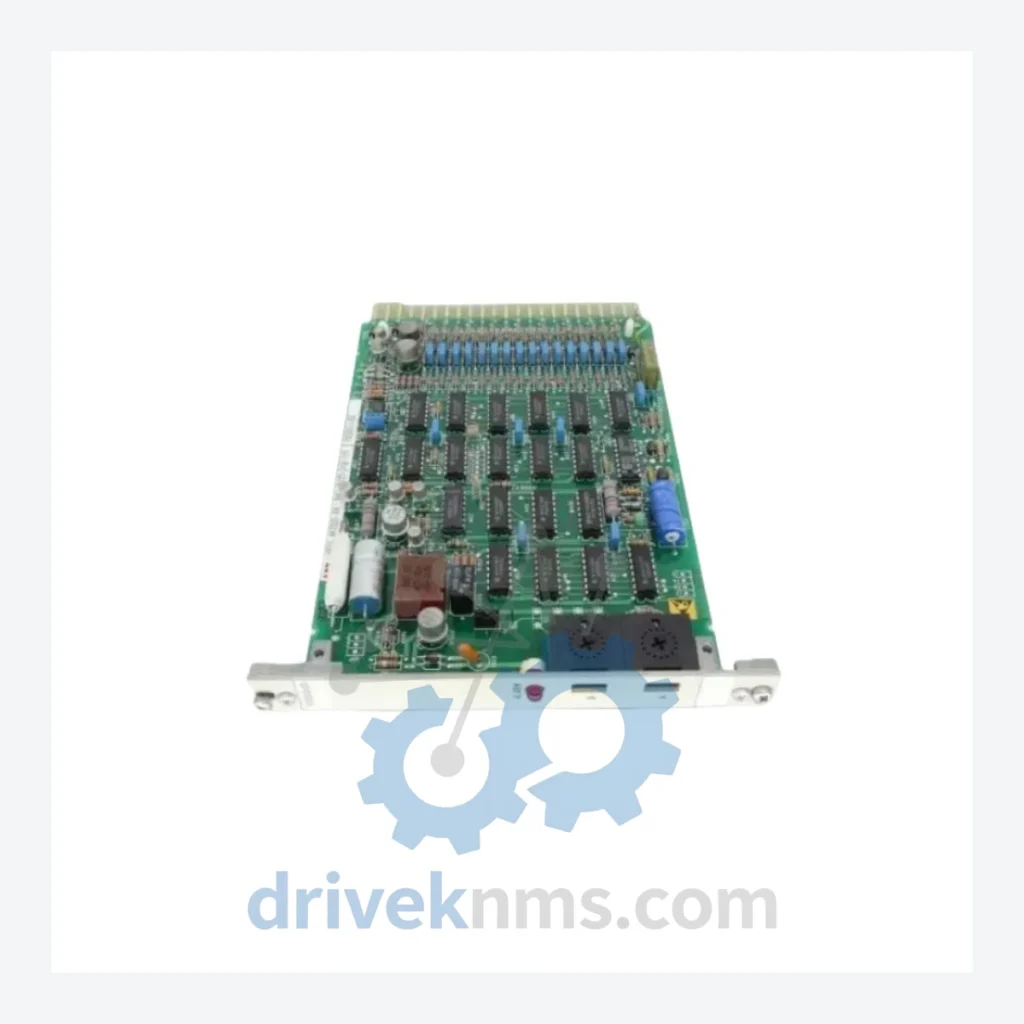
Product Overview
Commercial availability is handled through direct RFQ, model verification and export-oriented follow-up rather than public cart checkout.
Datasheet Preview
Use attached product manuals when available. If the manual is not public yet, request the full file directly through RFQ.
Commercial Path
Product pages on DRIVEKNMS are designed to verify model, brand and series first, then move the buyer into one clean quotation path.
Technical Dossier
The ABB HESG series is a core hardware family within the ABB Advant/Master Distributed Control System (DCS) platform, one of the most widely deployed process automation architectures in global heavy industry. Installations span petrochemical complexes, nuclear power stations, offshore oil platforms, pulp and paper mills, and large-scale refinery operations across Europe, Asia, and the Americas. The HESG designation covers a broad range of I/O modules, bus couplers, communication adapters, and power supply units that interface directly with the Advant Controller AC 110, AC 160, and AC 450 families. Due to the long operational lifecycles typical of DCS infrastructure — often 20 to 30 years — HESG modules remain in active service at facilities that have not yet migrated to ABB's successor platforms (System 800xA, ABB Ability). Sourcing genuine, tested replacement units is a critical maintenance requirement for these sites.
The HESG hardware family was introduced as part of ABB's Advant OCS (Open Control System) strategy in the late 1980s, designed to provide modular, rack-mounted I/O and communication infrastructure for the Master Bus 300 (MB300) fieldbus protocol. Early HESG modules operated exclusively on the MB300 serial bus, with each module assigned a fixed station address via hardware DIP switches. The architecture used a passive backplane design, where modules communicated through a shared bus coupler — the role fulfilled by units such as the HESG447440R001.
Through the 1990s, ABB expanded the HESG catalog to support PROFIBUS-DP and FOUNDATION Fieldbus H1 integration, enabling hybrid installations where legacy MB300 segments coexisted with newer fieldbus networks. Firmware revisions introduced diagnostic registers accessible via the Advant Operator Station (AOS), improving fault isolation without physical module removal. By the mid-2000s, the HESG series entered a mature/end-of-active-production phase. ABB formally discontinued new manufacturing of most HESG variants, directing customers toward the S800 I/O family and, subsequently, the S900 remote I/O series for hazardous area applications. Compatibility between HESG and S800 requires gateway modules and is not transparent at the bus level. Sites running HESG infrastructure must therefore maintain a dedicated spare parts inventory or engage specialist suppliers for lifecycle extension support.
Bus Couplers & Communication Adapters
Digital Input (DI) Modules
Digital Output (DO) Modules
Analog Input (AI) Modules
Analog Output (AO) Modules
Power Supply Units
DriveKNMS maintains a dedicated inventory of HESG series modules sourced from decommissioned plant equipment, controlled storage, and verified secondary market channels. All units are cataloged by part number, hardware revision, and firmware version where applicable. DriveKNMS provides lifecycle extension support specifically for the HESG platform, including cross-reference matching for customers who know the functional requirement but not the exact ABB part number. For multi-unit requirements — such as full station rebuilds or scheduled maintenance kits — bulk sourcing inquiries are handled directly by the technical sales team.
HESG modules present specific testing challenges due to their backplane bus architecture. A module that passes basic power-on self-test may still exhibit intermittent faults when subjected to MB300 bus traffic under load. DriveKNMS applies a multi-stage verification process to all HESG units prior to dispatch.
Stage 1 — Visual and Physical Inspection: Component-level examination for capacitor degradation, connector pin damage, PCB corrosion, and conformal coating integrity. Modules with evidence of thermal stress or mechanical damage are quarantined.
Stage 2 — Power Supply Verification: All internal DC rails are measured under load. HESG modules with switch-mode power stages are tested across the full input voltage tolerance range (18–30 VDC for 24 V nominal units).
Stage 3 — Functional Bus Test: Modules are installed in a live HESG test rack connected to an Advant Controller test bench. MB300 bus communication is verified at the register level. For I/O modules, all channels are exercised with calibrated signal sources (AI/AO) or load simulators (DI/DO). Channel-level fault flags are logged and reviewed.
Continue The Model Path
Move from this exact model into the matching system hub, brand archive, model-family archive or lifecycle sourcing route before sending a final RFQ list.
Related Paths
ABB NAMC-11C is listed for Controller Cards RFQ review. Confirm quantity, condition and destination before quotation.
ABB LZ02 is listed for H&B Contronic LZ Series RFQ review. Confirm quantity, condition and destination before quotation.
ABB LL02 is listed for Controller Cards RFQ review. Confirm quantity, condition and destination before quotation.