
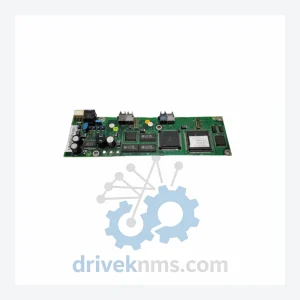
ABB NAMC-11C
ABB NAMC-11C is listed for Controller Cards RFQ review. Confirm quantity, condition and destination before quotation.
RFQ-ready industrial model
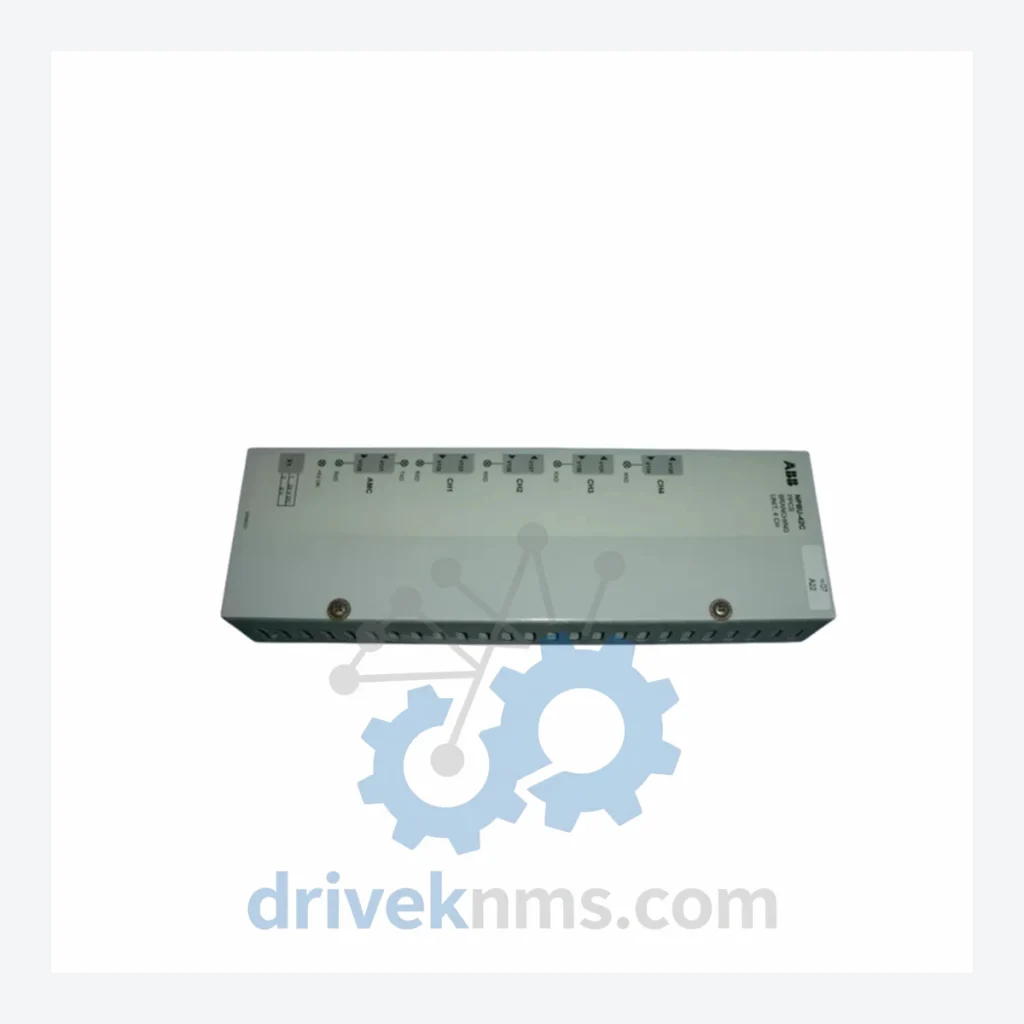
Model: NPBU-42C
Product Overview
Commercial availability is handled through direct RFQ, model verification and export-oriented follow-up rather than public cart checkout.
Datasheet Preview
Use attached product manuals when available. If the manual is not public yet, request the full file directly through RFQ.
Commercial Path
Product pages on DRIVEKNMS are designed to verify model, brand and series first, then move the buyer into one clean quotation path.
Technical Dossier
The ABB NPBU (Node Processor Branching Unit) series is a critical infrastructure component within ABB's Advant OCS and Freelance DCS control architectures. Deployed extensively across global heavy industry — including petrochemical refineries, nuclear power auxiliary systems, offshore platforms, and continuous-process chemical plants — the NPBU series functions as the communication backbone between field I/O nodes and the central process controller. Its role in deterministic data routing across RCOM and MasterBus 300 fieldbus topologies makes it a non-substitutable element in legacy DCS installations that remain in active production service. Installed base estimates across EMEA and Asia-Pacific alone account for tens of thousands of units, many of which are operating beyond their original design lifecycle, creating sustained demand for verified spare parts and lifecycle extension services.
The NPBU series was introduced as part of ABB's Advant Controller 450 (AC450) ecosystem in the late 1980s, designed to support the MasterBus 300 serial communication standard. Early variants such as the NPBU-21C and NPBU-31C provided basic branching and node isolation functions with limited diagnostic capability. As ABB transitioned into the Freelance 2000 and subsequently Freelance 800F platforms through the 1990s and 2000s, the NPBU architecture was refined to support higher node counts, improved fault isolation, and compatibility with PROFIBUS DP bridging adapters. The NPBU-42C represents the mature generation of this lineage, offering four-port branching with enhanced short-circuit protection per branch and passive termination management. Compatibility constraints are significant: NPBU units are bus-topology-specific and are not interchangeable with ABB's later CI801/CI830 PROFIBUS interface modules used in AC800F systems. Engineers maintaining mixed-generation Freelance installations must verify firmware revision levels and backplane connector variants before substitution.
The following SKUs represent verified models within the ABB NPBU and closely associated branching/communication module families. Each entry reflects a distinct hardware revision or port-count configuration:
NPBU-21C: 2-port MasterBus 300 branching unit, early Advant OCS generation
NPBU-31C: 3-port branching unit with passive bus termination, AC450 compatible
NPBU-42C: 4-port branching unit, enhanced branch short-circuit isolation, Freelance DCS
NPBU-42D: Revised hardware of NPBU-42C with updated connector locking mechanism
NPBU-51C: 5-port variant for high-density node topologies in large-scale DCS rings
NKTU-01: Termination unit for MasterBus 300 trunk cable, used with NPBU series
NKTU-02: Extended termination unit, dual-ended trunk configuration
NDBU-95: PROFIBUS DP branching unit, successor-generation for AC800F migration paths
NDBU-96: Enhanced PROFIBUS DP branching unit with diagnostic LED per port
NKTU-21: Passive trunk terminator, compatible with NPBU-42C bus segments
NCAB-0300: Shielded MasterBus 300 cable assembly, 3-meter, NPBU interconnect
NCAB-0600: Shielded MasterBus 300 cable assembly, 6-meter, NPBU interconnect
NKTU-11: Active bus terminator unit for extended trunk lengths
NPBU-42C/S: NPBU-42C with conformal coating for high-humidity environments
NKTU-31: Trunk termination unit, 3-port configuration, Advant OCS legacy
DSBC-176: Bus communication module, Advant Controller, used alongside NPBU branching infrastructure
The NPBU-42C and related branching units present specific quality verification challenges due to their passive bus architecture: unlike active I/O modules, functional failure modes are often latent and only manifest under loaded bus conditions. DriveKNMS applies a multi-stage inspection protocol for all NPBU-series units. Physical inspection covers connector pin straightness, locking tab integrity, and PCB surface condition for corrosion or flux residue. Electrical verification includes branch-to-branch isolation resistance measurement, trunk impedance continuity check at 150Ω nominal, and short-circuit protection element verification per branch port. Where applicable, units are bench-tested in a live MasterBus 300 segment with a known-good AC450 or Freelance controller node to confirm transparent data routing across all active ports. Units that pass all stages are issued a DriveKNMS inspection record and shipped with ESD-protective packaging.
Continue The Model Path
Move from this exact model into the matching system hub, brand archive, model-family archive or lifecycle sourcing route before sending a final RFQ list.
Related Paths
ABB NAMC-11C is listed for Controller Cards RFQ review. Confirm quantity, condition and destination before quotation.
ABB LL02 is listed for Controller Cards RFQ review. Confirm quantity, condition and destination before quotation.
ABB LZ02 is listed for H&B Contronic LZ Series RFQ review. Confirm quantity, condition and destination before quotation.