
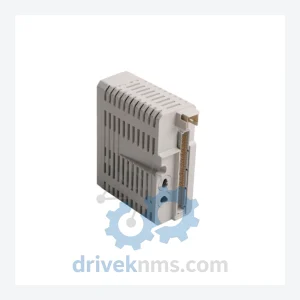
ABB DI811 3BSE008552R1 Digital Input Module – S800 I/O Series
ABB DI811 3BSE008552R1 is listed for S800 I/O RFQ review. Confirm quantity, condition and destination before quotation.
RFQ-ready industrial model
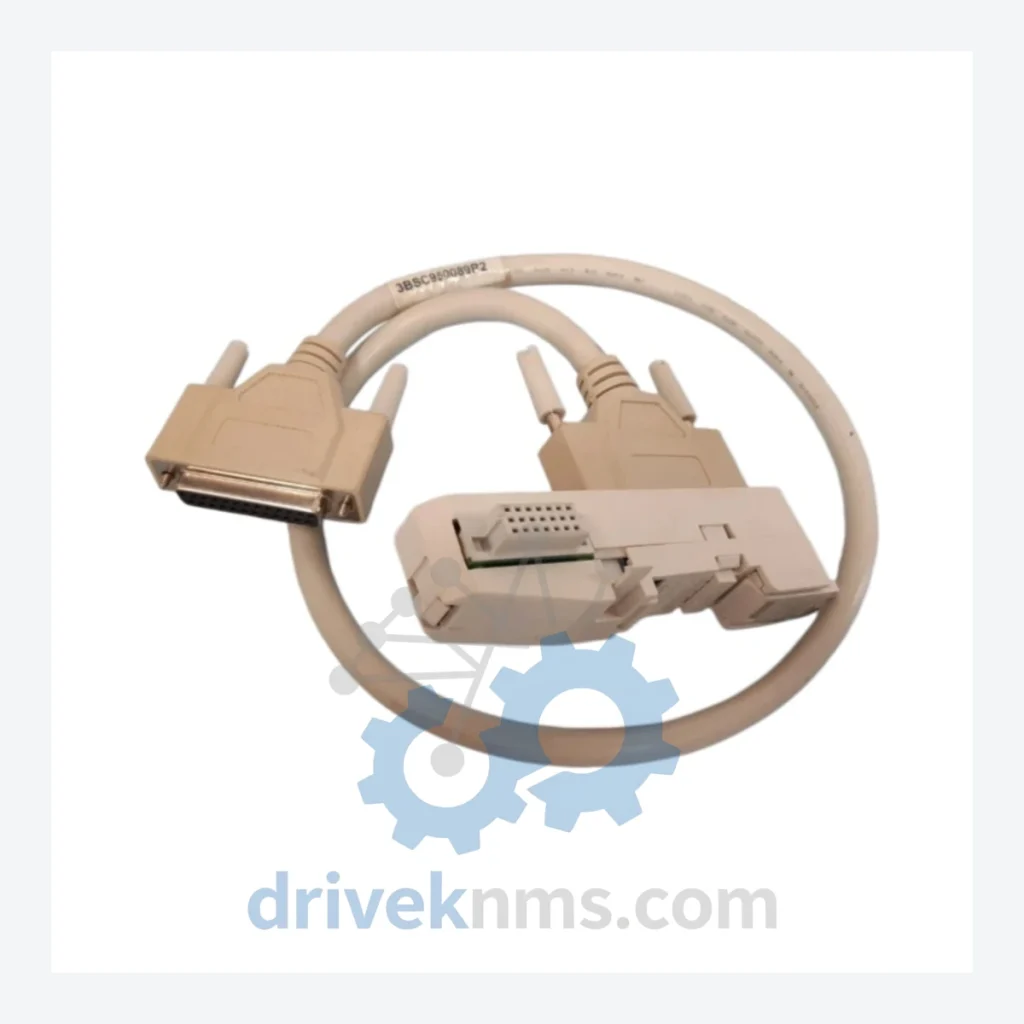
Model: TK801V006 3BSC950089R2
Product Overview
Commercial availability is handled through direct RFQ, model verification and export-oriented follow-up rather than public cart checkout.
Datasheet Preview
Use attached product manuals when available. If the manual is not public yet, request the full file directly through RFQ.
Commercial Path
Product pages on DRIVEKNMS are designed to verify model, brand and series first, then move the buyer into one clean quotation path.
Technical Dossier
The ABB S800 I/O system is a distributed input/output platform engineered for integration with the ABB AC800M Process Controller family, which forms the backbone of ABB's System 800xA Distributed Control System (DCS). Since its commercial introduction in the late 1990s, the S800 I/O series has accumulated a global installed base spanning petrochemical refineries, nuclear power auxiliary systems, offshore oil & gas platforms, pulp and paper mills, and large-scale water treatment facilities. Its modular backplane architecture, deterministic ModuleBus communication, and IEC 61508-compliant safety variants (S800 Safety I/O) have made it a reference standard in process automation engineering.
The S800 I/O system communicates with the AC800M controller via the ModuleBus — a proprietary, high-speed serial bus that supports both optical fiber (ModuleBus Optical) and copper cable (ModuleBus Electrical) topologies. Each I/O station consists of a Baseplate (TB820/TB840), a ModuleBus Modem (MB810/MB820), and individual I/O modules inserted into the baseplate slots. This architecture allows field replacement of individual modules without disrupting adjacent channels, a critical requirement in continuous-process industries where unplanned shutdowns carry significant economic penalties.
The S800 I/O platform has progressed through three identifiable architectural generations since its introduction under ABB's Advant OCS lineage:
Generation 1 (1997–2003): Initial release coincided with the AC800M controller launch. Modules in this generation used a 40-pin backplane connector and supported basic analog and digital I/O functions. Communication was exclusively via copper ModuleBus cables. Key identifiers include early revision suffixes (e.g., /1, /2) and the use of 3BSE-prefixed part numbers. Compatibility with current TB820V2 baseplates requires verification of firmware revision levels.
Generation 2 (2003–2012): Introduction of the TB840 baseplate with optical ModuleBus support, enabling I/O station distances up to 1 km from the controller. This generation also introduced HART-enabled analog modules (AI835, AO835) and the first redundant power supply configurations. The ModuleBus extension cable TK801V006 (3BSC950089R2) was standardized in this period as the primary copper interconnect for multi-baseplate I/O stations.
Generation 3 / Current (2012–present): Introduction of S800 L I/O (low-cost variant), expanded PROFIBUS DP adapter support (CI840A), and integration with System 800xA Extended Automation. Safety I/O modules (AI880A, DO880) certified to SIL 2/3 per IEC 61511 were added. ABB has formally announced end-of-manufacturing for several Generation 1 modules; however, end-of-support dates extend to 2030+ for most Generation 2 modules, making third-party spare parts sourcing a standard lifecycle management practice for asset owners.
The following catalog covers verified S800 I/O and ModuleBus accessory part numbers. SKUs are organized by functional category.
Analog Input Modules (AI)
AI810 (3BSE008516R1): 8-channel analog input, 4–20 mA / 0–10 V, single-ended, non-HART.
AI820 (3BSE008544R1): 8-channel analog input, differential, high-accuracy, ±10 V / 4–20 mA.
AI830 (3BSE008580R1): 8-channel thermocouple/RTD input, supports PT100, J, K, T type sensors.
AI835 (3BSE051306R1): 8-channel analog input with HART pass-through, 4–20 mA, field device diagnostics.
AI880A (3BSC690086R1): 8-channel safety analog input, SIL 2 certified, 4–20 mA, IEC 61508 compliant.
Analog Output Modules (AO)
AO810 (3BSE008522R1): 8-channel analog output, 4–20 mA, single-ended.
AO820 (3BSE008546R1): 8-channel analog output, ±10 V / 4–20 mA, high-resolution 16-bit DAC.
AO835 (3BSE060737R1): 8-channel analog output with HART, 4–20 mA, supports FDT/DTM device management.
Digital Input Modules (DI)
DI810 (3BSE008508R1): 32-channel digital input, 24 VDC, sink/source configurable.
DI820 (3BSE008536R1): 16-channel digital input, 120 VAC, optically isolated.
DI830 (3BSE013258R1): 32-channel digital input, 48 VDC, high-density field wiring.
Digital Output Modules (DO)
DO810 (3BSE008510R1): 32-channel digital output, 24 VDC, 0.5 A per channel, solid-state.
DO820 (3BSE008538R1): 16-channel digital output, 120 VAC relay, 2 A per channel.
DO880 (3BSC690087R1): 16-channel safety digital output, SIL 2/3 certified, 24 VDC.
Communication & ModuleBus Adapters
MB810 (3BSE025255R1): ModuleBus Modem, copper interface, connects TB820 baseplate to AC800M optical port via copper cable.
MB820 (3BSE025255R2): ModuleBus Modem, optical fiber interface, supports distances up to 1 km.
CI840A (3BSE041882R1): PROFIBUS DP adapter, connects S800 I/O station to third-party PROFIBUS masters.
Baseplates & Accessories
TB820V2 (3BSE013208R1): 8-slot I/O baseplate, standard copper ModuleBus, DIN-rail or panel mount.
TB840A (3BSE037760R1): 8-slot I/O baseplate with optical ModuleBus interface, redundant power input.
TK801V006 (3BSC950089R2): ModuleBus extension cable, 0.6 m, copper, connects TB820 baseplates in multi-station configurations. Shielded twisted-pair construction, rated for industrial EMC environments.
DriveKNMS maintains a dedicated inventory of S800 I/O spare parts, including modules with ABB end-of-manufacturing designations. Our sourcing protocol covers:
The S800 I/O system's backplane-based architecture introduces specific failure modes that require targeted test procedures beyond standard functional verification. DriveKNMS applies the following QC protocol to all S800 I/O units processed through our facility:
Backplane Connector Inspection: The 40-pin backplane connector on each module is inspected under 10× magnification for pin deformation, oxidation, and contamination. Connector resistance is measured at each pin pair; values exceeding 50 mΩ trigger rejection.
ModuleBus Communication Test: Each module is inserted into a live TB820V2 test baseplate connected to an AC800M controller running a dedicated diagnostic application. ModuleBus frame error rates, module identification response times, and channel-level I/O accuracy are logged against ABB factory acceptance test specifications.
Analog Channel Calibration: All AI and AO modules undergo 5-point calibration verification across the full input/output range (0%, 25%, 50%, 75%, 100% of span). Deviation from ABB published accuracy specifications (typically ±0.1% of span) results in recalibration or rejection.
HART Communication Verification (AI835 / AO835): HART-enabled modules are tested using a HART communicator to verify secondary variable pass-through and device descriptor (DD) response integrity.
Burn-In Cycle: All modules are subjected to a 48-hour powered burn-in at 40°C ambient to screen for early-life component failures prior to shipment.
Continue The Model Path
Move from this exact model into the matching system hub, brand archive, model-family archive or lifecycle sourcing route before sending a final RFQ list.
Related Paths
ABB DI811 3BSE008552R1 is listed for S800 I/O RFQ review. Confirm quantity, condition and destination before quotation.
ABB 3BSC690086R1 is listed for S800 I/O RFQ review. Confirm quantity, condition and destination before quotation.
ABB 3BSE0651010R2 is listed for S800 I/O RFQ review. Confirm quantity, condition and destination before quotation.