ABB SNAT-7120 Circuit Board – SNAZ7120J Series
ABB SNAT-7120 / SNAZ7120J Circuit Board: Sourcing Strategy & Asset Return Value in a Constrained Global Supply Chain The ABB…
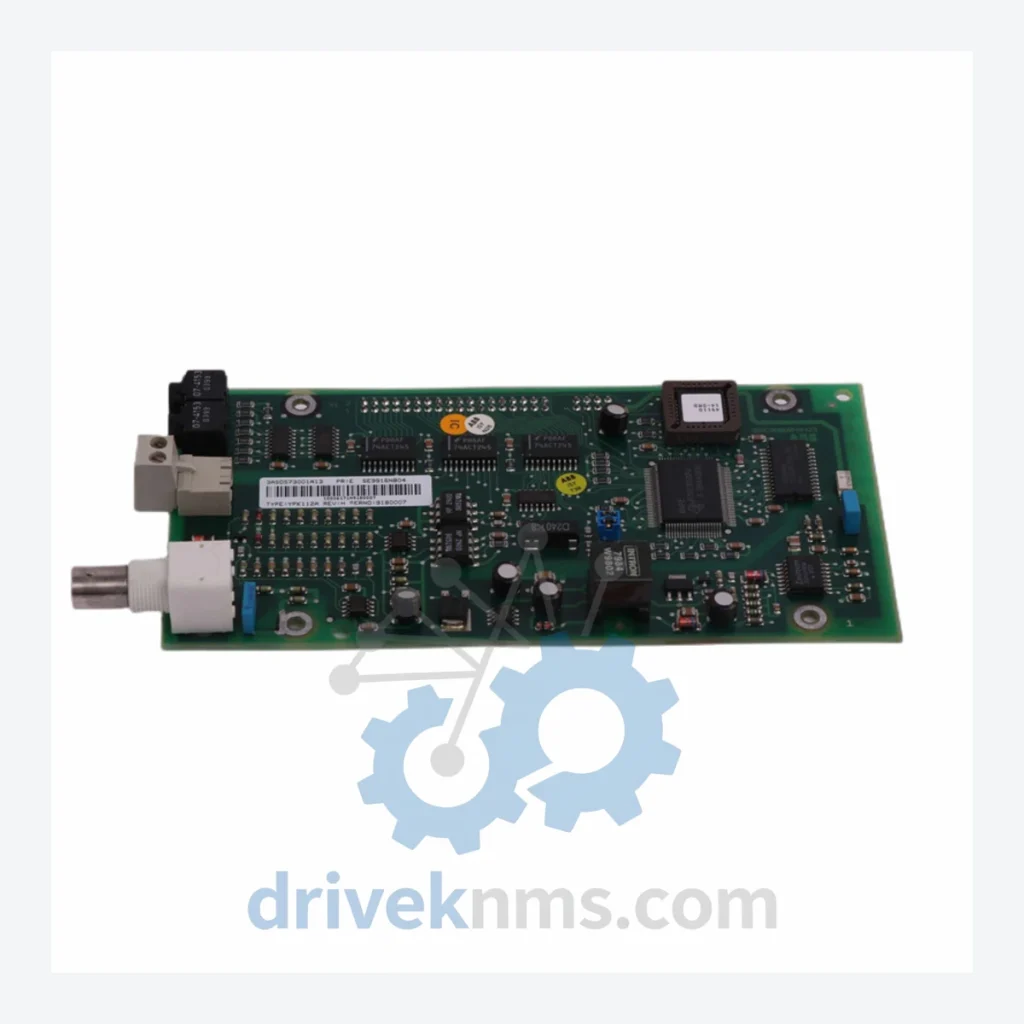
Model: YPK112A 3ASD5730011A13
Product Overview
Commercial availability is handled through direct RFQ, model verification and export-oriented follow-up rather than public cart checkout.
Datasheet Preview
Use attached product manuals when available. If the manual is not public yet, request the full file directly through RFQ.
Commercial Path
Product pages on DRIVEKNMS are designed to verify model, brand and series first, then move the buyer into one clean quotation path.
Technical Dossier
The ABB YPK112A series is a communication and interface module family developed within ABB's industrial automation portfolio, designed for integration into distributed control systems (DCS) and programmable logic controller (PLC) architectures. These modules are deployed across heavy industrial sectors including petrochemical refineries, nuclear power generation facilities, offshore oil & gas platforms, and large-scale chemical processing plants. The YPK112A form factor is engineered for backplane-mounted installation within ABB's modular rack systems, providing deterministic fieldbus communication, inter-module data exchange, and supervisory network connectivity. Installed base records indicate significant deployment in ABB Advant, MOD 300, and Symphony Plus migration environments where legacy communication infrastructure must be maintained alongside modern control layers.
The YPK112A series traces its lineage to ABB's mid-generation DCS communication layer, introduced as a standardized interface solution bridging proprietary ABB fieldbus protocols with open industrial networks. Early variants operated exclusively within ABB's internal backplane bus, supporting point-to-point serial communication at fixed baud rates. As industrial Ethernet and PROFIBUS became dominant in the 2000s, the YPK112A architecture was extended to support dual-port configurations and protocol conversion functions, enabling coexistence with third-party SCADA systems.
The 3ASD-prefix hardware revision (e.g., 3ASD5730011A13) denotes a specific manufacturing revision level within ABB's internal part numbering convention, indicating board-level changes to signal conditioning circuitry, firmware ROM version, or connector specification. Compatibility between revision levels must be verified against the rack controller firmware version; cross-revision substitution without firmware alignment is a documented source of communication faults in legacy installations. As of 2026, the YPK112A series is classified as a mature/end-of-life product line. ABB no longer manufactures new units; procurement is exclusively through authorized aftermarket distributors and certified refurbishers. Long-term maintenance support (LTMS) contracts covering this series are available through select ABB service partners.
The following SKUs represent verified models within the ABB YPK112A communication module family and associated interface hardware. Each entry reflects a distinct hardware configuration or revision level.
YPK112A 3ASD5730011A13: Backplane communication module, revision A13, serial fieldbus interface.
YPK112A 3ASD5730011A11: Backplane communication module, revision A11, earlier signal conditioning.
YPK112A 3ASD5730011A12: Backplane communication module, revision A12, intermediate firmware ROM.
YPK112A 3ASD5730011A14: Backplane communication module, revision A14, updated connector spec.
YPK112A 3ASD5730011A15: Backplane communication module, revision A15, enhanced EMC shielding.
YPK112A 3ASD5730011B01: B-series revision, modified power rail interface, DCS rack compatible.
YPK112A 3ASD5730011B02: B-series revision, dual-port serial output configuration.
YPK112A 3ASD5730011B03: B-series revision, extended temperature range variant (-20°C to +70°C).
YPK112A 3ASD5730011C01: C-series revision, PROFIBUS DP interface layer added.
YPK112A 3ASD5730011C02: C-series revision, industrial Ethernet port (10BASE-T) integrated.
YPK112A 3ASD5730011C03: C-series revision, redundant communication path support.
YPK112A 3ASD5730011D01: D-series revision, updated ASIC, reduced power consumption.
YPK112A 3ASD5730011D02: D-series revision, firmware v4.x compatible, Symphony Plus migration target.
YPK112A 3ASD5730011D03: D-series revision, conformal coating variant for high-humidity environments.
YPK112A 3ASD5730011E01: Final production revision, last manufactured batch, full DCS rack compatibility.
YPK112A 3ASD5730011E02: Final production revision, extended lifecycle support firmware pre-loaded.
DriveKNMS maintains a dedicated inventory program for end-of-life ABB communication modules including the full YPK112A revision range. As ABB has ceased new production of this series, procurement from the open market carries significant risk of counterfeit or non-functional units. DriveKNMS sources YPK112A modules exclusively from decommissioned plant equipment, verified surplus stock from certified ABB system integrators, and controlled refurbishment pipelines. Each unit is traceable to its original installation environment. For obsolete revision levels (A11, A12, B01, B02) where direct replacements are unavailable, DriveKNMS provides cross-reference analysis to identify functionally equivalent substitutes within the ABB Symphony Plus or AC500 ecosystems. Emergency same-day quotation is available for shutdown-critical procurement scenarios.
The YPK112A communication module presents specific test challenges due to its backplane bus interface and proprietary ABB communication protocol stack. DriveKNMS employs a multi-stage verification process for all YPK112A units entering inventory. Stage 1: Visual inspection of PCB, connector pins, and conformal coating integrity under 10x magnification. Stage 2: Power-on functional test using an ABB-compatible rack test fixture, verifying correct backplane enumeration and LED status indication. Stage 3: Communication loopback test confirming data integrity at rated baud rate across all active ports. Stage 4: Firmware version identification and logging against the unit's hardware revision level. Stage 5: 48-hour burn-in cycle under rated operating temperature to screen latent component failures. All units are shipped with a test report and 12-month warranty against functional defects.