
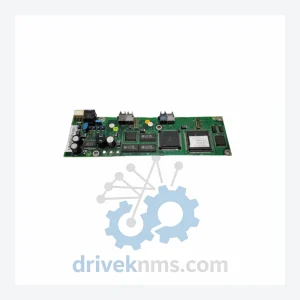
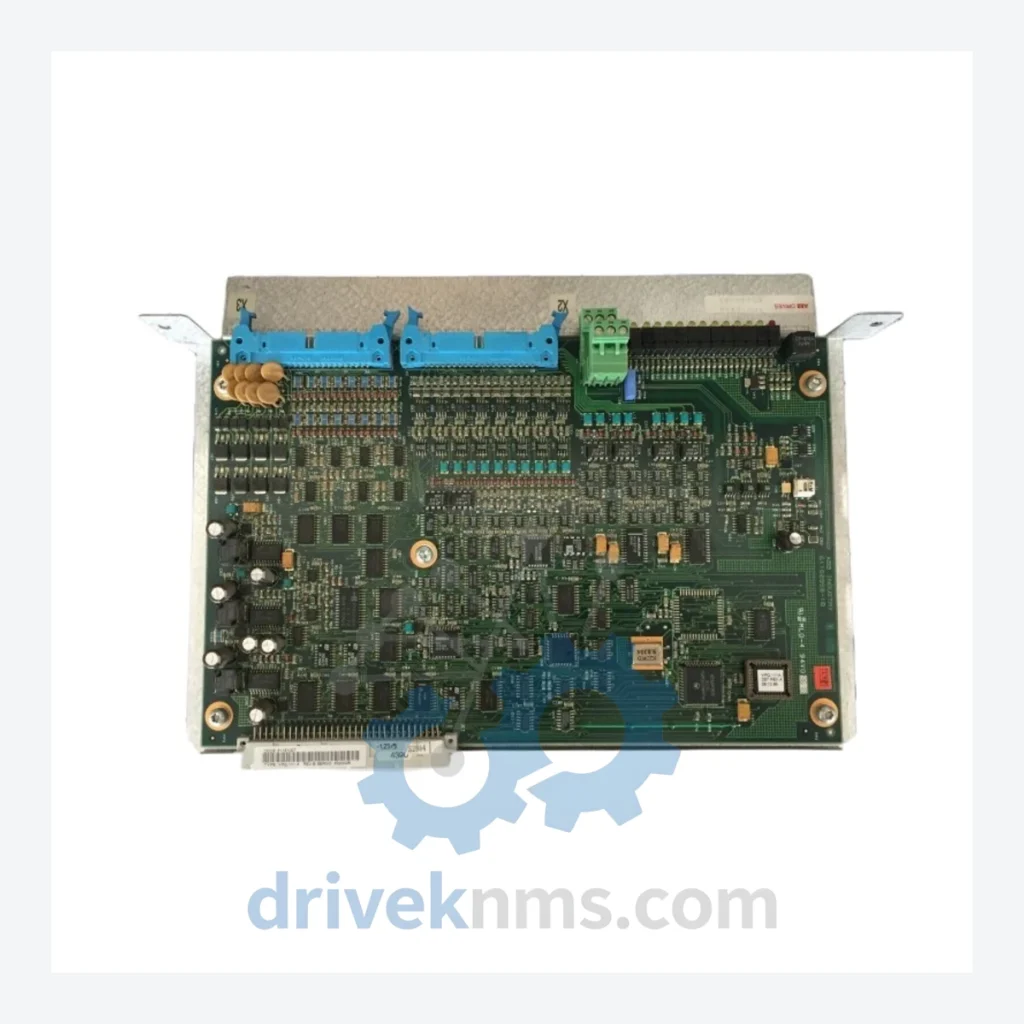
ABB NAMC-11C
ABB NAMC-11C is listed for Controller Cards RFQ review. Confirm quantity, condition and destination before quotation.
RFQ-ready industrial model
Model: YPQ111A 61161007
Product Overview
Commercial availability is handled through direct RFQ, model verification and export-oriented follow-up rather than public cart checkout.
Datasheet Preview
Use attached product manuals when available. If the manual is not public yet, request the full file directly through RFQ.
Commercial Path
Product pages on DRIVEKNMS are designed to verify model, brand and series first, then move the buyer into one clean quotation path.
Technical Dossier
RFQ support for obsolete parts: Send the model number, required quantity and destination so DriveKNMS can confirm sourcing options before quotation.
The ABB MasterPiece platform was deployed extensively across power generation, pulp and paper, chemical processing, and water treatment facilities throughout the 1990s and 2000s. Many of these installations remain operational today — not because operators are unaware of newer alternatives, but because the cost and risk of migration outweigh any operational benefit. The YPQ111A 61161007 Extension I/O Board sits at the communication backbone of these systems, managing the signal routing between field instruments and the central processing units. There is no cross-compatible substitute from current ABB product lines. When this board fails without a replacement on hand, the choice narrows to two options: source the original part, or commit to a platform overhaul. For facilities running continuous processes, the latter is rarely a viable short-term decision. Maintaining a verified spare of the YPQ111A is not a procurement preference — it is an operational risk management decision.
Factory management teams facing pressure to retire aging DCS platforms frequently underestimate the leverage that targeted spare parts inventory provides. The following approach has been applied successfully across legacy ABB, Honeywell, and Siemens installations to defer capital expenditure while maintaining system reliability:
1. Failure Mode Mapping: Identify the three to five modules within your MasterPiece installation that have no modern equivalent and carry the highest consequence of failure. The YPQ111A is typically among them. Prioritize sourcing verified spares for these modules before any failure event occurs.
2. Condition-Based Monitoring: Implement periodic signal integrity checks on I/O boards. Early detection of degraded performance — intermittent signal loss, increased scan cycle times — allows planned replacement rather than emergency shutdown response.
3. Controlled Spare Rotation: For boards sourced as refurbished units, establish a rotation schedule. A board held in climate-controlled storage and bench-tested annually retains functional reliability far longer than one left unmonitored in a parts cabinet.
4. Vendor Qualification: Not all obsolete parts in circulation carry equal reliability. Require documentation of inspection history, firmware version verification, and physical condition assessment before accepting any YPQ111A into your critical spare inventory.
5. Deferred Migration Planning: Use the operational window created by secured spare parts to plan migration on your schedule — not in response to a failure event. A two-to-three year runway allows proper engineering evaluation, budget allocation, and phased implementation without production disruption.
Every YPQ111A 61161007 unit processed by DriveKNMS passes through a structured five-step inspection protocol before it is offered for sale:
Step 1 – Visual and Physical Inspection: Full board examination for mechanical damage, pin corrosion, solder joint integrity, and connector wear. Units with compromised connectors or corroded I/O pins are rejected at this stage.
Step 2 – Electrolytic Capacitor Assessment: Aging electrolytic capacitors are the primary failure point in boards of this generation. Each capacitor is tested for capacitance value, ESR (equivalent series resistance), and leakage. Boards with out-of-specification capacitors are either recapped with equivalent-rated components or removed from inventory.
Step 3 – Firmware Version Verification: The firmware revision is confirmed and documented. Compatibility with the target MasterPiece system version is verified prior to shipment where system configuration data is provided by the customer.
Step 4 – Functional Bench Test: Where test fixtures are available, boards are powered and subjected to signal simulation to confirm I/O channel response.
Step 5 – Packaging and Documentation: Units are packaged in anti-static materials with desiccant. Inspection records accompany each shipment.
For facilities that have already invested in operator familiarity with the MasterPiece HMI environment, preserving the existing hardware also preserves that institutional knowledge. Retraining costs following a platform migration are consistently underestimated in capital project budgets.
Q: Can you verify compatibility with my specific MasterPiece configuration?
A: Yes. Provide your system version and existing board revision details, and our technical team will confirm compatibility before dispatch review.
Continue The Model Path
Move from this exact model into the matching system hub, brand archive, model-family archive or lifecycle sourcing route before sending a final RFQ list.
Related Paths
ABB NAMC-11C is listed for Controller Cards RFQ review. Confirm quantity, condition and destination before quotation.
ABB LL02 is listed for Controller Cards RFQ review. Confirm quantity, condition and destination before quotation.
ABB LZ02 is listed for H&B Contronic LZ Series RFQ review. Confirm quantity, condition and destination before quotation.