
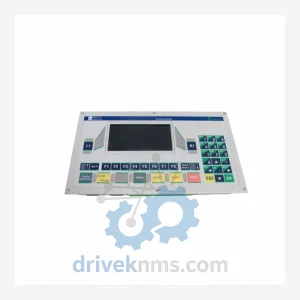
INDRAMAT BTV06.1HN-RS-FW Operator Panel – Obsolete BTV Series Spare Part
Indramat BTV06.1HN-RS-FW is listed for Indramat RFQ review. Confirm quantity, condition and destination before quotation.
RFQ-ready industrial model
Model: CLC-D02.2
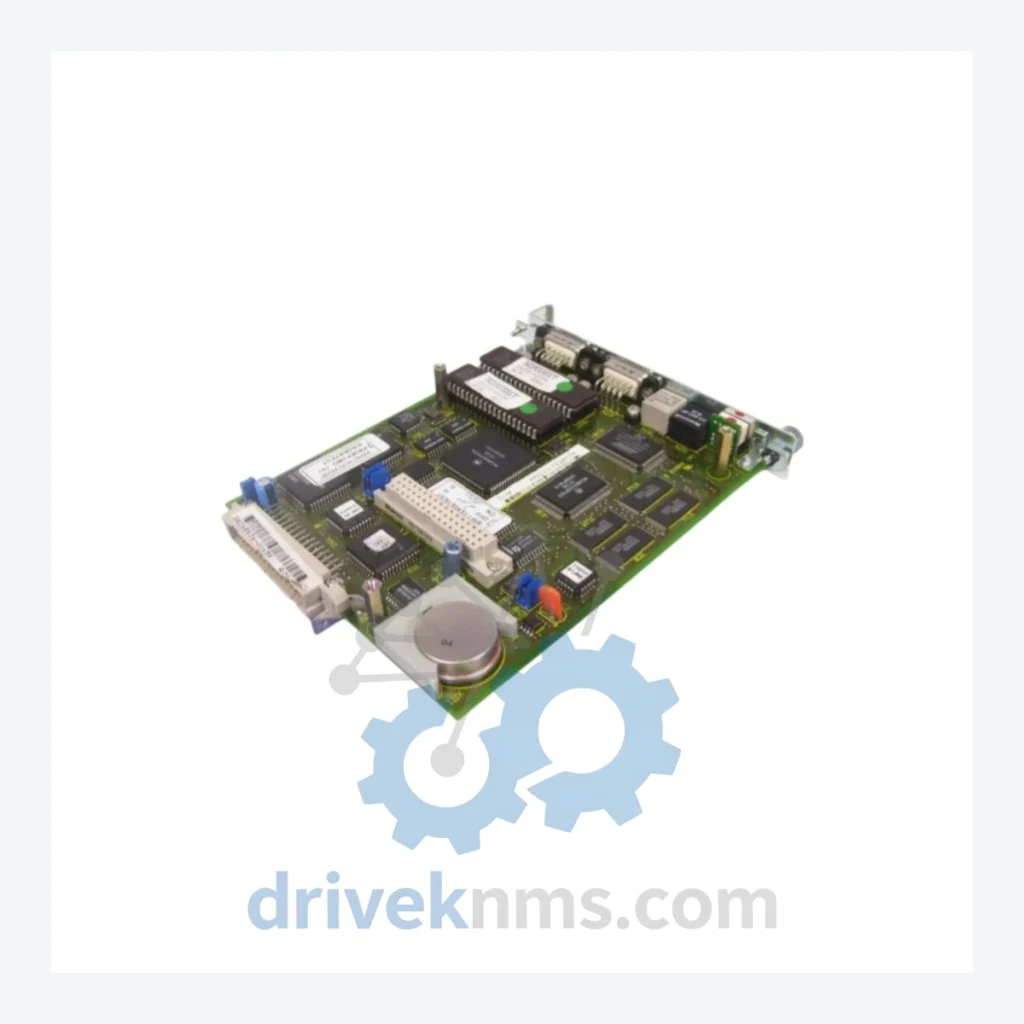
Product Overview
Commercial availability is handled through direct RFQ, model verification and export-oriented follow-up rather than public cart checkout.
Datasheet Preview
Use attached product manuals when available. If the manual is not public yet, request the full file directly through RFQ.
Commercial Path
Product pages on DRIVEKNMS are designed to verify model, brand and series first, then move the buyer into one clean quotation path.
Technical Dossier
RFQ support for obsolete parts: Send the model number, required quantity and destination so DriveKNMS can confirm sourcing options before quotation.
| Parameter | Detail |
|---|---|
| Manufacturer | Bosch Rexroth (Indramat) |
| Part Number | CLC-D02.2 |
| Product Family | CLC / CLM Positioning Controller Series |
| Function | Positioning Control Card (closed-loop axis positioning) |
| Country of Origin | Germany |
| OEM Status | Discontinued – No longer available through Bosch Rexroth channels |
| Compatible Systems | Bosch Rexroth Indramat CLM / CLC controller platforms |
| Typical Application | Multi-axis CNC, transfer lines, press automation, assembly machinery |
Note: Specific electrical parameters (voltage ratings, current specs) are confirmed individually upon request and verified against the unit's hardware revision label. No parameters are published here that have not been physically verified — accuracy in obsolete drive components is a safety matter.
The Bosch Rexroth Indramat CLC and CLM controller family was deployed extensively throughout the 1980s and 1990s in European and Asian automotive, press, and machine tool industries. These systems were built to a standard of mechanical and electrical robustness that many current-generation platforms do not match for heavy industrial duty cycles. The CLC-D02.2 card specifically handles the position loop computation — interpolating encoder feedback, executing the positioning profile, and communicating axis status to the supervisory controller.
There is no functional equivalent card available from current Bosch Rexroth product lines. The architecture of the CLM/CLC platform is proprietary; the card slot, bus protocol, and firmware interface are not replicated in any modern successor product. This means that for a facility operating this equipment, the only paths when a CLC-D02.2 fails are: (1) locate a verified spare from the secondary market, or (2) undertake a full drive system replacement. Path 2 is not a maintenance decision — it is a capital project.
Facilities that have extended the service life of their Indramat-based lines by 5 to 10 years through strategic spare parts procurement consistently report the same outcome: the cost of maintaining a critical spares inventory for legacy drives is a fraction — typically 3% to 8% — of the cost of a forced platform migration. The CLC-D02.2 is precisely the type of component that belongs in that inventory. It is a single-card failure mode that can halt production for weeks if no spare is on hand, and it is a straightforward swap when one is available.
DriveKNMS applies a 5-stage inspection protocol to all obsolete control cards before they are offered for sale. This process is not a visual check — it is a structured technical evaluation designed to identify the failure modes specific to cards of this age and design generation.
Stage 1 – Electrolytic Capacitor Assessment: Capacitors on cards of this era are the primary age-related failure point. Each capacitor is inspected for physical deformation, electrolyte leakage, and ESR deviation. Cards with capacitor degradation are either reconditioned with matched-specification replacements or removed from saleable inventory.
Stage 2 – Firmware Version Verification: The firmware revision on the card's EPROM is logged and cross-referenced against known compatible versions for the target CLM/CLC platform. Mismatched firmware versions are a common source of post-installation faults in legacy drive systems.
Stage 3 – Pin and Connector Inspection: All edge connectors and board-mounted connectors are examined under magnification for oxidation, pin deformation, and contact contamination. Corroded contacts are cleaned using appropriate contact restoration procedures.
Stage 4 – PCB Integrity Check: Board traces, solder joints, and component mounting are inspected for cold joints, micro-fractures, and any evidence of prior repair work. Prior repairs are disclosed.
The CLC-D02.2 is a direct hardware replacement for the original card position in the CLM/CLC controller chassis. Installation does not require reprogramming of the supervisory PLC, reconfiguration of the drive parameters stored in the controller, or any mechanical modification to the machine. The card seats into the existing slot, the controller recognizes it on power-up, and the axis resumes operation under the existing program.
This drop-in replacement characteristic is the core economic argument for sourcing a spare rather than migrating the platform. Engineering hours for a card swap are measured in hours. Engineering hours for a drive platform migration on a multi-axis machine are measured in weeks. The CLC-D02.2 spare eliminates the migration trigger entirely — the machine continues to run on its existing program, with its existing mechanical calibration, without any revalidation burden on the production team.
For facilities operating under ISO or automotive quality management systems, avoiding a drive platform change also avoids the revalidation and re-qualification process that a new drive system would require. This is a compliance cost that is rarely included in migration cost estimates, and it is not trivial.
Q: How do I know the card is genuine and not a counterfeit or substandard repair?
A: All cards are sourced from decommissioned OEM equipment or verified industrial surplus channels. The card's hardware revision, date codes, and component markings are inspected for authenticity. Any prior repair work identified during inspection is disclosed in the product condition report provided with the shipment.
Q: Can you source other Indramat CLC/CLM series components?
A: Yes. DriveKNMS specializes in the full Bosch Rexroth Indramat legacy product range. Contact us with your complete BOM for a consolidated sourcing assessment.
Continue The Model Path
Move from this exact model into the matching system hub, brand archive, model-family archive or lifecycle sourcing route before sending a final RFQ list.
Related Paths
Indramat BTV06.1HN-RS-FW is listed for Indramat RFQ review. Confirm quantity, condition and destination before quotation.
Indramat DKC10.3-012-3-MGP-01VRS is listed for Indramat RFQ review. Confirm quantity, condition and destination before quotation.
Indramat REFU RZB 01.2-UN is listed for Indramat RFQ review. Confirm quantity, condition and destination before quotation.