
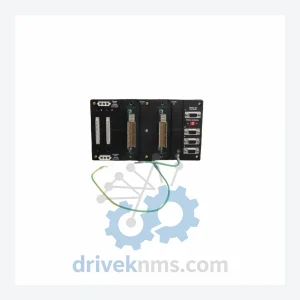
Foxboro RH924YF Mounted Modular Controller – Obsolete I/A Series Spare Part
Foxboro RH924YF Mounted Modular Controller – Obsolete I/A Series Spare Part When a Foxboro RH924YF fails on the plant floor,…
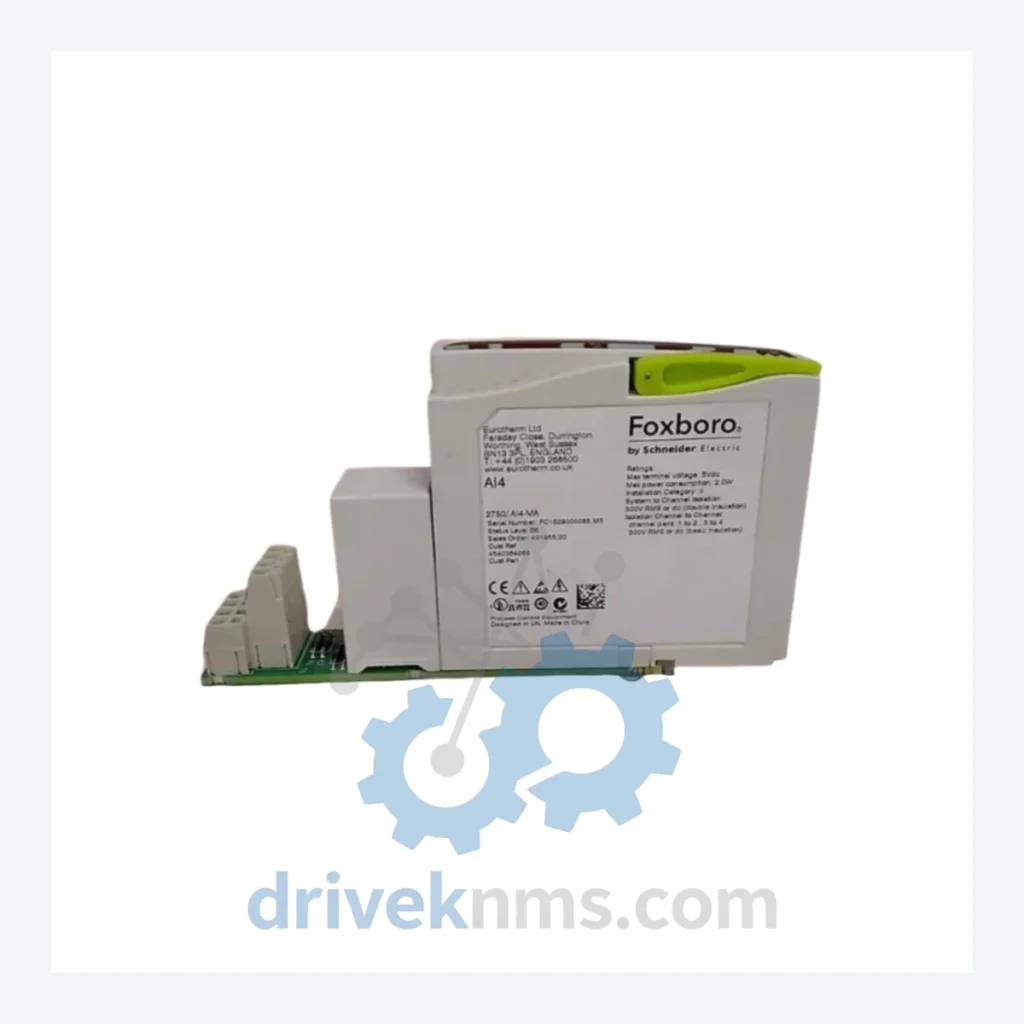
Model: 2750/DO4
Product Overview
Commercial availability is handled through direct RFQ, model verification and export-oriented follow-up rather than public cart checkout.
Datasheet Preview
Use attached product manuals when available. If the manual is not public yet, request the full file directly through RFQ.
Commercial Path
Product pages on DRIVEKNMS are designed to verify model, brand and series first, then move the buyer into one clean quotation path.
Technical Dossier
The Foxboro 2750 Series is a core I/O subsystem within the Foxboro I/A Series Distributed Control System (DCS), one of the most widely deployed process automation platforms in global heavy industry. Installations span petrochemical complexes, nuclear power generation facilities, crude oil refineries, LNG terminals, and continuous-process chemical plants across North America, Europe, the Middle East, and Asia-Pacific. The 2750 Series functions as the field interface layer of the I/A Series architecture, translating physical process signals — 4–20 mA analog loops, discrete 24 VDC/120 VAC contacts, thermocouple and RTD inputs — into digital data streams processed by the I/A Series fieldbus and control processors. Its modular, rack-based form factor allows granular I/O expansion without system-wide reconfiguration, a design characteristic that has sustained its operational relevance across multi-decade plant lifecycles.
The Foxboro I/A Series DCS was introduced in 1987 as one of the first commercially available open-architecture distributed control systems. The 2750 Series I/O subsystem was developed as the field termination and signal conditioning layer for this platform, designed to interface with the Nodebus and Fieldbus communication backplanes that form the I/A Series data highway.
Early 2750 Series modules operated exclusively with the original I/A Series Nodebus at 2 Mbit/s. As the platform evolved through the 1990s and 2000s, Foxboro introduced enhanced FBM (Field Bus Module) generations — FBM01 through FBM230+ — that progressively replaced discrete 2750-series termination assemblies in new installations. However, the 2750 Series remained the standard I/O hardware for brownfield sites and plants that had standardized on the original I/A Series rack infrastructure.
Compatibility considerations are critical for maintenance engineers: 2750 Series modules are designed for use with specific I/A Series processor nodes (CP10, CP30, CP40, CP60) and require matching termination assemblies (FBM termination units). Substitution with later FBM-generation modules requires verification of backplane compatibility, power budget, and software block mapping within the I/A Series configuration database (ICC/SysDef). Plants running Foxboro IACC or IA Series v8.x software must validate module firmware revisions before replacement.
The following SKUs represent verified, commonly stocked modules within the Foxboro 2750 Series. Modules are classified by functional type: AO (Analog Output), AI (Analog Input), DI (Digital Input), DO (Digital Output), TC (Thermocouple Input), RTD (Resistance Temperature Detector Input), PWR (Power Supply).
2750/DO4: 4-channel 24 VDC digital output module; solid-state switching for solenoid valves and discrete actuators.
2750/DO8: 8-channel 24 VDC digital output module; high-density discrete control for relay and valve arrays.
2750/DI4: 4-channel 24 VDC digital input module; contact closure and proximity switch signal acquisition.
2750/DI8: 8-channel 24 VDC digital input module; high-density discrete status monitoring.
2750/DI16: 16-channel 24 VDC digital input module; maximum-density binary status acquisition per rack slot.
2750/AI4: 4-channel analog input module; 4–20 mA HART-compatible process variable acquisition.
2750/AI8: 8-channel analog input module; dual-range 4–20 mA / 1–5 VDC signal conditioning.
2750/AO4: 4-channel analog output module; 4–20 mA current loop output for control valve positioners.
2750/AO8: 8-channel analog output module; high-density analog setpoint distribution.
2750/TC8: 8-channel thermocouple input module; supports J, K, T, E, R, S, B type thermocouples with CJC.
2750/RTD4: 4-channel RTD input module; 2-wire, 3-wire, and 4-wire Pt100/Pt1000 configurations.
2750/RTD8: 8-channel RTD input module; high-density temperature measurement for heat exchanger networks.
2750/PI4: 4-channel pulse input module; frequency and totalizer inputs for flow transmitters and turbine meters.
2750/DO4-120: 4-channel 120 VAC digital output module; line-voltage switching for motor starters and contactors.
2750/DI4-120: 4-channel 120 VAC digital input module; line-voltage discrete status acquisition.
2750/PWR: Rack power supply module; 24 VDC regulated output for 2750 Series I/O rack bus.
2750/COM: Communication adapter module; Nodebus interface for 2750 Series rack-to-CP node connectivity.
Foxboro formally transitioned new I/A Series installations to the FBM200-series I/O platform in the mid-2000s. The 2750 Series entered a maintenance-only lifecycle phase, with Schneider Electric (which acquired Foxboro's parent Invensys in 2014) progressively discontinuing new manufacture of individual 2750 Series modules. As of 2026, the majority of 2750 Series SKUs are classified as end-of-life (EOL) or last-time-buy (LTB) by the OEM.
DriveKNMS maintains a dedicated inventory of 2750 Series modules sourced from decommissioned plant assets, certified refurbishment programs, and verified surplus channels. Our procurement network covers North America, Western Europe, and Southeast Asia, enabling us to locate low-volume, high-specificity SKUs that are no longer available through standard distribution. For plants committed to long-term I/A Series operation without platform migration, DriveKNMS provides lifecycle extension support including module-level repair, functional testing, and documented traceability for regulatory compliance environments (nuclear, pharmaceutical, refining).
The 2750 Series presents specific quality verification challenges due to its backplane-dependent communication architecture and age-related component degradation patterns. DriveKNMS applies a structured test protocol to all 2750 Series modules prior to shipment:
Backplane Interface Verification: Each module is seated in a reference 2750 Series rack and powered through a calibrated 24 VDC supply. Nodebus communication handshake is confirmed using an I/A Series CP node in loopback test mode, verifying that the module registers correctly in the system configuration database.
Channel-Level Functional Test: All I/O channels are exercised across their full signal range. For analog modules, output accuracy is verified against a calibrated reference (±0.1% FS). For digital modules, switching response time and contact integrity are measured. Thermocouple and RTD modules are tested with a precision decade resistance box and thermocouple simulator.
Component-Level Inspection: Electrolytic capacitors, optocouplers, and backplane connector pins — the primary failure points in aged 2750 Series hardware — are inspected and replaced as required. Conformal coating integrity is assessed for modules sourced from high-humidity or corrosive-atmosphere installations.
Documentation: Each unit ships with a test report recording channel-by-channel results, firmware revision, and physical condition grade. Traceability documentation is available on request for regulated industries.
© 2026 DriveKNMS. All trademarks belong to their respective owners. Specifications are for reference only and subject to change without notice. Verify all parameters against official documentation before installation.
Related Paths
Foxboro RH924YF Mounted Modular Controller – Obsolete I/A Series Spare Part When a Foxboro RH924YF fails on the plant floor,…
Foxboro FCM10E P0914YM Communication Interface Module – Obsolete I/A Series Spare Part When a Foxboro FCM10E P0914YM fails in an…
Foxboro FBM Series: Comprehensive Module Range and Technical Overview The Foxboro FBM (Fieldbus Module) series is a core component of…