
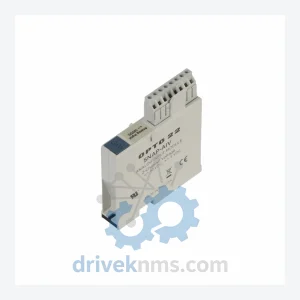
OPTO 22 SNAP-AIV Analog Input Module – Obsolete SNAP I/O Spare Part
OPTO 22 SNAP-AIV Analog Input Module – Obsolete SNAP I/O Spare Part When a SNAP-AIV module fails on an aging…
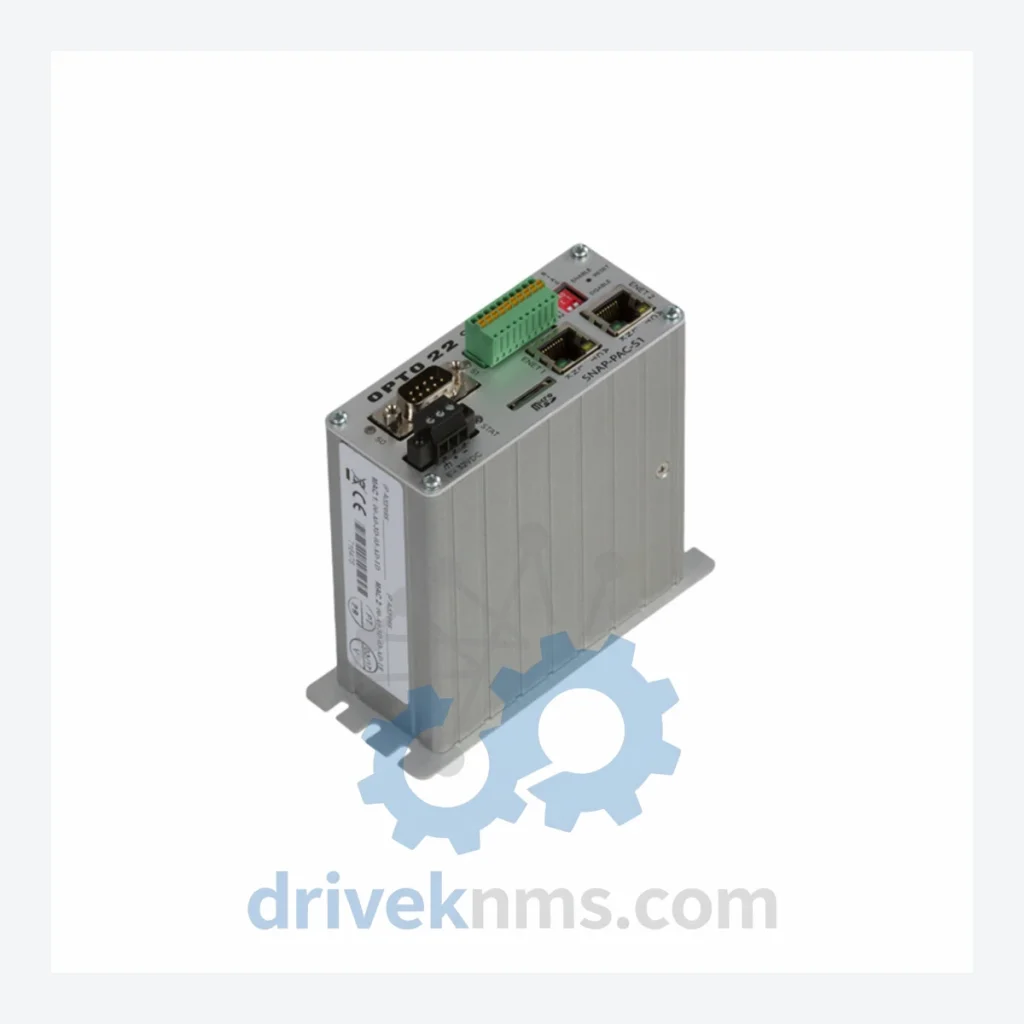
Model: SNAP-PAC-S1
Product Overview
Commercial availability is handled through direct RFQ, model verification and export-oriented follow-up rather than public cart checkout.
Datasheet Preview
Use attached product manuals when available. If the manual is not public yet, request the full file directly through RFQ.
Commercial Path
Product pages on DRIVEKNMS are designed to verify model, brand and series first, then move the buyer into one clean quotation path.
Technical Dossier
The OPTO 22 SNAP-PAC series is a family of programmable automation controllers (PACs) and associated I/O modules deployed across global heavy industry, including petrochemical refineries, nuclear power generation facilities, offshore platforms, water treatment plants, and continuous-process chemical manufacturing. The SNAP-PAC architecture integrates real-time control, deterministic I/O scanning, and Ethernet-based communications into a single unified platform, making it a reference standard for facilities requiring long-lifecycle automation infrastructure. Its modular backplane design allows field-replaceable I/O without controller downtime, a critical requirement in 24/7 process environments. SNAP-PAC controllers run OPTO 22's PAC Control and PAC Display software suites, and the series supports both standalone and distributed control topologies. Installed base density is highest in North American and European process industries, with significant deployment in Asia-Pacific LNG and refining sectors.
The SNAP-PAC series succeeded OPTO 22's earlier SNAP Ultimate and SNAP Ethernet I/O platforms, which used a separate controller-plus-brain architecture. The SNAP-PAC line consolidated control intelligence directly into the controller module, eliminating the need for a separate SNAP Ethernet Brain on standalone racks. Early SNAP-PAC controllers (circa 2004–2008) operated on 10/100 Ethernet and supported serial legacy protocols including Modbus RTU and DNP3. Mid-generation revisions introduced dual Ethernet ports for network redundancy and expanded memory capacity to support larger PAC Control strategy files. The SNAP-PAC-S1 and SNAP-PAC-S2 represent the standalone controller tier, while the SNAP-PAC-R1 and SNAP-PAC-R2 serve as rack-mounted variants designed for SNAP-PAC mounting racks. The SNAP-PAC-EB1 and SNAP-PAC-EB2 Ethernet brains extend I/O to remote racks without a local controller. As of 2020, OPTO 22 introduced the groov EPIC (GRV-EPIC-PR1) as the next-generation successor platform, offering Linux-based edge computing, Node-RED integration, and OPC UA native support. Facilities running SNAP-PAC hardware face a compatibility boundary: groov EPIC does not share the same backplane or I/O modules, requiring a full rack migration rather than a drop-in upgrade. This architectural discontinuity has extended the active service life of SNAP-PAC installations, as many operators defer migration due to capital cost and process risk.
Controllers — Standalone
Controllers — Rack-Mounted
Ethernet Brains (Remote I/O Expansion)
Analog Input Modules
Analog Output Modules
Digital Input Modules
Digital Output Modules
Communication & Serial Modules
Power Supplies
Mounting Racks
As OPTO 22 transitions its product roadmap toward the groov EPIC platform, a growing subset of SNAP-PAC modules has entered end-of-life or limited-availability status. Modules such as the SNAP-SCM-232, SNAP-AIRTD-8, and earlier SNAP-PAC-R1 controller revisions are no longer in active production, creating sourcing gaps for facilities operating under long-term maintenance contracts or regulatory frameworks that prohibit unvalidated hardware substitutions (e.g., SIL-rated loops, nuclear QA programs).
DriveKNMS maintains a dedicated inventory of tested SNAP-PAC surplus and refurbished modules sourced from decommissioned plant assets, authorized distributor overstock, and controlled secondary market channels. Each unit is catalogued by firmware revision and hardware revision code where applicable, enabling compatibility verification against the customer's existing rack configuration. For facilities requiring multi-year spare parts coverage, DriveKNMS can structure blanket purchase agreements with reserved inventory allocation, reducing exposure to spot-market price volatility for discontinued part numbers.
SNAP-PAC modules present specific test challenges due to their integrated backplane bus architecture and Ethernet-dependent I/O scanning. DriveKNMS applies the following verification protocol to all SNAP-PAC inventory prior to dispatch:
Related Paths
OPTO 22 SNAP-AIV Analog Input Module – Obsolete SNAP I/O Spare Part When a SNAP-AIV module fails on an aging…
OPTO 22 SNAP Series: Comprehensive Module Range and Technical Overview The OPTO 22 SNAP (Simple Networking and Automation Platform) series…
OPTO 22 SNAP B3000 BRAIN: Global Sourcing Strategy & Asset Return Value for Procurement Teams The OPTO 22 SNAP-B3000-BRAIN is…