
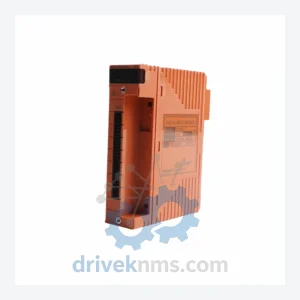
Yokogawa SAI143 Modules: SAI143-S63
Yokogawa SAI143-S63 is listed for SAI143 RFQ review. Confirm quantity, condition and destination before quotation.
RFQ-ready industrial model
Model: SAI143-S33/PRP S2
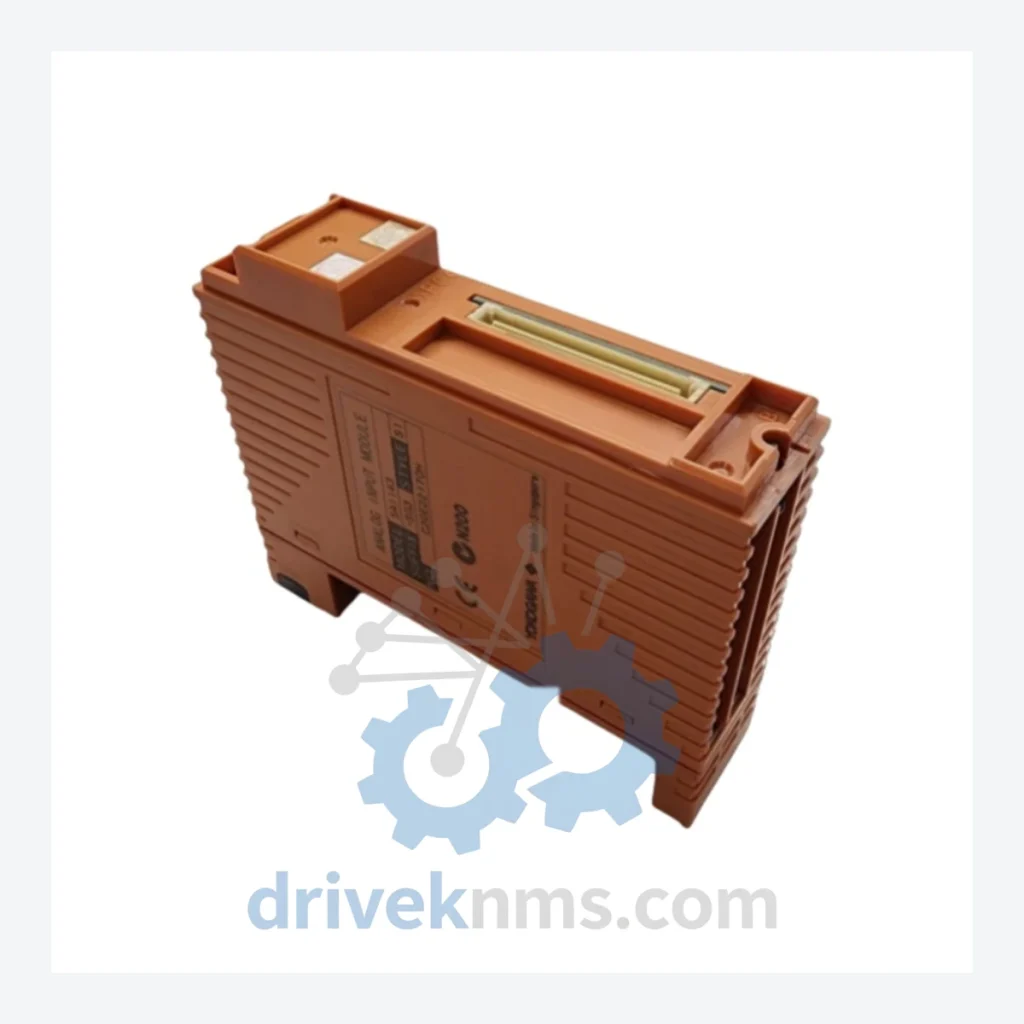
Product Overview
Commercial availability is handled through direct RFQ, model verification and export-oriented follow-up rather than public cart checkout.
Datasheet Preview
Use attached product manuals when available. If the manual is not public yet, request the full file directly through RFQ.
Commercial Path
Product pages on DRIVEKNMS are designed to verify model, brand and series first, then move the buyer into one clean quotation path.
Technical Dossier
The Yokogawa SAI143 series represents a family of signal conditioner input modules deployed extensively within Yokogawa's CENTUM CS/CS3000/VP distributed control systems and STARDOM network-based control platforms. These modules serve as the critical interface layer between field instrumentation — thermocouples, RTDs, millivolt sources, and resistance inputs — and the DCS controller backbone. Across global heavy industry installations including petrochemical complexes, LNG terminals, nuclear auxiliary systems, and continuous process refineries, SAI143-series modules remain embedded in control architectures that were engineered for 20–30 year operational lifespans. The installed base is substantial: facilities that commissioned CENTUM CS3000 systems in the early 2000s are now operating hardware that is no longer in active production, yet replacement or full system migration carries capital costs measured in the millions of dollars. For plant engineering and maintenance teams, the SAI143 series is not a legacy curiosity — it is a live operational dependency.
The SAI143 designation falls within Yokogawa's broader SAI (Signal Analog Input) module taxonomy, which evolved across successive generations of the CENTUM platform. Early CENTUM CS hardware used discrete wiring-intensive I/O racks with limited channel density. The transition to CENTUM CS3000 introduced the Field Control Station (FCS) architecture, where SAI143-series modules plugged into standardized node units (ANB10D, ANB11D) via a proprietary backplane bus. This bus architecture enforced strict module-slot compatibility: a given node unit accepts only modules with matching bus revision and firmware baseline. The SAI143 series addressed the need for multi-function analog input conditioning — supporting thermocouple cold-junction compensation, RTD linearization, and millivolt-range signal processing within a single module footprint. Later variants introduced HART pass-through capability and enhanced noise rejection for installations near high-voltage switchgear. With the release of CENTUM VP, Yokogawa shifted toward the KFCS and PFCS controller families with updated I/O module designations, effectively placing the SAI143 series in a mature/end-of-life product phase. Firmware updates ceased, and new project specifications no longer reference SAI143 modules. However, no direct plug-compatible replacement exists for installed systems without a full I/O node redesign — a project-level undertaking that most facilities defer indefinitely.
The following SKUs represent confirmed members of the SAI143 module family, organized by variant designation and input configuration. Each entry reflects a distinct hardware configuration; substitution between variants is not supported without engineering validation.
SAI143-H63 S3: 16-ch thermocouple/mV input, high-density, HART-compatible, S3 firmware revision
SAI143-S33/PRP S2: Thermocouple/mV input with PRP (Parallel Redundancy Protocol) network support, S2 revision
SAI143-H03 S3: 16-ch analog input module, standard range, non-HART, S3 firmware
SAI143-H13 S3: Thermocouple input, extended cold-junction compensation range, S3 revision
SAI143-H23 S3: RTD (Pt100/Pt1000) resistance input, 16-channel, S3 firmware
SAI143-H33 S3: Millivolt input, high-resolution ADC, 16-channel configuration
SAI143-H43 S3: Multi-range analog input, selectable thermocouple/mV/RTD per channel
SAI143-H53 S3: Thermocouple input with enhanced EMI shielding for high-noise environments
SAI143-H73 S3: 16-ch analog input, extended temperature operating range variant
SAI143-S03/PRP S2: Standard analog input with PRP redundant network interface, S2 revision
SAI143-S13/PRP S2: RTD input variant with PRP network redundancy support
SAI143-S23/PRP S2: Millivolt input, PRP-enabled, for redundant FCS node configurations
SAI143-S43/PRP S2: Multi-range input, PRP network, S2 firmware baseline
SAI143-S53/PRP S2: Thermocouple/mV, PRP, enhanced noise rejection, S2 revision
SAI143-S63/PRP S2: High-density thermocouple input, PRP redundancy, S2 firmware
SAI143-H83 S3: Resistance input, extended channel isolation, S3 firmware revision
Note: Suffix designations (S2, S3) indicate firmware/hardware revision levels and are not interchangeable. PRP variants are specific to redundant network node configurations and cannot be installed in non-redundant node units.
The SAI143 module's internal architecture presents specific failure modes that require targeted inspection protocols beyond standard power-on testing. DriveKNMS applies the following verification steps to all SAI143 units:
Continue The Model Path
Move from this exact model into the matching system hub, brand archive, model-family archive or lifecycle sourcing route before sending a final RFQ list.
Related Paths
Yokogawa SAI143-S63 is listed for SAI143 RFQ review. Confirm quantity, condition and destination before quotation.
ABB SAI143-H53 is listed for SAI143 RFQ review. Confirm quantity, condition and destination before quotation.
Yokogawa K9634DA-01 is listed for Servo Drives RFQ review. Confirm quantity, condition and destination before quotation.