
Foxboro I/A Series Modules P0971WV DNBT Dual Nodebus Module
Foxboro P0971WV DNBT is listed for Controller Cards RFQ review. Confirm quantity, condition and destination before quotation.
RFQ-ready industrial model
Model: FBM237 RH914XS
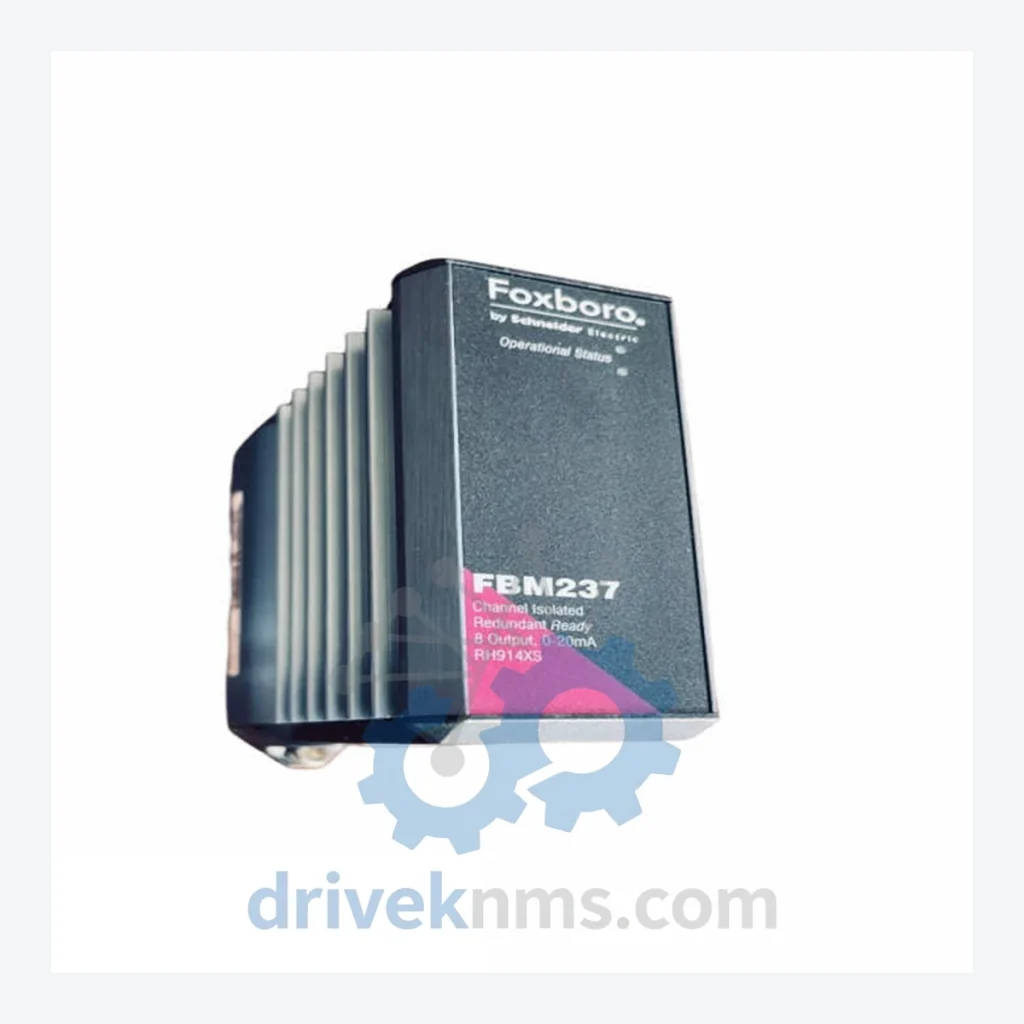
Product Overview
Commercial availability is handled through direct RFQ, model verification and export-oriented follow-up rather than public cart checkout.
Datasheet Preview
Use attached product manuals when available. If the manual is not public yet, request the full file directly through RFQ.
Commercial Path
Product pages on DRIVEKNMS are designed to verify model, brand and series first, then move the buyer into one clean quotation path.
Technical Dossier
The Foxboro FBM237 series is a field-proven family of interface modules deployed within the Foxboro I/A Series Distributed Control System (DCS). These modules serve as the primary I/O and communication bridge between field instrumentation and the I/A Series control processors. The FBM237 range is installed across critical global infrastructure including petrochemical complexes, nuclear power generation facilities, offshore oil platforms, and large-scale refinery operations. Its ruggedized backplane design and deterministic bus communication make it a standard specification in long-lifecycle plant environments where replacement availability and backward compatibility are non-negotiable engineering requirements.
The FBM237 module family was developed as part of Foxboro's I/A Series platform, which introduced a distributed, fiber-optic nodebus architecture in the mid-1980s. Early FBM generations (FBM01–FBM10) handled basic analog and discrete I/O. The FBM200-series represented a significant architectural advancement, introducing enhanced signal conditioning, higher channel density, and support for HART field device communication. The FBM237 specifically addresses serial and interface communication requirements, functioning as a multi-protocol serial interface module compatible with the I/A Series Fieldbus Modules (FBMs) mounted on the FBM Termination Assemblies (FTAs).
The following SKUs represent the documented FBM237 series variants and associated interface/termination assemblies. Each module is classified by primary function:
FBM237 RH914XS: Multi-protocol serial interface module, primary I/A Series DCS communication bridge.
FBM237 P0926GX: FBM237 base module variant with extended temperature tolerance for harsh environments.
FBM237 P0926GY: Redundant-capable FBM237 variant for high-availability control loop configurations.
FBM237 P0926GZ: FBM237 module with enhanced EMI shielding for electrically noisy plant environments.
FBM201: Analog input module, 8-channel, 4–20 mA HART-compatible, I/A Series FBM200 family.
FBM202: Analog output module, 8-channel, 4–20 mA with HART pass-through capability.
FBM203: Discrete input module, 32-channel, 24 VDC, high-density field termination.
FBM204: Discrete output module, 16-channel, relay contact output, DIN rail mountable FTA.
FBM207: Pulse input module for turbine flow meters and high-frequency discrete signals.
FBM211: Thermocouple/RTD input module, 16-channel, direct sensor connection without transmitter.
FBM214: Analog input module, 16-channel, single-ended, 4–20 mA, low-cost density solution.
FBM216: Analog input module with HART multiplexer support for asset management integration.
FBM220: Discrete input module, 64-channel, high-density, for large interlock and ESD systems.
FBM230: FOUNDATION Fieldbus H1 interface module, supports up to 16 FF devices per segment.
FBM232: PROFIBUS DP master interface module for third-party device integration.
FBM233: DeviceNet scanner module for Allen-Bradley and compatible device networks.
FBM235: Modbus RTU/ASCII master module for legacy serial device communication.
FBM241: High-speed counter and encoder interface module for motion and positioning feedback.
FTA-specific termination assemblies (P0916AA, P0916AB, P0916AC): Field Termination Assemblies matched to FBM237 carrier slots, providing screw-terminal field wiring interface.
FBM237 modules present specific test challenges due to their multi-protocol serial interface architecture and dependency on I/A Series nodebus communication timing. DriveKNMS applies the following verification procedures to all FBM237 units:
1. Visual and mechanical inspection: Backplane connector pin integrity, PCB surface inspection for corrosion, capacitor condition assessment, and faceplate LED indicator verification.
2. Power rail verification: Confirmation of correct +5 VDC, +15 VDC, and −15 VDC supply rail outputs under load conditions.
3. Nodebus communication test: Module is installed in a live I/A Series test rack and polled via the nodebus to confirm correct device address response and data throughput.
4. Serial port loopback test: Each serial channel is tested for correct TX/RX signal integrity at rated baud rates.
5. Burn-in cycle: Modules are operated continuously for a minimum of 24 hours at elevated ambient temperature to screen for latent component failures.
6. Final functional sign-off: Test data is logged and a serialized test certificate is issued with each unit shipped.
Continue The Model Path
Move from this exact model into the matching system hub, brand archive, model-family archive or lifecycle sourcing route before sending a final RFQ list.
Related Paths
Foxboro P0971WV DNBT is listed for Controller Cards RFQ review. Confirm quantity, condition and destination before quotation.
Foxboro FBM204 is listed for Controller Cards RFQ review. Confirm quantity, condition and destination before quotation.
Foxboro FBM211 is listed for Controller Cards RFQ review. Confirm quantity, condition and destination before quotation.