
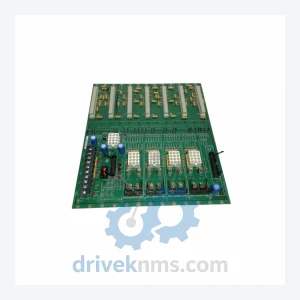
GE DS200VPBLG1ADD Voting Power Board – Obsolete Mark V Spare Part
General Electric DS200VPBLG1ADD is listed for Mark V RFQ review. Confirm quantity, condition and destination before quotation.
RFQ-ready industrial model
Model: DS215SLCCG1AZZ01A
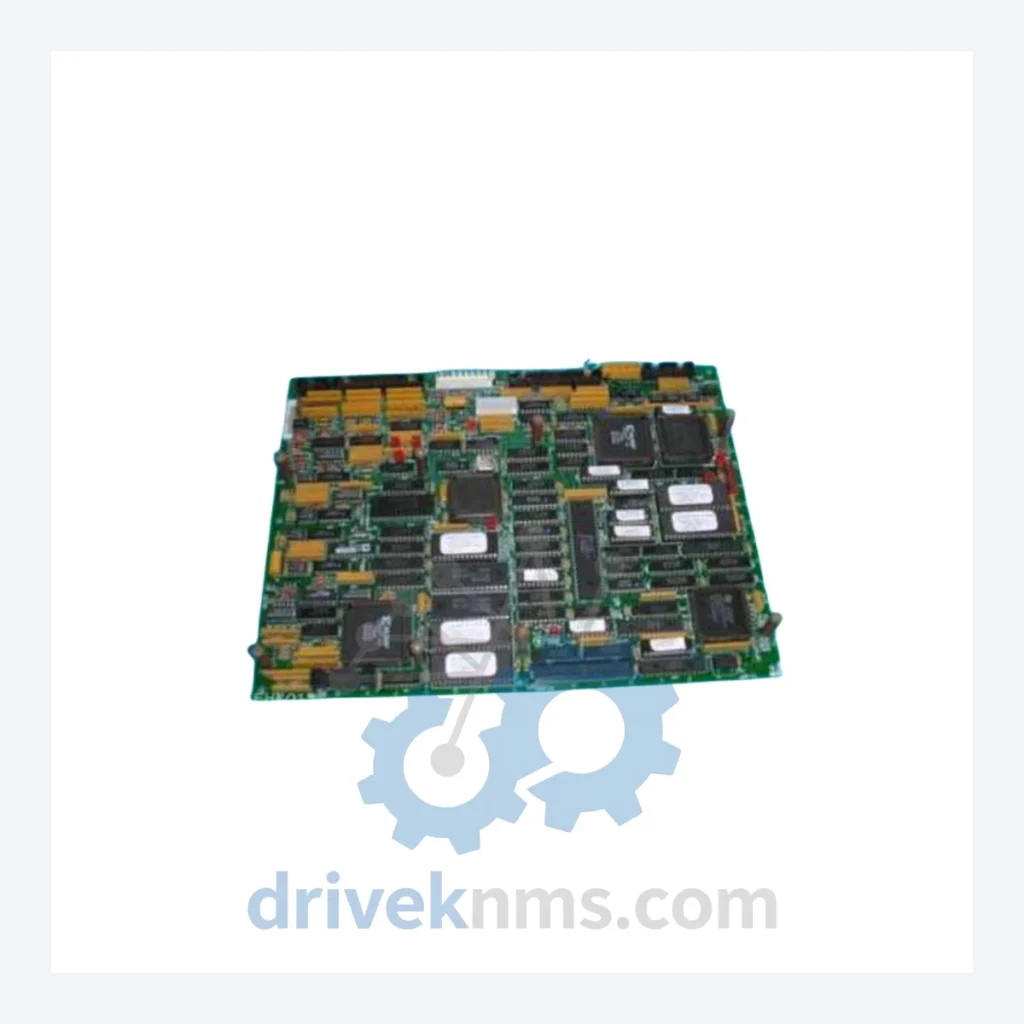
Product Overview
Commercial availability is handled through direct RFQ, model verification and export-oriented follow-up rather than public cart checkout.
Datasheet Preview
Use attached product manuals when available. If the manual is not public yet, request the full file directly through RFQ.
Commercial Path
Product pages on DRIVEKNMS are designed to verify model, brand and series first, then move the buyer into one clean quotation path.
Technical Dossier
RFQ support for obsolete parts: Send the model number, required quantity and destination so DriveKNMS can confirm sourcing options before quotation.
Note: Electrical parameters specific to individual board revisions are not published here to prevent misapplication. Contact our technical team to confirm compatibility with your exact Mark V panel configuration before ordering.
The GE Mark V Speedtronic platform controlled gas and steam turbines across power generation, oil & gas, and petrochemical facilities for decades. GE formally ended Mark V support, and the successor Mark VI and Mark VIe systems are not backward-compatible at the hardware level. This means every Mark V installation worldwide is now operating on a finite parts horizon.
The DS215SLCCG1AZZ01A sits within the core logic architecture of the Mark V panel. Its firmware layer governs sequencing, protection logic, and I/O communication between the core and the operator interface. A failure of this module does not produce a degraded operating mode — it produces a turbine trip and a control system that cannot be restarted until the module is replaced or the entire panel is replaced.
Facilities that have not pre-positioned at least one spare of this module are operating with a single point of failure that has no fast resolution path. OEM channels closed years ago. Broker market availability is inconsistent and often unverified. The cost of an unplanned outage — measured in lost generation revenue, emergency engineering fees, and expedited logistics — routinely exceeds the cost of a full spare parts inventory many times over.
DriveKNMS sources DS215SLCCG1AZZ01A units through verified industrial decommissioning channels and maintains traceability records on each unit. This is not a commodity transaction. It is asset protection for a system that was never designed to be replaced on short notice.
Plant managers facing pressure to retire aging Mark V installations have a financially defensible alternative: a structured spare parts strategy that defers the capital expenditure of a full control system upgrade while maintaining operational reliability. The following approach has been applied successfully across power and process industries:
1. Conduct a criticality-ranked parts audit. Not every Mark V module carries equal failure risk. Firmware and processor boards — including the DS215SLCCG1AZZ01A — are high-criticality items with no workaround on failure. Identify these first and secure minimum two-unit spares for each.
2. Establish a firmware version baseline. Mark V panels are sensitive to firmware version mismatches between boards. Before purchasing any spare module, document the firmware revision currently running in your panel. DriveKNMS can assist in matching spare units to your specific revision requirements.
3. Implement a scheduled inspection cycle. Electrolytic capacitors on boards of this age are the primary failure mechanism. A biennial inspection and targeted recapping program — performed by qualified personnel — can extend board service life significantly beyond what passive storage alone provides.
4. Maintain a cold-storage spare inventory. Boards stored in climate-controlled, ESD-safe conditions with periodic power-up testing retain functionality far longer than boards left in ambient industrial environments. A properly managed spare inventory is a depreciating asset, not a sunk cost.
5. Plan the upgrade on your schedule, not the market's. The goal of a spare parts strategy is not to avoid upgrading indefinitely — it is to execute the upgrade when engineering resources, budget cycles, and production windows align, rather than under emergency conditions. Each year of planned operation on a maintained Mark V system versus an emergency migration represents a measurable return on the cost of spare parts.
Every DS215SLCCG1AZZ01A unit processed by DriveKNMS passes a five-stage quality protocol before it is offered for sale. This process was developed specifically for discontinued industrial control hardware where field failure consequences are severe.
Stage 1 – Visual and Physical Inspection: Full board examination for mechanical damage, pin corrosion, solder joint integrity, and connector condition. Units with compromised connectors or corroded pins are rejected at this stage.
Stage 2 – Electrolytic Capacitor Assessment: Capacitors are tested for ESR (equivalent series resistance) and capacitance retention. Aged capacitors that fall outside specification are replaced with equivalent-rated components. This is the most common failure point in boards of this vintage.
Stage 3 – Firmware Version Verification: The firmware revision is read and documented. This record is provided to the customer to confirm compatibility with their installed panel configuration before dispatch review.
Stage 4 – Functional Bench Test: Where test fixtures are available for the specific module type, boards are powered and exercised through their primary logic functions. Results are logged.
Stage 5 – ESD-Safe Packaging and Documentation: Units are packaged in anti-static materials with full condition and test records included. Traceability documentation accompanies each shipment.
The DS215SLCCG1AZZ01A is a direct hardware replacement for the same part number within the Mark V panel. There is no firmware reprogramming required by the end user, no I/O remapping, and no changes to the operator interface configuration. The replacement procedure follows the standard GE Mark V maintenance documentation.
This drop-in replacement characteristic is the core economic argument for sourcing a spare rather than initiating a control system upgrade. An upgrade project requires engineering design, factory acceptance testing, site installation, commissioning, and operator retraining — a process measured in months and millions. A board replacement, performed by qualified maintenance personnel with a verified spare on hand, is measured in hours.
Facilities that have executed Mark V to Mark VI migrations report that the primary driver of cost overrun is schedule compression caused by unplanned failures during the transition period. Pre-positioning spares for critical modules like the DS215SLCCG1AZZ01A provides schedule protection during that window as well.
Should I buy one spare or multiple units?
For a module of this criticality in a discontinued platform, the standard recommendation is a minimum of two units: one active spare and one held in long-term storage. If your facility operates multiple Mark V panels, scale accordingly. The cost of a second unit is a fraction of the cost of a single unplanned outage.
Continue The Model Path
Move from this exact model into the matching system hub, brand archive, model-family archive or lifecycle sourcing route before sending a final RFQ list.
Related Paths
General Electric DS200VPBLG1ADD is listed for Mark V RFQ review. Confirm quantity, condition and destination before quotation.
General Electric DS200TCQBG1AGB is listed for Mark V RFQ review. Confirm quantity, condition and destination before quotation.
General Electric DS200TCTGG1AFF is listed for Mark V RFQ review. Confirm quantity, condition and destination before quotation.