
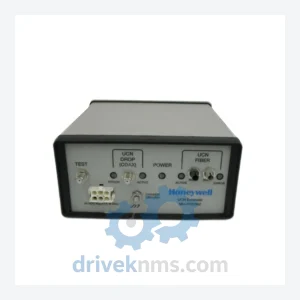
Honeywell TDC 3000 UCN Modules MU-FOED02 51197564-200 UCN Extender Fiber Optic Signal
Honeywell MU-FOED02 51197564-200 is listed for DCS Cards RFQ review. Confirm quantity, condition and destination before quotation.
RFQ-ready industrial model
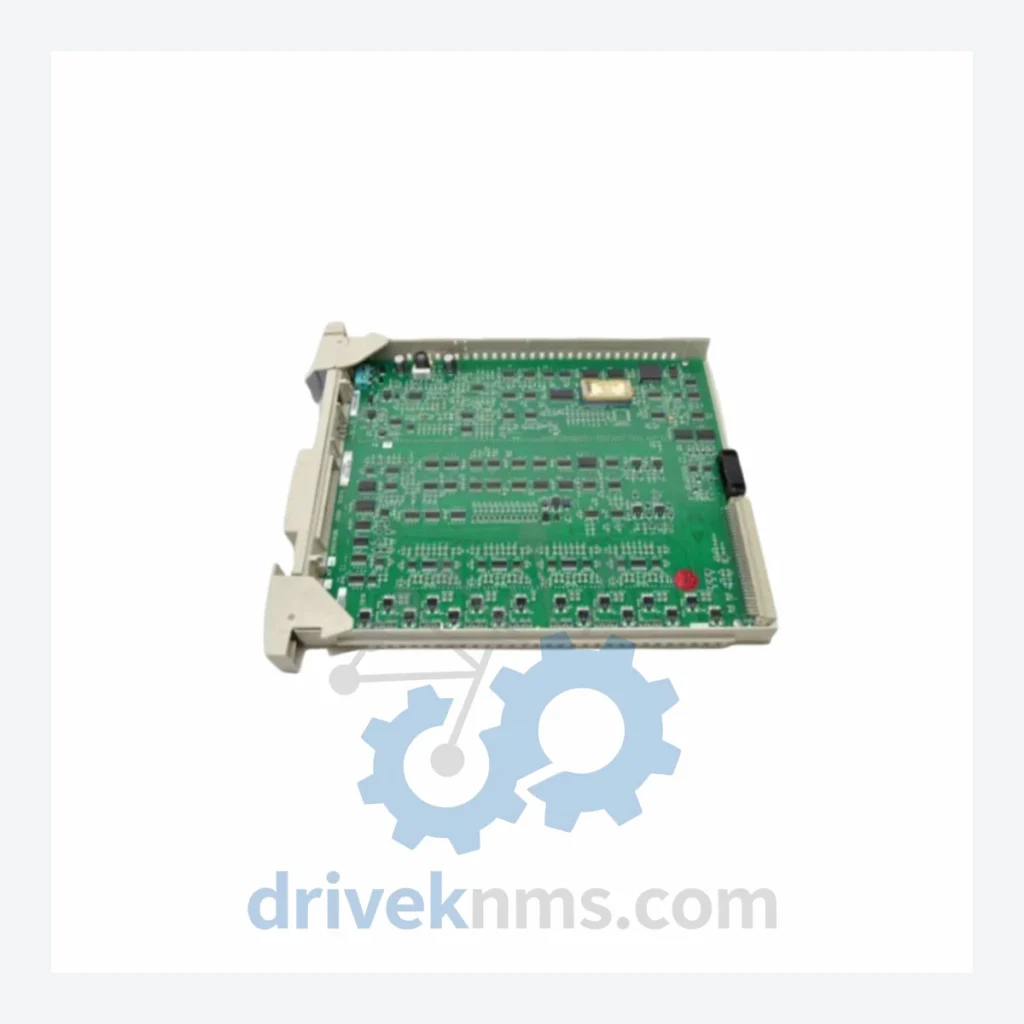
Model: 51403645-100 TP-ZSBHM2-100
Product Overview
Commercial availability is handled through direct RFQ, model verification and export-oriented follow-up rather than public cart checkout.
Datasheet Preview
Use attached product manuals when available. If the manual is not public yet, request the full file directly through RFQ.
Commercial Path
Product pages on DRIVEKNMS are designed to verify model, brand and series first, then move the buyer into one clean quotation path.
Technical Dossier
The 51403645-100 TP-ZSBHM2-100 is a Bus Highway Module within the TPS architecture, responsible for managing communication between the Universal Control Network (UCN) and the Local Control Network (LCN), providing the critical data highway interface that underpins real-time process data exchange across the plant control network.
The TDC 3000 platform was introduced by Honeywell in 1975 as the industry's first microprocessor-based DCS. Its architecture evolved through three distinct generations. The original TDC 2000 (1975–1983) established the data highway concept using a coaxial token-passing bus. TDC 3000 (1983–1995) introduced the Local Control Network (LCN) and Universal Control Network (UCN), separating operator interface traffic from field device communication and enabling larger, more complex plant topologies. The TPS (TotalPlant Solution) generation (1995–present) unified the LCN/UCN infrastructure with Ethernet-based Plant Information Network (PIN) connectivity, introduced the Application Module (AM), and expanded I/O capacity through the Series C and HPM (High-Performance Process Manager) modules.
Compatibility across generations is a persistent engineering challenge. LCN-based modules (e.g., NIM, AM, HM) are not directly interchangeable with UCN-based field devices (e.g., HPM, PM, APM) without the appropriate network interface hardware. Backplane revisions between TDC 3000 and TPS generations introduced pin-count and firmware dependencies that require careful cross-referencing before substitution. Facilities operating mixed-generation hardware must maintain accurate module revision records to avoid communication faults during replacement.
The following SKUs represent verified, commonly stocked modules within the Honeywell TPS/TDC 3000 platform. Modules are classified by functional category.
Bus & Highway Interface Modules
51403645-100 / TP-ZSBHM2-100: UCN-to-LCN Bus Highway Module, dual-port highway interface for TPS backplane communication.
51401642-100 / TP-LCNP4-100: LCN Personality Module, manages LCN node addressing and token-passing protocol arbitration.
51402573-100 / TP-LCNP4E-100: Enhanced LCN Personality Module, extended memory variant for high-node-count LCN segments.
51304453-100 / MC-TDOY22: Highway Traffic Director, manages data packet routing between LCN segments in multi-node configurations.
Process Manager / Controller Modules
51304362-100 / MC-PAOY22: High-Performance Process Manager (HPM) Analog Output Module, 8-channel, 4–20 mA, HART-capable.
51304362-150 / MC-PAOY22: HPM Analog Output Module, CE-marked variant for European installations.
51304453-150 / MC-TDOY22: HPM Digital Output Module, 32-channel, 24 VDC, sourcing type.
51309276-175 / MC-TAIH04: HPM Analog Input Module, 16-channel thermocouple/RTD, high-density I/O card.
51309276-225 / MC-TAIH04: HPM Analog Input Module, extended isolation variant, for high-noise process environments.
51401196-100 / TP-LCNP4-200: Application Module (AM) Processor Card, 32-bit RISC processor, runs advanced control and optimization strategies.
Digital I/O Modules
51304441-100 / MC-TDID12: HPM Digital Input Module, 32-channel, 24 VDC, dry contact and wet contact configurable.
51304441-150 / MC-TDID12: HPM Digital Input Module, 120 VAC input variant, for legacy field wiring compatibility.
51309218-175 / MC-TAOY22: HPM Analog Output Module, 8-channel, isolated, for split-range valve control applications.
51401584-100 / TP-LCNP4-300: History Module (HM) Processor Card, manages real-time and historical process data archiving on the LCN.
Power Supply Modules
51109684-100 / MC-PSIM11: HPM Power Supply Module, 24 VDC, 10 A, redundant-capable, for HPM cabinet power distribution.
51195056-100 / TP-ZPSM-100: TPS Backplane Power Supply Module, provides regulated DC rails to LCN node backplane slots.
51401491-100 / TP-ZPSU-100: Redundant Power Supply Unit for TPS LCN nodes, hot-swap capable, N+1 configuration support.
Communication & Network Interface Modules
51304453-200 / MC-TNNT22: UCN Network Interface Module (NIM), connects HPM field buses to the UCN highway segment.
51401584-200 / TP-LCNP4-400: Gateway Module for Ethernet/PIN integration, bridges LCN historian data to plant-level SCADA and MES systems.
For facilities operating under long-term service agreements or regulatory frameworks that prohibit platform migration (e.g., nuclear licensed facilities, safety-instrumented systems under IEC 61511), DriveKNMS provides lifecycle extension support including: module-level functional testing, firmware revision verification, long-term storage under controlled environmental conditions (temperature, humidity, ESD), and documented traceability records compatible with ISO 9001 and ASME NQA-1 quality programs. Minimum order quantities are not required for spare parts procurement; single-unit emergency orders are accepted with expedited processing.
TPS/TDC 3000 modules present specific test challenges due to their proprietary backplane bus protocols, token-passing LCN communication sequences, and multi-layer PCB construction with surface-mount and through-hole hybrid assemblies. DriveKNMS applies the following test procedures to all TPS/TDC 3000 modules prior to shipment:
Backplane Bus Simulation: Each module is seated in a live TPS/TDC 3000 test rack configured to replicate the target node type (LCN, UCN, or HPM). Bus communication is verified at the protocol level using Honeywell-compatible diagnostic software, confirming correct token acquisition, data packet transmission, and error-free highway participation.
Power Rail Verification: All DC supply rails (+5 V, ±12 V, +24 V as applicable) are measured under load conditions. Ripple and noise are verified against OEM specifications using calibrated oscilloscope equipment.
Functional I/O Test: For I/O modules, all channels are exercised through their full input/output range. Analog channels are verified for linearity, offset, and gain accuracy. Digital channels are verified for correct state switching, pull-up/pull-down behavior, and isolation resistance.
Thermal Burn-In: Modules are operated at elevated ambient temperature (typically 50°C) for a minimum of 24 hours to screen for infant-mortality component failures prior to shipment.
Revision and Firmware Audit: Hardware revision markings and firmware EPROMs are documented and cross-referenced against the target system's compatibility matrix to prevent revision mismatch failures in the field.
Continue The Model Path
Move from this exact model into the matching system hub, brand archive, model-family archive or lifecycle sourcing route before sending a final RFQ list.
Related Paths
Honeywell MU-FOED02 51197564-200 is listed for DCS Cards RFQ review. Confirm quantity, condition and destination before quotation.
Honeywell MC-TAMT03 51309223-175 is listed for DCS Cards RFQ review. Confirm quantity, condition and destination before quotation.
Honeywell TC-CCN013 is listed for DCS Cards RFQ review. Confirm quantity, condition and destination before quotation.