Technical Dossier
Product Details And Specifications
Honeywell FSC Series Technical Notes
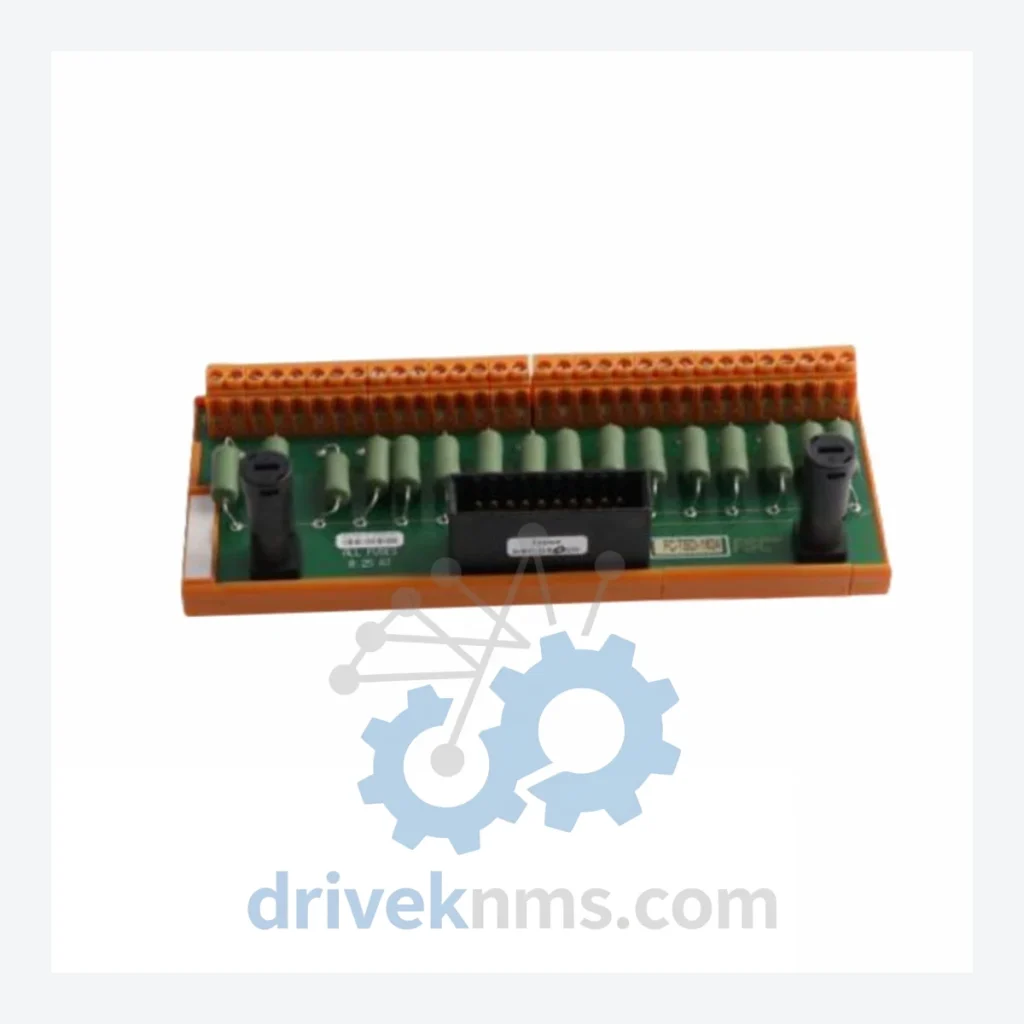
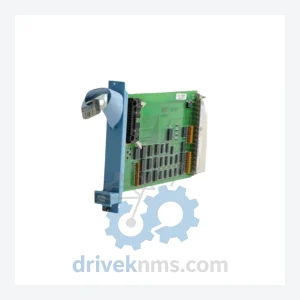
The Honeywell FSC (Fail-Safe Controller) series is a dedicated safety instrumented system (SIS) platform engineered to IEC 61508 SIL 3 standards. It has accumulated a substantial installed base across global heavy industry sectors including petrochemical complexes, offshore oil & gas platforms, nuclear power generation facilities, and large-scale refinery operations. The FSC architecture is characterized by its redundant CPU topology, deterministic scan cycle, and a modular I/O backplane that allows field-level replacement without full system shutdown in supported configurations. Its deployment in safety-critical loops — emergency shutdown (ESD), fire & gas (F&G), and burner management systems (BMS) — has made it a long-term fixture in plant asset registers worldwide. The FS-TSAI-1620m is a representative analog input module within this platform, providing 16-channel isolated analog signal acquisition for process variable monitoring in safety loops.
The Evolution of FSC Architecture
The Honeywell FSC platform was introduced in the early 1990s as a successor to relay-based safety logic systems, providing a programmable, certifiable alternative for SIL 2 and SIL 3 applications. The original FSC hardware used a proprietary backplane bus with dedicated module addressing, a design that prioritized determinism and fault isolation over flexibility. Early CPU modules such as the FS-SDO-0808 and first-generation processor cards operated on a single-processor architecture with hardware watchdog supervision.
Through the mid-1990s to early 2000s, Honeywell expanded the I/O catalog to include high-density analog modules (16-channel variants like the FS-TSAI-1620m), digital output modules with supervised relay outputs, and communication adapters for Modbus and proprietary DCS integration. The introduction of the FSC Workbench engineering environment standardized configuration and diagnostics across the platform.
By the 2010s, the FSC series entered a mature/end-of-life phase as Honeywell transitioned customers toward the Safety Manager (SM) and Safety Manager SC platforms. FSC hardware is no longer manufactured as new production; however, the installed base remains active at thousands of sites globally, creating sustained demand for certified spare parts, refurbished modules, and lifecycle extension services. Compatibility between FSC generations is constrained by backplane revision and firmware version — cross-generation substitution requires engineering validation.
FSC Series Full Catalog & Functionalities (SKU List)
Analog Input Modules
- FS-TSAI-1620m: 16-channel isolated analog input, 4–20 mA / 1–5 V, SIL 3 rated
- FS-TSAI-0808: 8-channel analog input module, dual-redundant signal path
- FS-TSAI-1600: 16-channel analog input, non-isolated, standard process range
- FS-TSAI-0800: 8-channel analog input, 0–20 mA range, field-configurable
Analog Output Modules
- FS-TSAO-0404: 4-channel analog output, 4–20 mA, loop-powered with diagnostics
- FS-TSAO-0808: 8-channel analog output module, SIL 2 certified
Digital Input Modules
- FS-SDI-1616: 16-channel digital input, 24 VDC, supervised line monitoring
- FS-SDI-0808: 8-channel digital input, configurable for NAMUR sensors
- FS-SDI-3232: 32-channel high-density digital input, backplane bus interface
Digital Output Modules
- FS-SDO-0808: 8-channel digital output, relay-supervised, SIL 3 capable
- FS-SDO-1616: 16-channel digital output, solid-state, 24 VDC load
- FS-SDO-0404R: 4-channel relay output, hardwired interlock support
CPU & Processor Modules
- FS-CPU-0100: Single-processor FSC CPU, 1 MB application memory
- FS-CPU-0200: Dual-redundant CPU module, hot-standby switchover
- FS-CPU-0300: Enhanced CPU with extended diagnostics and Modbus TCP support
Communication & Power Modules
- FS-COM-0100: Modbus RTU communication adapter, RS-485 interface
- FS-PSU-2410: 24 VDC / 10 A power supply module, redundancy-capable
- FS-PSU-2420: 24 VDC / 20 A high-capacity power supply for large I/O racks
Sourcing Hard-to-Find & Obsolete FSC Series Parts
For sites operating under a plant life extension (PLEX) program or undergoing safety system revalidation, DriveKNMS can provide documentation packages including test records and traceability data to support SIL maintenance audits.
Quality Control for the FSC Series Range
FSC modules present specific test challenges due to their backplane-dependent communication architecture and internal self-diagnostic routines. Standard bench testing without a compatible FSC rack and CPU is insufficient to validate module health. DriveKNMS employs a dedicated FSC test rack environment that replicates the operational backplane bus, allowing each module to complete its full power-on self-test (POST) and diagnostic cycle before being cleared for dispatch.
For analog input modules such as the FS-TSAI-1620m, the test procedure includes: channel-by-channel signal injection across the full 4–20 mA range, verification of isolation integrity between channels, confirmation of diagnostic fault reporting to the CPU, and inspection of connector pins and backplane edge contacts for wear or oxidation. Modules that fail any stage of this protocol are quarantined and not offered for sale.