
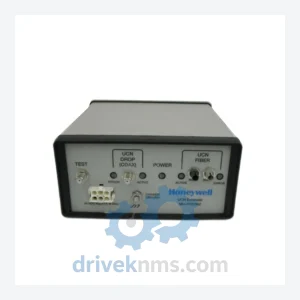
Honeywell TDC 3000 UCN Modules MU-FOED02 51197564-200 UCN Extender Fiber Optic Signal
Honeywell MU-FOED02 51197564-200 is listed for DCS Cards RFQ review. Confirm quantity, condition and destination before quotation.
RFQ-ready industrial model
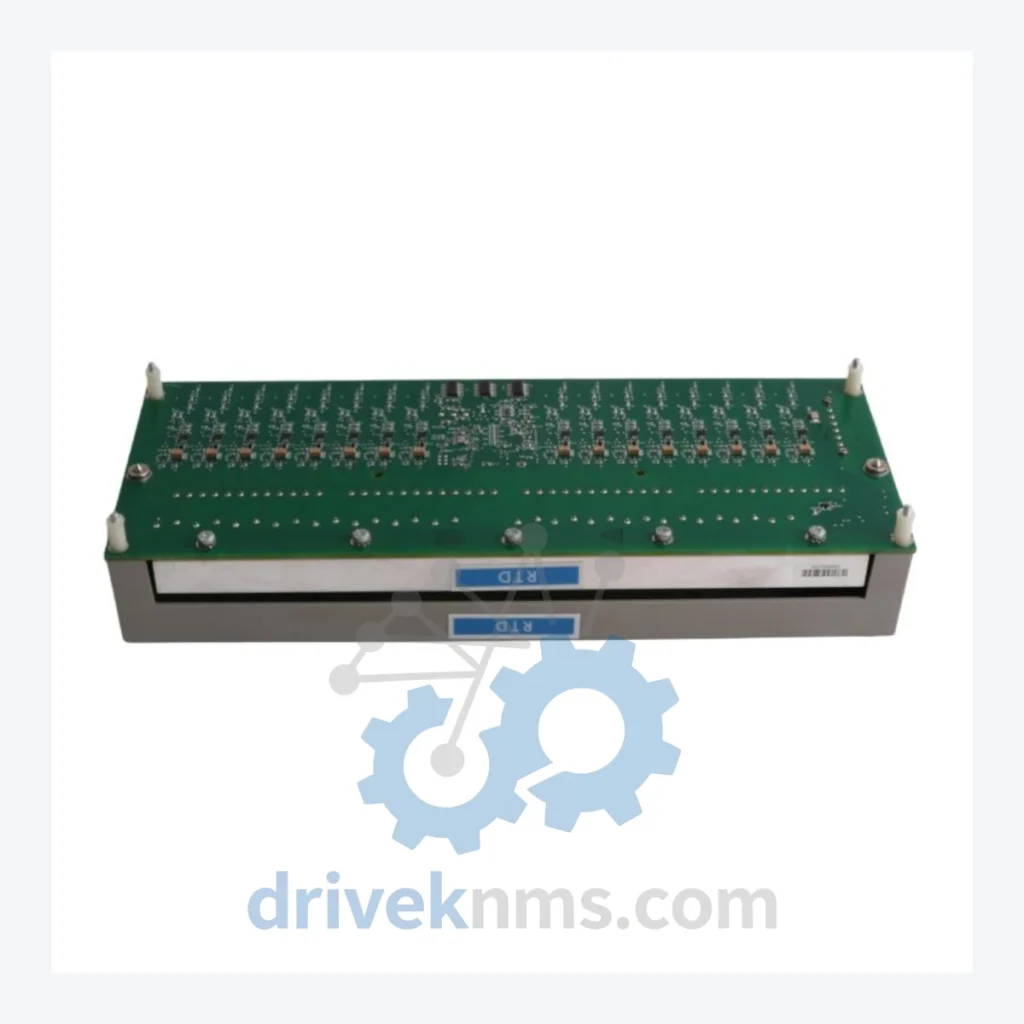
Model: MC-TAMR04 51305907-175
Product Overview
Commercial availability is handled through direct RFQ, model verification and export-oriented follow-up rather than public cart checkout.
Datasheet Preview
Use attached product manuals when available. If the manual is not public yet, request the full file directly through RFQ.
Commercial Path
Product pages on DRIVEKNMS are designed to verify model, brand and series first, then move the buyer into one clean quotation path.
Technical Dossier
The Honeywell TDC 3000 (Total Distributed Control) is one of the most widely deployed Distributed Control System (DCS) platforms in global heavy industry. Installed across petrochemical refineries, nuclear power facilities, offshore platforms, pulp and paper mills, and large-scale chemical processing plants, the TDC 3000 architecture established the foundational model for modern process automation. Its modular I/O structure — anchored by the Local Control Network (LCN) and the Universal Control Network (UCN) — enabled plant-wide integration at a scale that defined an era of industrial computing. The MC-TAMR04 (P/N: 51305907-175) is a Low Level Input Multiplexer module within this ecosystem, designed to condition and route low-amplitude analog signals (thermocouples, RTDs, millivolt sources) into the DCS data highway for high-resolution process monitoring.
Honeywell introduced the TDC 3000 platform in the mid-1980s as a successor to the TDC 2000, transitioning from a centralized controller model to a fully distributed peer-to-peer network topology. The LCN (Local Control Network) served as the backbone, operating at 5 Mbps coaxial token-passing, while the UCN (Universal Control Network) connected field I/O subsystems at 5 Mbps. Over successive hardware generations, Honeywell introduced the High-Performance Process Manager (HPM), the Advanced Process Manager (APM), and the Application Module (AM), each expanding computational throughput while maintaining backward compatibility with legacy I/O wiring infrastructure.
The MC- prefix designates modules belonging to the Multifunction Controller and associated I/O subsystem family. These modules interface directly with the Process Manager (PM) or High-Performance Process Manager (HPM) backplane. As the platform matured into the 1990s and 2000s, Honeywell introduced the Experion PKS (Process Knowledge System) as the migration path, offering a Windows-based operator interface while retaining compatibility with existing TDC 3000 field wiring and I/O modules. Many facilities continue to operate TDC 3000 hardware under Experion supervisory control, making legacy module availability a critical operational requirement.
Compatibility considerations span three primary generations: TDC 3000 (original LCN/UCN), TDC 3000x (enhanced with redundancy options), and Experion PKS (C200/C300 controllers with legacy I/O retention). Modules such as the MC-TAMR04 remain in active service across all three generations wherever original field wiring is preserved.
Analog Input Modules
Analog Output Modules
Digital Input Modules
Digital Output Modules
Controller & Communication Modules
Power Supply Modules
For obsolete modules with no direct Honeywell replacement, DriveKNMS provides cross-reference analysis to identify compatible third-party or Honeywell-successor alternatives, including Experion PKS C200/C300 I/O modules that accept legacy field wiring with appropriate marshalling modifications.
TDC 3000 I/O modules present specific test challenges due to their proprietary backplane communication protocol and the age-related degradation patterns common in hardware manufactured between 1985 and 2005. DriveKNMS applies a structured test protocol to all MC-series modules prior to shipment:
Continue The Model Path
Move from this exact model into the matching system hub, brand archive, model-family archive or lifecycle sourcing route before sending a final RFQ list.
Related Paths
Honeywell MU-FOED02 51197564-200 is listed for DCS Cards RFQ review. Confirm quantity, condition and destination before quotation.
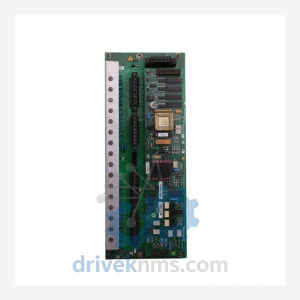
Honeywell MC-TAMT03 51309223-175 is listed for DCS Cards RFQ review. Confirm quantity, condition and destination before quotation.
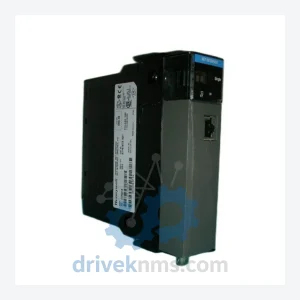
Honeywell TC-CCN013 is listed for DCS Cards RFQ review. Confirm quantity, condition and destination before quotation.