
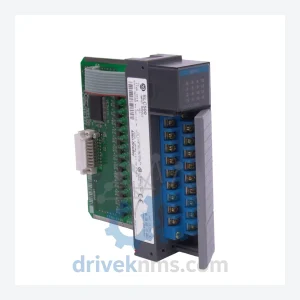
Allen-Bradley 1746-ITV16 DC Input Module – Obsolete SLC 500 Spare Part
Allen-Bradley 1746-ITV16 is listed for SLC 500 RFQ review. Confirm quantity, condition and destination before quotation.
RFQ-ready industrial model
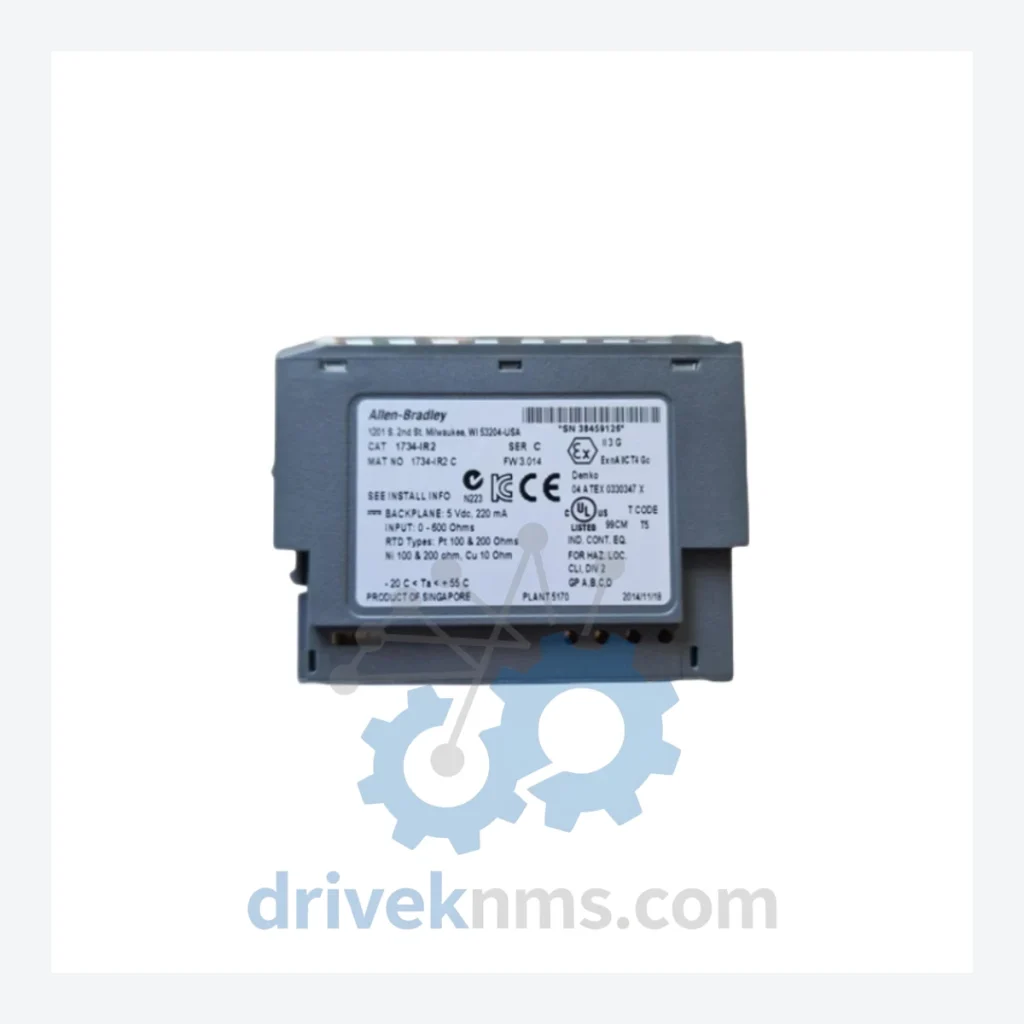
Model: 1734-IR2
Product Overview
Commercial availability is handled through direct RFQ, model verification and export-oriented follow-up rather than public cart checkout.
Datasheet Preview
Use attached product manuals when available. If the manual is not public yet, request the full file directly through RFQ.
Commercial Path
Product pages on DRIVEKNMS are designed to verify model, brand and series first, then move the buyer into one clean quotation path.
Technical Dossier
DriveKNMS holds verified physical inventory of the 1734-IR2. Each unit is processed through our in-house QA protocol before dispatch.
RFQ support for obsolete parts: Send the model number, required quantity and destination so DriveKNMS can confirm sourcing options before quotation.
| Parameter | Value |
|---|---|
| Manufacturer | Allen-Bradley (Rockwell Automation) |
| Part Number | 1734-IR2 |
| Series | POINT I/O |
| Module Type | RTD Input Module |
| Number of Channels | 2 |
| Input Type | RTD (Resistance Temperature Detector) |
| Country of Origin | United States |
| Product Status | Discontinued / Obsolete |
| Compatible Platforms | ControlLogix, CompactLogix, MicroLogix (with POINT I/O adapter) |
| Communication | Via POINT I/O adapter (e.g., 1734-AENT, 1734-ADNX) |
Note: Electrical parameters such as input impedance, excitation current, and resolution are not published here to avoid inaccuracy. Please contact us for the original Rockwell Automation datasheet.
The 1734 POINT I/O platform was deployed extensively across process industries — oil and gas, food and beverage, water treatment, and discrete manufacturing — throughout the 2000s and 2010s. Many of these installations remain in active production. The control logic, HMI screens, historian tags, and safety configurations built around this hardware represent years of engineering investment that cannot be replicated quickly or cheaply.
The practical strategy for facilities with 5–10 years of remaining planned service life on their existing control architecture is straightforward: maintain a vetted inventory of critical I/O modules. The cost of holding two or three spare 1734-IR2 units is measured in hundreds of dollars. The cost of a production stoppage while sourcing an obsolete part through the open market — with no guarantee of availability — is measured in days of lost output and emergency engineering fees.
Obsolete industrial modules present specific failure risks that differ from new production components. Our QA process for the 1734-IR2 addresses the failure modes most commonly observed in aged POINT I/O hardware:
Units that do not pass all five stages are not offered for sale.
Should I buy more than one unit?
For any module that is confirmed discontinued with no current-generation equivalent, holding a minimum of two spare units is standard practice in reliability-centered maintenance programs. If your facility has multiple POINT I/O racks using the 1734-IR2, calculate your critical spare quantity based on the number of installed units and your acceptable risk of a production stoppage.
Continue The Model Path
Move from this exact model into the matching system hub, brand archive, model-family archive or lifecycle sourcing route before sending a final RFQ list.
Related Paths
Allen-Bradley 1746-ITV16 is listed for SLC 500 RFQ review. Confirm quantity, condition and destination before quotation.
Allen-Bradley 1746-IO12 is listed for SLC 500 RFQ review. Confirm quantity, condition and destination before quotation.
Allen-Bradley 1746-OW4 is listed for SLC 500 RFQ review. Confirm quantity, condition and destination before quotation.