
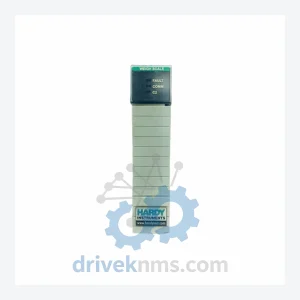
HARDY 1746-WS Weigh Scale Module – Obsolete SLC 500 Spare Part
Hardy Process Solutions 1746-WS is listed for SLC 500 RFQ review. Confirm quantity, condition and destination before quotation.
RFQ-ready industrial model
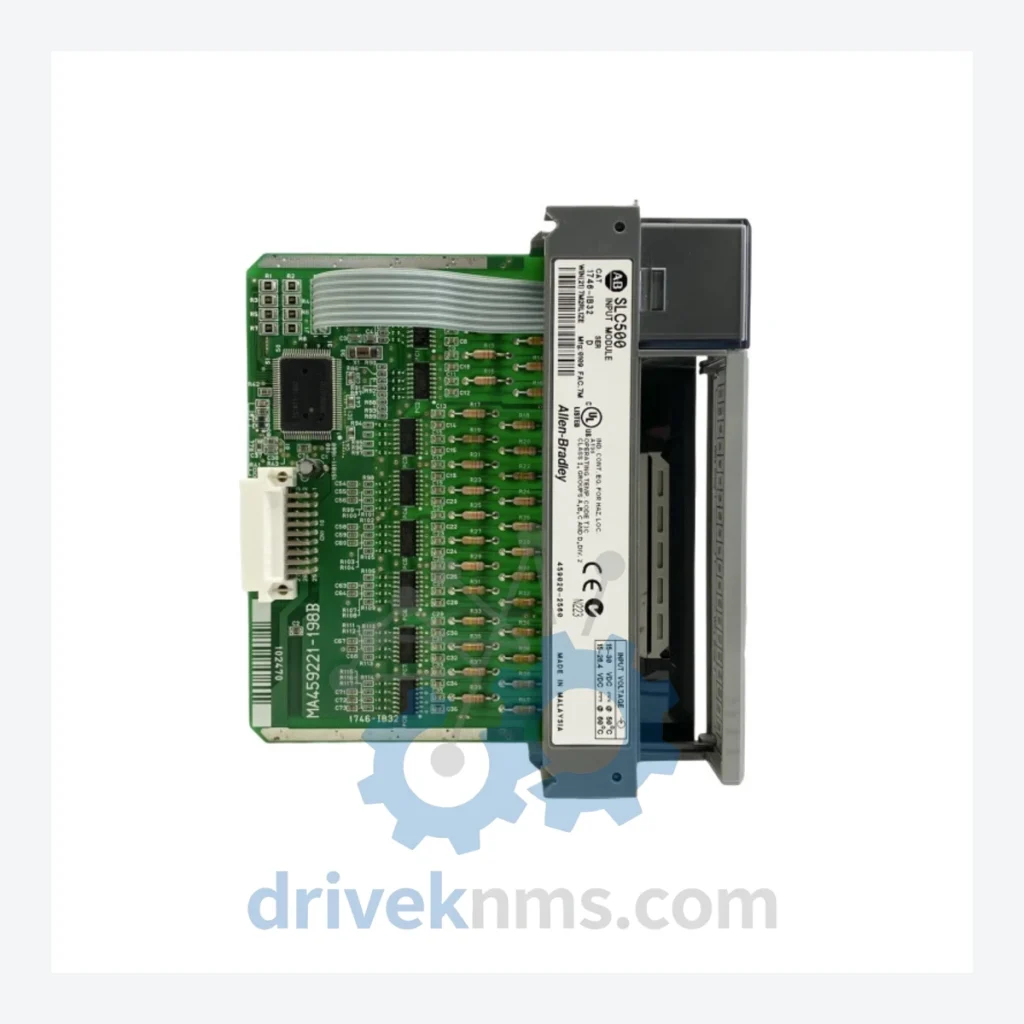
Model: 1746-IB32/D
Product Overview
Commercial availability is handled through direct RFQ, model verification and export-oriented follow-up rather than public cart checkout.
Datasheet Preview
Use attached product manuals when available. If the manual is not public yet, request the full file directly through RFQ.
Commercial Path
Product pages on DRIVEKNMS are designed to verify model, brand and series first, then move the buyer into one clean quotation path.
Technical Dossier
The Allen-Bradley SLC 500 platform, built on the 1746 backplane architecture, is one of the most widely deployed small-to-mid-range programmable logic controller systems in global heavy industry. Installed across petrochemical refineries, nuclear auxiliary systems, pulp and paper mills, automotive assembly lines, and water treatment facilities, the SLC 500 family has maintained a continuous field presence since its introduction in the late 1980s. Its modular I/O chassis design, deterministic scan-cycle execution, and broad third-party compatibility established it as a reference-class controller for process automation engineers throughout the 1990s and 2000s. Despite Rockwell Automation's end-of-life designation for the SLC 500 line, the installed base remains substantial, and demand for verified spare modules — particularly digital I/O, analog, and communication adapters — continues across maintenance, retrofit, and lifecycle extension programs.
The SLC 500 architecture was introduced by Allen-Bradley (subsequently acquired by Rockwell Automation) as a successor to the SLC 100 and SLC 150 fixed-format controllers. The 1746 backplane standard defined a modular chassis system available in 4-, 7-, 10-, and 13-slot configurations, accepting a fixed-slot processor in position 0 and I/O or specialty modules in the remaining slots.
Early processors — the SLC 5/01 (1747-L511) and SLC 5/02 (1747-L524) — used DH-485 as the primary network interface. The SLC 5/03 (1747-L531) introduced RS-232 DF1 and DH-485 dual-port communication. The SLC 5/04 (1747-L541) added DH+ network capability, enabling integration into larger Allen-Bradley DH+ networks alongside PLC-5 systems. The SLC 5/05 (1747-L551/L552/L553) introduced native Ethernet/IP, marking the platform's transition into modern TCP/IP plant networks.
I/O modules evolved in parallel: early 1746-IB8 and 1746-OB8 8-point modules gave way to higher-density 16- and 32-point variants (1746-IB16, 1746-IB32, 1746-OB16, 1746-OB32) to reduce chassis slot consumption. Analog modules (1746-NI4, 1746-NO4I, 1746-NI8) were introduced to support process variable monitoring without external signal conditioners. Specialty modules including the 1746-HSCE (high-speed counter), 1746-QS (stepper), and 1746-BAS (BASIC module) extended the platform into motion and custom logic applications.
Rockwell Automation announced the SLC 500 product line as end-of-life (EOL), with last-time-buy periods now closed for most catalog numbers. Migration paths recommended by Rockwell include the MicroLogix 1400, CompactLogix L1/L2/L3, and ControlLogix platforms. However, the cost and complexity of full system migration — including I/O rewiring, program conversion, and HMI reconfiguration — means that a significant portion of the installed base continues to operate on SLC 500 hardware, supported by the secondary market for verified spare modules.
Digital Input Modules (DI)
Digital Output Modules (DO)
Analog Modules (AI/AO)
Specialty & Communication Modules
All sourced units are subject to provenance verification: modules are cross-referenced against known production date codes, firmware revision labels, and physical inspection criteria to exclude counterfeit or non-genuine product. For customers operating SLC 500 systems in regulated environments (pharmaceutical, nuclear auxiliary, water treatment), DriveKNMS can provide batch traceability documentation and test records upon request.
For obsolete modules with no direct replacement in the 1746 catalog, DriveKNMS provides application-level consultation to identify compatible substitute modules or to assess the feasibility of slot-for-slot replacement with third-party I/O solutions that maintain 1746 backplane compatibility.
The 1746 backplane uses a proprietary parallel bus architecture for data transfer between the processor and I/O modules. Quality control procedures for SLC 500 modules at DriveKNMS are structured around this bus architecture and the specific failure modes common to the platform.
Each digital I/O module undergoes point-by-point functional verification using a dedicated SLC 500 test chassis loaded with a 1747-L541 processor. Input modules are tested by applying calibrated 24VDC or 120VAC signals to each input terminal and confirming correct bit-state registration in the processor's input image table. Output modules are tested under resistive load at rated current per point, with thermal imaging used to identify abnormal junction temperatures indicative of degraded output transistors or triacs.
Analog modules (1746-NI4, 1746-NI8, 1746-NO4I) are tested using calibrated signal sources and measurement instruments traceable to national standards. Each channel is verified across the full configured range (4–20mA or 0–10V) at a minimum of five calibration points, with linearity error and offset recorded. Modules failing to meet Rockwell Automation's published accuracy specifications are rejected from inventory.
Communication and specialty modules (1747-SDN, 1746-HSCE) are tested in application-representative configurations, including network node enumeration for DeviceNet modules and frequency response verification for counter/encoder modules.
Continue The Model Path
Move from this exact model into the matching system hub, brand archive, model-family archive or lifecycle sourcing route before sending a final RFQ list.
Related Paths
Hardy Process Solutions 1746-WS is listed for SLC 500 RFQ review. Confirm quantity, condition and destination before quotation.
ProSoft Technology 2150-AGA 1747-KE is listed for SLC 500 RFQ review. Confirm quantity, condition and destination before quotation.
ProSoft Technology MVI46-GSC is listed for SLC 500 RFQ review. Confirm quantity, condition and destination before quotation.