
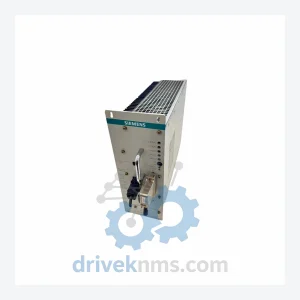
Siemens S31043 Rectifier Modules S31043-K1166-X
Siemens S31043-K1166-X is listed for Controller Cards RFQ review. Confirm quantity, condition and destination before quotation.
RFQ-ready industrial model
Model: 6DP1232-8BA
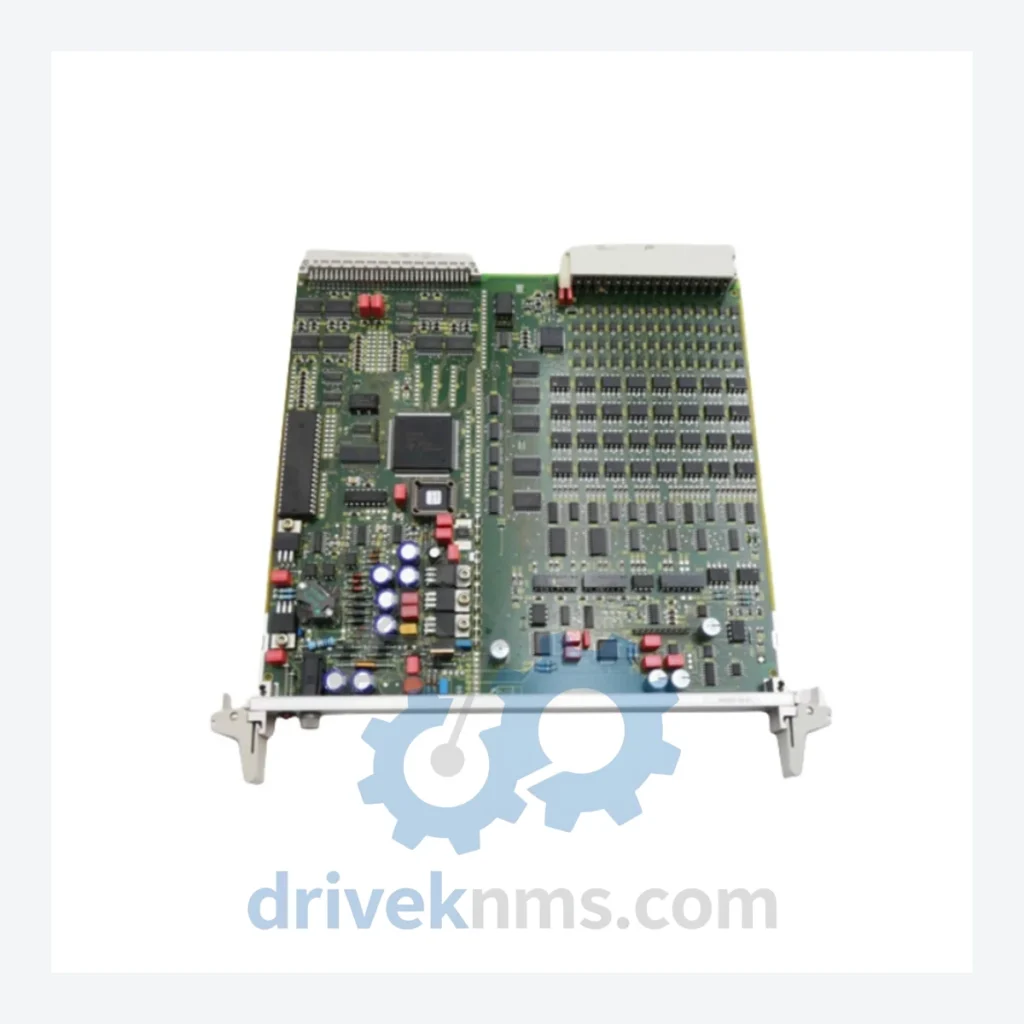
Product Overview
Commercial availability is handled through direct RFQ, model verification and export-oriented follow-up rather than public cart checkout.
Datasheet Preview
Use attached product manuals when available. If the manual is not public yet, request the full file directly through RFQ.
Commercial Path
Product pages on DRIVEKNMS are designed to verify model, brand and series first, then move the buyer into one clean quotation path.
Technical Dossier
RFQ support for obsolete parts: Send the model number, required quantity and destination so DriveKNMS can confirm sourcing options before quotation.
| Parameter | Detail |
|---|---|
| Part Number | 6DP1232-8BA |
| Manufacturer | Siemens AG |
| Series | TELEPERM M |
| Module Type | Analog Input Module |
| Country of Origin | Germany |
| Lifecycle Status | Discontinued / Obsolete – No longer manufactured or sold by Siemens |
| Compatible System | Siemens TELEPERM M DCS |
| Typical Application | Process signal acquisition in petrochemical, power generation, and chemical plant DCS environments |
Note: Electrical parameters such as input range, channel count, and signal type are not published here to prevent specification errors. Confirmed technical data is provided upon request with your system configuration details.
The Siemens TELEPERM M platform was deployed extensively across refineries, power stations, and large-scale chemical facilities from the 1980s through the early 2000s. Many of these installations remain operational today — not because operators are unaware of the system's age, but because the process economics of full migration do not justify the disruption. A single TELEPERM M cabinet may control dozens of critical process loops. The 6DP1232-8BA analog input module sits at the data acquisition layer of this architecture: it converts field-level process signals into digital values that the central processing units act upon. Without a functioning replacement, the affected control loops must be taken offline or operated in manual mode — a condition that introduces both safety risk and production loss.
Siemens ceased manufacturing and supporting the TELEPERM M product line, and the secondary market supply of modules like the 6DP1232-8BA has contracted sharply over the past decade. Plants that did not build strategic spare inventories during the system's active lifecycle now face a procurement environment where each available unit represents a finite, non-renewable resource. Securing RFQ-reviewed sourcing status now — before the next unplanned failure — is not a discretionary purchase. It is a risk management decision with a calculable return.
For facilities operating legacy DCS platforms under retirement pressure, the following framework has been applied successfully across multiple industrial sites to defer capital replacement programs while maintaining process reliability:
1. Conduct a Critical Spare Audit. Map every module type in your TELEPERM M or equivalent legacy DCS against current secondary market availability. Modules with fewer than three known sources globally should be classified as critical-risk items. The 6DP1232-8BA falls into this category.
5. Document Firmware and Configuration Baselines. For modules that carry firmware or configuration data, maintain a verified backup of all parameters. This eliminates re-commissioning time when a replacement module is installed and prevents the engineering cost associated with reconstructing lost configurations.
Applied consistently, this approach has allowed facilities to operate legacy DCS platforms reliably for 5–10 years beyond their original planned retirement dates, deferring capital expenditure until a planned, budgeted migration window — rather than an emergency replacement driven by unplanned failure.
Every 6DP1232-8BA unit processed by DriveKNMS passes through a structured 5-step quality verification protocol before it is offered for sale. This process is designed specifically for the failure modes common to electronics of this age and design generation:
Step 1 – Visual and Physical Inspection: Full board examination for mechanical damage, connector pin corrosion, PCB delamination, and evidence of prior field repairs or unauthorized modifications.
Step 2 – Electrolytic Capacitor Assessment: Aging electrolytic capacitors are the primary failure mechanism in legacy analog modules. Each unit is inspected for capacitor bulging, electrolyte leakage, and ESR (equivalent series resistance) deviation from specification. Units with compromised capacitors are either reconditioned with verified replacement components or rejected from inventory.
Step 3 – Firmware Version Verification: Where applicable, firmware revision is confirmed and documented. Units with unknown or mismatched firmware versions are flagged and disclosed to the buyer prior to sale.
Step 4 – Pin and Connector Integrity Check: All edge connectors and backplane interface pins are inspected for oxidation, mechanical deformation, and contact resistance. Corroded contacts are treated and re-tested; units with structural pin damage are rejected.
The 6DP1232-8BA is a direct hardware replacement for the same part number within the TELEPERM M backplane architecture. Installation does not require software reconfiguration of the DCS host, re-engineering of I/O assignments, or modification of field wiring. The module seats into the existing rack position and resumes operation within the established system configuration — a drop-in replacement in the practical sense of the term.
This characteristic is the core economic argument for sourcing a verified spare rather than pursuing a migration path. An engineering project to replace TELEPERM M analog input functionality with a modern equivalent involves I/O mapping, signal conditioning review, DCS software modification, loop testing, and operator qualification. The cost of that engineering work — measured in labor hours alone — typically exceeds the cost of maintaining a spare parts inventory for the legacy system by a factor of ten or more. For plant management teams operating under capital budget constraints, the arithmetic is straightforward.
Q: How do I know the unit is genuine and not a counterfeit?
A: All units are sourced from documented industrial asset recovery channels — decommissioned plant equipment, verified distributor overstock, and controlled secondary market sources. Siemens part markings, board revision codes, and date codes are inspected and documented. We do not source from unverified brokers or auction platforms without provenance documentation.
Continue The Model Path
Move from this exact model into the matching system hub, brand archive, model-family archive or lifecycle sourcing route before sending a final RFQ list.
Related Paths
Siemens S31043-K1166-X is listed for Controller Cards RFQ review. Confirm quantity, condition and destination before quotation.
Siemens RMS-TSG-TZ-C is listed for Controller Cards RFQ review. Confirm quantity, condition and destination before quotation.
Siemens RMS-TSIG-TZ-C is listed for Controller Cards RFQ review. Confirm quantity, condition and destination before quotation.