
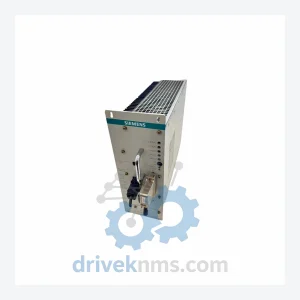
Siemens S31043 Rectifier Modules S31043-K1166-X
Siemens S31043-K1166-X is listed for Controller Cards RFQ review. Confirm quantity, condition and destination before quotation.
RFQ-ready industrial model
Model: 6DP1280-8BA
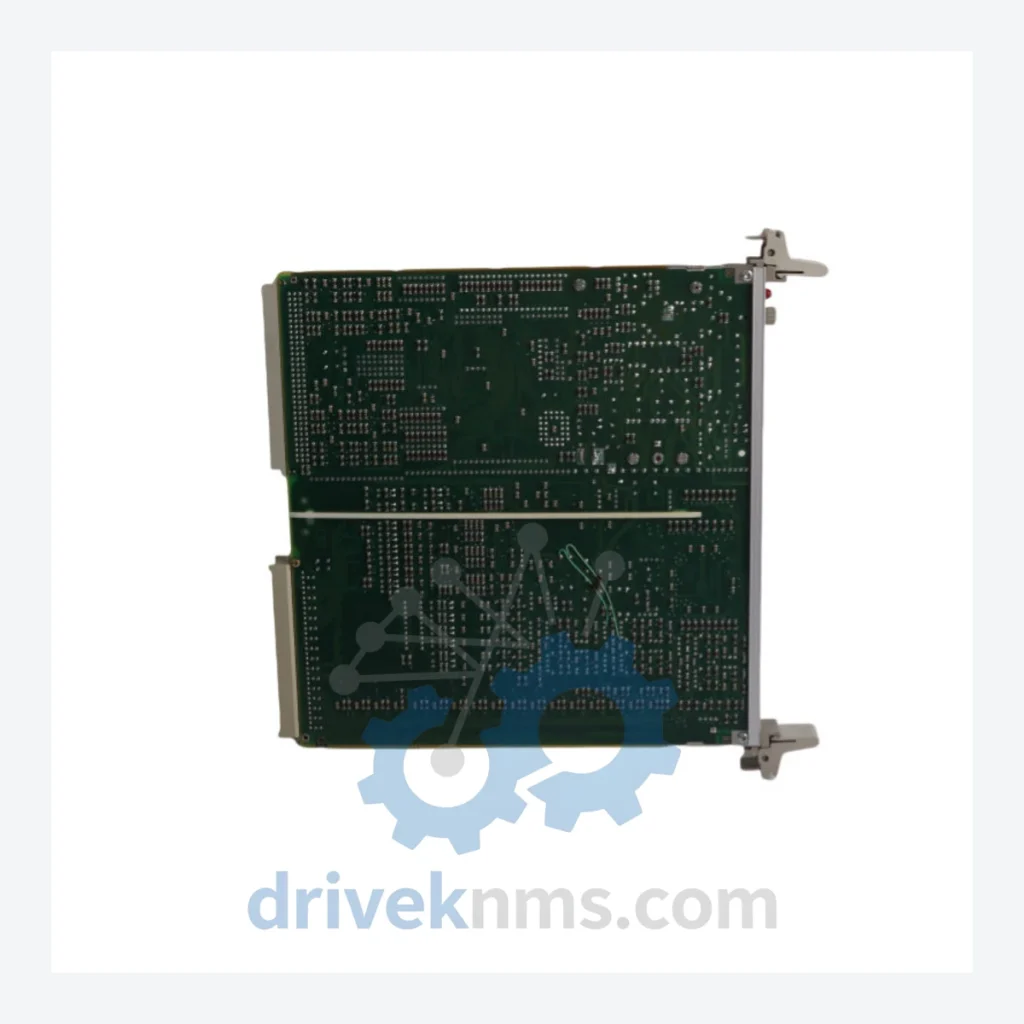
Product Overview
Commercial availability is handled through direct RFQ, model verification and export-oriented follow-up rather than public cart checkout.
Datasheet Preview
Use attached product manuals when available. If the manual is not public yet, request the full file directly through RFQ.
Commercial Path
Product pages on DRIVEKNMS are designed to verify model, brand and series first, then move the buyer into one clean quotation path.
Technical Dossier
The Siemens TELEPERM M system, identified by the 6DP1 product family prefix, is a process control platform deployed across global heavy industry since the 1980s. It maintains a significant installed base in chemical plants, nuclear power stations, oil refineries, and petrochemical complexes — environments where system replacement carries prohibitive cost and operational risk. The 6DP1 series encompasses CPU modules, analog and digital I/O, communication adapters, and power supply units, all operating on a proprietary backplane bus architecture. Many facilities continue to operate TELEPERM M infrastructure beyond its official end-of-life, making spare part availability a critical operational concern.
The TELEPERM M platform was introduced by Siemens in the early 1980s as a modular distributed control system targeting continuous process industries. The original architecture used a parallel backplane bus with proprietary inter-module communication, distinct from later fieldbus standards such as PROFIBUS or HART. Early hardware revisions (suffix variants -8AA, -8AB) established the physical form factor and connector pinout that remained consistent through subsequent generations, enabling backward compatibility within the same rack chassis.
Through the late 1980s and 1990s, Siemens expanded the 6DP1 catalog with enhanced CPU variants offering increased scan rates and expanded memory, alongside higher-density I/O modules. Communication adapters were introduced to bridge TELEPERM M to emerging plant networks. By the 2000s, Siemens formally transitioned its DCS portfolio toward the SIMATIC PCS 7 platform, placing the TELEPERM M 6DP1 series into a maintenance-only lifecycle. Siemens issued end-of-life notices for most 6DP1 modules between 2005 and 2015, with no direct drop-in hardware replacement — migration requires engineering effort and system re-qualification, which many operators defer indefinitely.
Compatibility constraints are significant: modules are rack-specific, power budgets are fixed per chassis, and firmware versions must align with the central controller revision. Substituting a module with a different hardware suffix requires validation against the site-specific system documentation.
Central Processing Units (CPU)
Analog Input Modules (AI)
Analog Output Modules (AO)
Digital Input Modules (DI)
Digital Output Modules (DO)
Communication & Interface Modules
Power Supply Modules
The TELEPERM M 6DP1 series uses a proprietary backplane bus with tightly coupled inter-module signaling. Standard bench power-up testing is insufficient to validate module functionality. DriveKNMS applies a structured test protocol specific to this platform:
Continue The Model Path
Move from this exact model into the matching system hub, brand archive, model-family archive or lifecycle sourcing route before sending a final RFQ list.
Related Paths
Siemens S31043-K1166-X is listed for Controller Cards RFQ review. Confirm quantity, condition and destination before quotation.
Siemens RMS-TSG-TZ-C is listed for Controller Cards RFQ review. Confirm quantity, condition and destination before quotation.
Siemens RMS-TSIG-TZ-C is listed for Controller Cards RFQ review. Confirm quantity, condition and destination before quotation.