
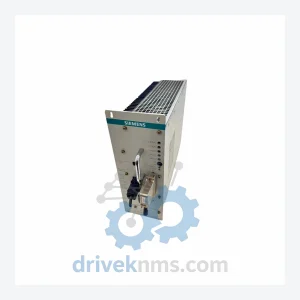
Siemens S31043 Rectifier Modules S31043-K1166-X
Siemens S31043-K1166-X is listed for Controller Cards RFQ review. Confirm quantity, condition and destination before quotation.
RFQ-ready industrial model
Model: RMS-TSIG-TZ-R
Product Overview
Commercial availability is handled through direct RFQ, model verification and export-oriented follow-up rather than public cart checkout.
Datasheet Preview
Use attached product manuals when available. If the manual is not public yet, request the full file directly through RFQ.
Commercial Path
Product pages on DRIVEKNMS are designed to verify model, brand and series first, then move the buyer into one clean quotation path.
Technical Dossier
The Siemens RMS-TSIG series represents a class of signal conditioning and terminal interface modules deployed extensively in heavy industrial environments including petrochemical refineries, nuclear power stations, and large-scale chemical processing plants. These modules serve as the physical interface layer between field instrumentation and the Siemens distributed control system (DCS) backplane, handling thermocouple signal isolation, terminal grounding, and zone-referenced input conditioning. Their compact rail-mount form factor and standardized terminal assignments made them a default specification in Siemens TELEPERM and SIMATIC PCS 7 installations across Europe, Asia, and the Middle East throughout the 1990s and 2000s. The RMS-TSIG-TZ-R variant specifically addresses thermocouple input with terminal zone referencing and reverse-polarity protection, a configuration required in high-density I/O marshalling cabinets where signal integrity over long cable runs is critical.
The RMS-TSIG lineage originates from Siemens' modular signal interface strategy developed in the late 1980s to standardize field wiring termination across TELEPERM M and TELEPERM XP platforms. Early variants used passive terminal blocks with no active signal conditioning; subsequent generations introduced galvanic isolation stages and cold-junction compensation circuitry for thermocouple inputs. The TZ-R suffix designation indicates a third-generation architecture incorporating terminal zone (TZ) grounding topology and reverse (R) input protection diodes — a response to field failures observed in installations with high common-mode noise environments such as motor control centers and transformer substations.
Compatibility across generations is constrained by backplane connector pinout revisions introduced between TELEPERM XP and SIMATIC PCS 7 S7-400-based systems. Modules from the original RMS-TSIG-T family are not directly interchangeable with TZ-R variants without terminal adapter plates. Engineers migrating from legacy TELEPERM installations to PCS 7 must verify the module generation against the marshalling cabinet wiring schedule before substitution.
The following SKUs represent the documented RMS-TSIG series range. Each entry reflects a distinct functional configuration within the series:
RMS-TSIG-TZ-R: Thermocouple input module, terminal zone ref, reverse protection
RMS-TSIG-TZ: Thermocouple input module, terminal zone referenced, standard polarity
RMS-TSIG-T: Basic thermocouple signal interface, no zone referencing
RMS-TSIG-TI: Thermocouple input with galvanic isolation stage
RMS-TSIG-TI-R: Isolated thermocouple input with reverse-polarity input protection
RMS-TSIG-RTD: RTD (Pt100/Pt1000) signal conditioning interface module
RMS-TSIG-RTD-I: Isolated RTD input module for 3-wire and 4-wire configurations
RMS-TSIG-AI: Analog input signal interface, 4–20 mA loop-powered
RMS-TSIG-AI-I: Isolated analog input, 4–20 mA, for intrinsically safe barriers
RMS-TSIG-AO: Analog output signal interface, 4–20 mA, DCS-driven
RMS-TSIG-DI: Digital input interface module, 24 VDC, dry contact
RMS-TSIG-DI-AC: Digital input interface, 115/230 VAC field signal compatible
RMS-TSIG-DO: Digital output relay interface, SPDT, 24 VDC/230 VAC rated
RMS-TSIG-DO-SS: Solid-state digital output interface, no mechanical contacts
RMS-TSIG-PWR: Dedicated power distribution module for RMS-TSIG rail segments
RMS-TSIG-BUS: Backplane bus coupler for multi-segment RMS-TSIG marshalling racks
RMS-TSIG-DIAG: Diagnostic interface module for loop continuity and signal health monitoring
The RMS-TSIG series has entered the mature-to-end-of-life phase of its product lifecycle. Siemens has progressively discontinued active production of individual module variants, with replacement recommendations pointing toward the SIMATIC ET 200SP and SIMATIC S7-1500 I/O platforms. However, the installed base of RMS-TSIG modules in operating plants remains substantial, particularly in facilities with long capital replacement cycles such as nuclear power stations and continuous-process chemical plants where DCS migrations are planned on 10–20 year horizons.
RMS-TSIG modules present specific quality verification challenges due to their mixed analog/digital signal paths and backplane bus interface circuitry. DriveKNMS applies a multi-stage inspection protocol to all RMS-TSIG units prior to dispatch:
Continue The Model Path
Move from this exact model into the matching system hub, brand archive, model-family archive or lifecycle sourcing route before sending a final RFQ list.
Related Paths
Siemens S31043-K1166-X is listed for Controller Cards RFQ review. Confirm quantity, condition and destination before quotation.
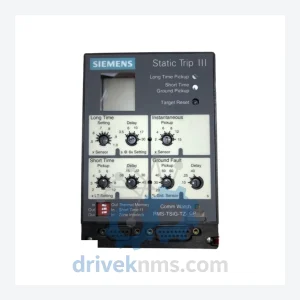
Siemens RMS-TSG-TZ-C is listed for Controller Cards RFQ review. Confirm quantity, condition and destination before quotation.
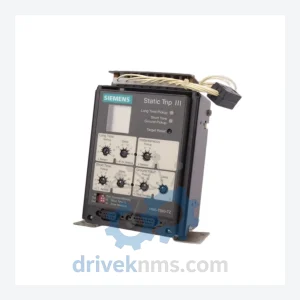
Siemens RMS-TSIG-TZ-C is listed for Controller Cards RFQ review. Confirm quantity, condition and destination before quotation.