
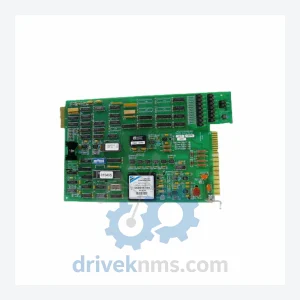
Westinghouse 7381A73G01 Speed Sensor Card – Obsolete WDPF Spare Part
Westinghouse 7381A73G01 is listed for WDPF RFQ review. Confirm quantity, condition and destination before quotation.
RFQ-ready industrial model
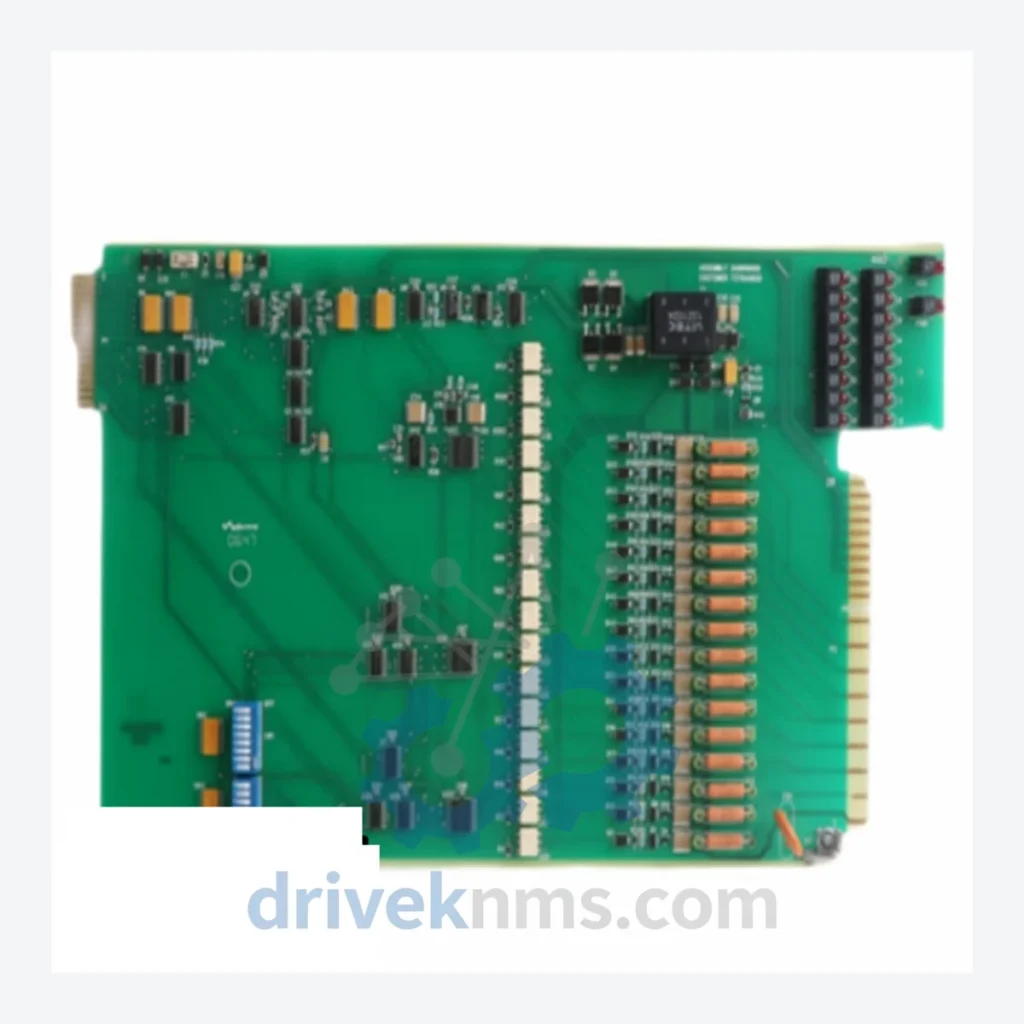
Model: 7379A06G02 3A99160G02
Product Overview
Commercial availability is handled through direct RFQ, model verification and export-oriented follow-up rather than public cart checkout.
Datasheet Preview
Use attached product manuals when available. If the manual is not public yet, request the full file directly through RFQ.
Commercial Path
Product pages on DRIVEKNMS are designed to verify model, brand and series first, then move the buyer into one clean quotation path.
Technical Dossier
DriveKNMS reviews sourcing options for this model through RFQ handling before quotation.
RFQ support for obsolete parts: Send the model number, required quantity and destination so DriveKNMS can confirm sourcing options before quotation.
| Parameter | Detail |
|---|---|
| Manufacturer | Westinghouse Electric Corporation (now Emerson) |
| Part Number | 7379A06G02 |
| Alternate Part Number | 3A99160G02 |
| Description | Low Power I/O Expansion Board |
| Compatible Platform | Westinghouse WDPF (Westinghouse Distributed Processing Family) |
| OEM Status | Discontinued / Obsolete |
| Country of Origin | United States |
| Electrical Parameters | Refer to OEM datasheet – contact us for documentation support |
| Form Factor | Refer to OEM datasheet |
The Westinghouse WDPF platform was deployed extensively in power generation, petrochemical, and heavy process industries from the 1980s through the early 2000s. Many of these installations remain operational today, supported by maintenance teams who understand the system's logic intimately. The 7379A06G02 I/O expansion board is not a peripheral accessory — it is a structural component of the WDPF field I/O architecture. Loss of this board without a replacement on hand forces one of three outcomes: emergency sourcing at distressed prices, unplanned production shutdown, or an accelerated and under-budgeted migration project.
None of those outcomes is acceptable for a plant running on a planned maintenance budget. The rational alternative is a pre-positioned spare. A single board held in climate-controlled storage costs a fraction of one day of lost production. For facilities operating continuous processes — power turbines, refinery units, chemical reactors — the math is unambiguous. Extending the operational life of a WDPF installation by five to ten years through targeted spare-part procurement is not a compromise; it is a capital allocation decision that preserves optionality while the organization plans its next-generation control architecture.
Plants that have successfully extended WDPF asset life typically follow three disciplines: (1) maintain a minimum two-unit spare inventory for every board type that has no modern equivalent, (2) document firmware revision levels across all installed cards to ensure replacement compatibility, and (3) establish a qualified supplier relationship before the emergency occurs. DriveKNMS exists to serve that third requirement.
Every 7379A06G02 unit that leaves our facility has passed a five-stage inspection protocol developed specifically for legacy industrial electronics:
Step 1 – Visual and Mechanical Inspection: Full board examination for physical damage, PCB delamination, solder joint integrity, and connector pin condition. Corroded or bent pins are documented and, where feasible, remediated before testing proceeds.
Step 2 – Electrolytic Capacitor Assessment: Aging electrolytic capacitors are the primary failure mode in boards of this era. Each capacitor is evaluated for ESR (equivalent series resistance) drift and physical signs of electrolyte leakage or case bulging. Units with compromised capacitors are either recapped by qualified technicians or quarantined.
Step 3 – Firmware Version Verification: Where firmware is embedded, the revision level is recorded and cross-referenced against known WDPF compatibility matrices. Mismatched firmware versions are flagged prior to shipment.
Step 4 – Functional Bench Test: Boards are powered and tested under controlled conditions to verify basic I/O channel response. Results are logged and accompany the shipment.
Step 5 – Packaging and ESD Protection: Units are packaged in anti-static bags with desiccant, inside rigid foam-lined cartons rated for international freight. Storage and transit conditions are documented.
No engineering re-commissioning: Unlike a platform migration, installing a like-for-like spare board does not trigger loop re-commissioning, safety system revalidation, or regulatory re-certification in most jurisdictions. The control logic, tuning parameters, and I/O assignments remain intact.
Operational continuity: Keeping a verified spare on the shelf converts a potential unplanned shutdown event into a planned, controlled maintenance activity. Mean time to repair drops from days or weeks (emergency sourcing) to hours (shelf-to-rack installation).
Q: Can you help me identify other WDPF boards I should be stocking?
A: Yes. Send us your WDPF cabinet configuration or spare parts list and our team will identify which boards carry the highest obsolescence risk and current market availability.
Continue The Model Path
Move from this exact model into the matching system hub, brand archive, model-family archive or lifecycle sourcing route before sending a final RFQ list.
Related Paths
Westinghouse 7381A73G01 is listed for WDPF RFQ review. Confirm quantity, condition and destination before quotation.
Westinghouse 1C31113G05 is listed for WDPF RFQ review. Confirm quantity, condition and destination before quotation.
Westinghouse 5X00376G01 is listed for WDPF RFQ review. Confirm quantity, condition and destination before quotation.