Products / Yaskawa / JAMMC Series
Yaskawa JAMMC Series

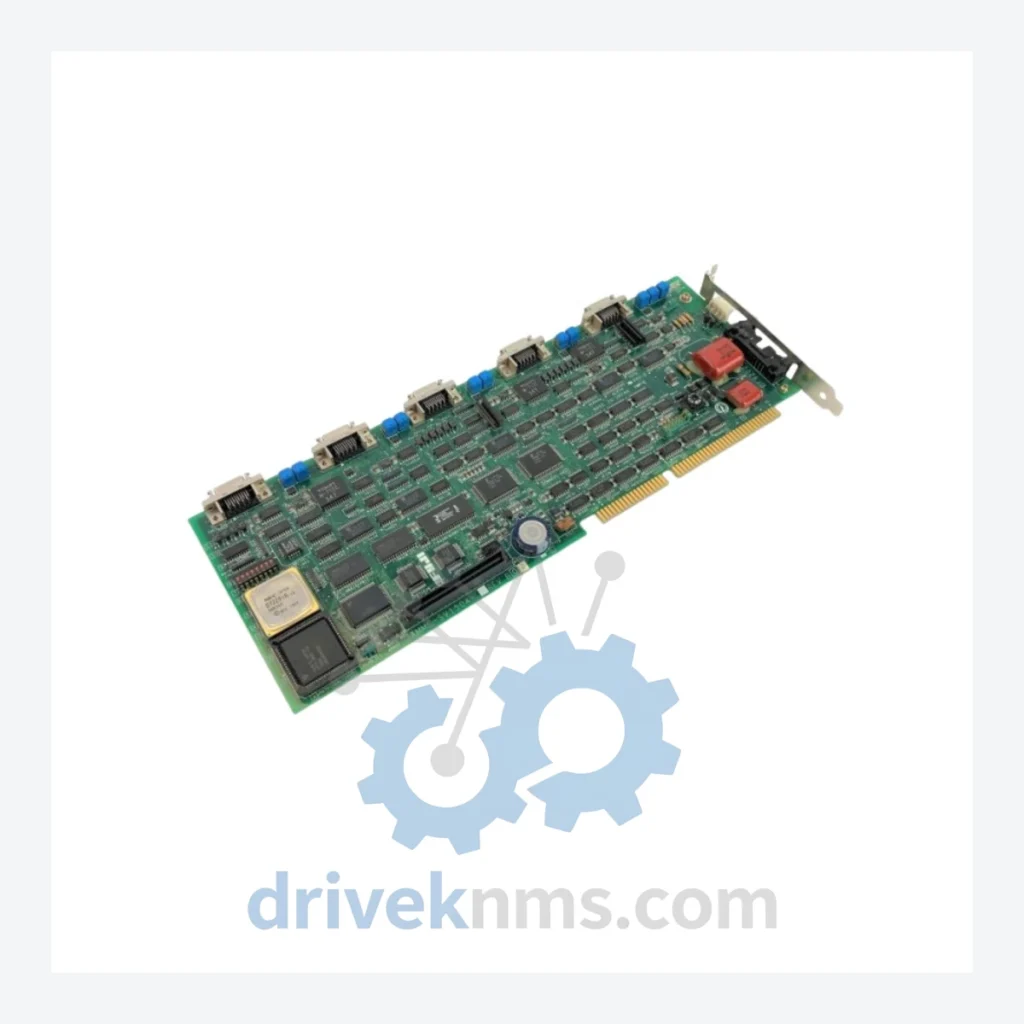
Yaskawa JAMMC Series Circuit Boards: JAMMC-SV150A

Model: JAMMC-SV150A

Brand Yaskawa
Series JAMMC Series
Model JAMMC-SV150A
RFQ-ready model route Obsolete and surplus sourcing Export follow-up by model list

Product Overview

Commercial availability is handled through direct RFQ, model verification and export-oriented follow-up rather than public cart checkout.

Datasheet Preview

Datasheet Preview

Use attached product manuals when available. If the manual is not public yet, request the full file directly through RFQ.

Request Full Manual

Commercial Path

Use This Page To Confirm The Model, Then Move To RFQ

Product pages on DRIVEKNMS are designed to verify model, brand and series first, then move the buyer into one clean quotation path.

Technical Dossier

Product Details And Specifications

Yaskawa JAMMC Series: Comprehensive Module Range and Technical Overview

The Yaskawa JAMMC series represents a family of servo drive circuit boards and control modules deployed extensively across global heavy industry verticals, including petrochemical refineries, nuclear power auxiliary systems, steel rolling mills, and offshore platform drive systems. These boards serve as the core signal processing and feedback interface layers within Yaskawa's AC servo and spindle drive platforms, primarily the VARISPEED and CIMR-series drive families. The JAMMC designation covers a broad range of printed circuit assemblies — from encoder feedback cards and current detection boards to gate drive interface boards and CPU control cards — making it one of the most referenced board-level part families in Yaskawa drive maintenance catalogs worldwide.

In heavy industrial environments where drive downtime translates directly to production loss, the JAMMC series has established a long-term installed base. Many facilities operating Yaskawa drives from the 1990s through the 2010s continue to rely on JAMMC-series boards as the primary repair-level spare, given that full drive replacement is often cost-prohibitive or structurally incompatible with existing panel configurations.

The Evolution of JAMMC Architecture

The JAMMC board family traces its origins to Yaskawa's early-generation transistor-based servo amplifiers of the late 1980s. Initial iterations were analog-dominant designs, handling current feedback and PWM gate signals through discrete component arrays. As Yaskawa transitioned into DSP-based servo control through the 1990s, the JAMMC series evolved to incorporate surface-mount logic ICs, FPGA-based encoder processing, and serial communication interfaces compatible with MECHATROLINK-I and later MECHATROLINK-II protocols.

By the mid-2000s, JAMMC boards were integrated into Yaskawa's Sigma-II and Sigma-III servo amplifier platforms, where they functioned as modular sub-assemblies within a standardized backplane architecture. This modularity allowed field engineers to replace individual board-level faults without full amplifier exchange — a significant operational advantage in continuous-process industries. The transition to Sigma-V and Sigma-7 platforms in the 2010s introduced new board designations (JUSP, SGDR series), but a substantial portion of the global installed base remains on JAMMC-era hardware, particularly in legacy CNC machine tools and older DCS-integrated motion systems.

Compatibility considerations are critical: JAMMC boards are not cross-compatible between drive power classes without verification of the gate drive voltage rating, encoder interface type (incremental vs. absolute), and bus communication protocol version. Substitution errors at the board level are a primary cause of drive damage during maintenance operations.

JAMMC Full Catalog & Functionalities (SKU List)

The following SKUs represent verified, commonly sourced models within the Yaskawa JAMMC series, classified by functional category:

Control & CPU Boards

  • JAMMC-SV150A: Servo control circuit board for VARISPEED-series AC servo drives; handles current loop and speed reference processing.
  • JAMMC-SV100A: Control board variant for lower-power servo amplifier class; analog speed command interface.
  • JAMMC-SV200A: High-capacity servo control board; supports extended encoder feedback resolution for precision axis applications.
  • JAMMC-SV300A: Advanced servo CPU board with MECHATROLINK-II serial interface; used in multi-axis coordinated motion systems.
  • JAMMC-SV350A: Enhanced control board with expanded I/O mapping; compatible with Sigma-II series amplifiers.

Gate Drive & Power Interface Boards

  • JAMMC-GD100A: IGBT gate drive board; interfaces control signals to power module switching elements in 200V-class drives.
  • JAMMC-GD200A: Gate drive board for 400V-class servo amplifiers; includes desaturation fault detection circuitry.
  • JAMMC-GD300A: High-current gate drive interface; used in spindle drive applications above 15kW.

Encoder Feedback & Signal Processing Boards

  • JAMMC-ENC01A: Incremental encoder interface board; supports A/B/Z differential line driver signals up to 500kHz.
  • JAMMC-ENC02A: Absolute encoder feedback board; compatible with Yaskawa 17-bit serial absolute encoders.
  • JAMMC-ENC03A: Multi-turn absolute encoder interface with battery backup circuit for position retention on power loss.

Current Detection & Analog I/O Boards

  • JAMMC-CD100A: Current detection board; hall-effect sensor interface for phase current measurement in 3-phase servo drives.
  • JAMMC-CD200A: Dual-channel current detection board for high-power drive configurations requiring redundant current sensing.
  • JAMMC-AI100A: Analog input expansion board; provides ±10V and 4–20mA reference input channels for external speed/torque command.

Communication & Network Interface Boards

  • JAMMC-ML01A: MECHATROLINK-I communication interface board; used in legacy Yaskawa motion network topologies.
  • JAMMC-ML02A: MECHATROLINK-II upgrade board; enables high-speed synchronous motion control in multi-axis configurations.
  • JAMMC-PG01A: Pulse generator (PG) feedback option board; supports open-collector and line-driver encoder types for spindle orientation.

Sourcing Hard-to-Find & Obsolete JAMMC Parts

The majority of the JAMMC series has entered the end-of-life or obsolete classification within Yaskawa's official parts support structure. Yaskawa's standard policy discontinues spare parts availability 10 years after a product's production end date, which means many JAMMC-series boards are no longer obtainable through authorized distribution channels.

DriveKNMS maintains a dedicated inventory program for lifecycle-extended support of Yaskawa JAMMC-series components. Our sourcing network covers tested-surplus, refurbished-to-spec, and new-old-stock (NOS) units recovered from decommissioned equipment and authorized liquidation channels. Each unit is individually cataloged with its revision level, firmware version (where applicable), and physical condition grade prior to listing.

For facilities operating Yaskawa drives in long-cycle industries — where equipment replacement cycles span 20–30 years — DriveKNMS provides a structured obsolescence management service: we maintain a reserved stock allocation for contracted customers, provide advance notification of stock depletion, and offer board-level repair assessment for units with repairable fault conditions (damaged connectors, failed capacitors, blown protection components).

Quality Control for the JAMMC Range

JAMMC-series boards present specific testing challenges due to their integration of high-frequency switching interfaces, precision analog signal paths, and serial communication logic on a single PCB assembly. DriveKNMS applies a multi-stage verification protocol to all JAMMC units prior to dispatch:

  • Visual Inspection: Full board examination under magnification for cracked solder joints, damaged SMD components, burnt traces, and connector pin integrity. Particular attention is given to the gate drive output section and encoder interface connectors, which are the highest-stress areas in field-returned units.
  • In-Circuit Parametric Testing: Key analog nodes are probed for correct bias voltages, reference levels, and impedance characteristics against known-good board specifications. Current detection circuits are verified for offset and gain accuracy.
  • Functional Load Test: Where test fixtures are available, boards are installed in a compatible drive chassis and operated under controlled load conditions to verify closed-loop servo response, fault detection logic, and communication handshake integrity.
  • Communication Protocol Verification: For boards with MECHATROLINK or serial encoder interfaces, protocol-level communication is verified using dedicated test equipment to confirm correct data framing, timing, and error response behavior.
  • Burn-In Screening: Selected units undergo thermal cycling and extended-duration power-on screening to identify latent component failures before shipment.

All tested units are issued a DriveKNMS inspection report documenting test results, revision identification, and warranty terms.

WhatsApp Prefilled Inquiry Email [email protected] Phone +86 18359293191 Top Back To Top