
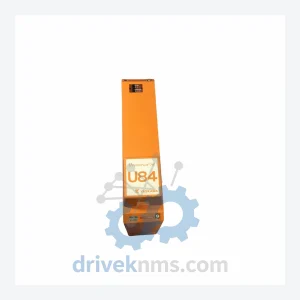
YASKAWA DDSCR Series Modules DDSCR-U84-124
Yaskawa DDSCR-U84-124 is listed for DDSCR Series RFQ review. Confirm quantity, condition and destination before quotation.
RFQ-ready industrial model
Model: SRDA-SDA71A01A-E NX100 JZRCR-NPP01B-1 NX100 JANCD-NCP01 JANCD-NCP01-1
Product Overview
Commercial availability is handled through direct RFQ, model verification and export-oriented follow-up rather than public cart checkout.
Datasheet Preview
Use attached product manuals when available. If the manual is not public yet, request the full file directly through RFQ.
Commercial Path
Product pages on DRIVEKNMS are designed to verify model, brand and series first, then move the buyer into one clean quotation path.
Technical Dossier
The Yaskawa NX100 is a robot controller platform deployed across heavy industrial sectors including petrochemical processing, nuclear facility maintenance, automotive body welding, and offshore refinery operations. Introduced as the successor to the XRC and MRC controller generations, the NX100 established a standardized backplane architecture capable of managing multi-axis coordinated motion for Yaskawa Motoman robot arms (UP, ES, HP, MA, and SK series). Its modular card-cage design allows field-level replacement of individual functional boards without full controller swap, a critical requirement for facilities operating under continuous production mandates. The NX100 remains one of the most widely installed robot controller platforms globally, with active installations spanning 1998–2015 production windows. As of 2026, the NX100 has entered its end-of-life phase; Yaskawa has transitioned current production to the DX100, DX200, and YRC1000 platforms. However, the installed base remains substantial, and demand for verified spare boards continues across MRO (Maintenance, Repair, and Overhaul) channels.
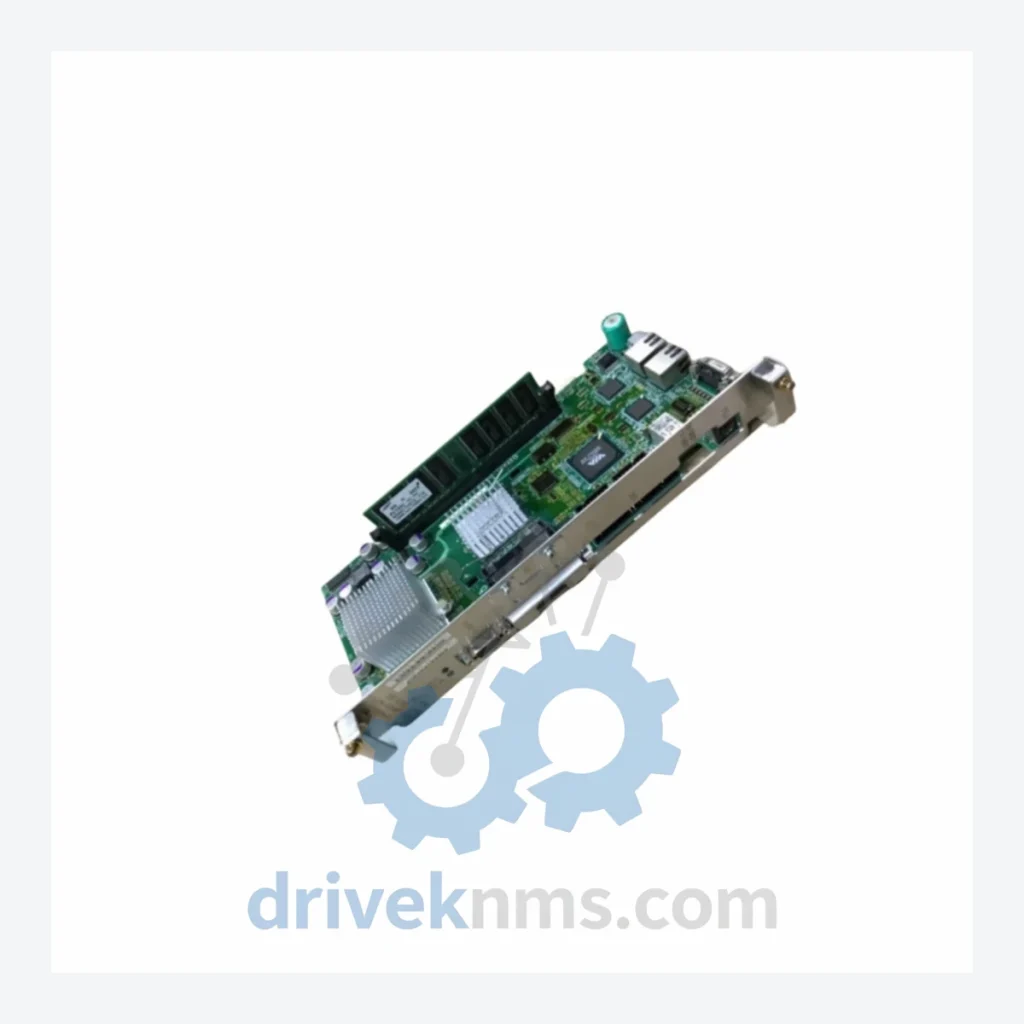
The NX100 controller architecture is built around a VME-compatible backplane with proprietary Yaskawa bus extensions. The CPU board (JANCD-NCP01 / JANCD-NCP01-1) serves as the central processing unit, executing motion interpolation, I/O polling, and inter-board communication via the MECHATROLINK-II serial bus. Early NX100 revisions used the SRDA-SDA71A01A board family for servo drive amplifier interfacing; later revisions introduced the SRDA-SDA71A01A-E suffix, indicating an enhanced EMC-compliant variant with revised gate driver circuitry.
The JZRCR-NPP01B-1 is the operator panel interface board, providing the physical connection layer between the Programming Pendant (JZRCR-YPP01-1 / DX100 pendant) and the controller backplane. Compatibility between NX100 and DX100 pendant hardware is partial and version-dependent; firmware mismatches are a documented failure mode during cross-generation maintenance.
The NX100 backplane supports up to 8 functional slots. Board communication relies on a parallel data bus with dedicated interrupt lines per slot. This architecture differs fundamentally from the DX100's serial-only inter-board topology, making direct board substitution between generations impossible without firmware and hardware adaptation.
Key architectural milestones: XRC (pre-2000) → NX100 (2001–2010, primary production) → DX100 (2008–2016) → DX200 (2013–present) → YRC1000 (2017–present). NX100 boards are not forward-compatible with DX100 or later platforms.
The following SKUs represent verified components within the Yaskawa NX100 controller ecosystem, classified by functional category:
CPU & Main Control Boards
JANCD-NCP01: NX100 main CPU board; motion control and system coordination.
JANCD-NCP01-1: Revised CPU board; enhanced memory addressing and bus timing.
JANCD-NCP01B: Later CPU variant with updated firmware ROM socket layout.
JZRCR-NPP01B-1: Operator panel interface board; pendant and HMI bus connection.
Servo Amplifier Interface Boards
SRDA-SDA71A01A-E: Servo drive amplifier board; axis 1–3 gate drive and feedback interface.
SRDA-SDA71A01A: Base variant of the servo amplifier board; pre-EMC revision.
SRDA-COA30A: Servo control option board; extended axis configuration support.
SRDA-EAXA01A: Servo amplifier axis expansion board for 7-axis robot configurations.
I/O Interface Boards
JANCD-IO01: Standard I/O board; 32 DI / 32 DO discrete signal interface.
JANCD-IO02: Extended I/O board; 64 DI / 64 DO with terminal block interface.
JANCD-IO03: High-density I/O board; 128-point mixed signal configuration.
JANCD-AIO01: Analog I/O board; 4-channel AI / 2-channel AO, ±10V range.
Communication & Network Adapter Boards
JANCD-YCP01: DeviceNet communication board; master/slave configurable.
JANCD-YCP02: PROFIBUS-DP adapter board; 12 Mbps max transfer rate.
JANCD-YCP03: CC-Link communication board; remote I/O station support.
JANCD-YEW01: Ethernet communication board; FTP and socket-level data transfer.
Power Supply Boards
JZRCR-NPP01: Controller power supply board; 24VDC regulated output for backplane.
SRDA-SDA71A02A: Servo power distribution board; DC bus interface for drive section.
NX100 boards present specific test challenges due to their VME-bus parallel architecture and multi-layer impedance-controlled PCB construction. DriveKNMS applies the following test protocol to all NX100 boards prior to dispatch:
Visual Inspection: Component-level examination under 10× magnification. Inspection targets include electrolytic capacitor ESR degradation (common on JANCD-NCP01 boards after 10+ years), solder joint fatigue on BGA and PLCC packages, and corrosion on edge connector gold fingers.
Power-On Functional Test: Each board is energized in an NX100-compatible test rig. CPU boards are verified for POST completion and MECHATROLINK-II bus initialization. Servo amplifier boards are tested for gate drive signal output on all axis channels. I/O boards are verified for full point-by-point DI/DO switching.
Communication Bus Verification: For network adapter boards (DeviceNet, PROFIBUS, CC-Link), protocol-level handshake testing is performed using dedicated master simulators to confirm frame integrity and error-free data exchange.
Continue The Model Path
Move from this exact model into the matching system hub, brand archive, model-family archive or lifecycle sourcing route before sending a final RFQ list.
Related Paths
Yaskawa DDSCR-U84-124 is listed for DDSCR Series RFQ review. Confirm quantity, condition and destination before quotation.
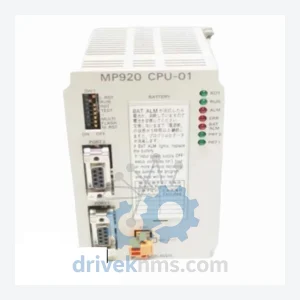
Yaskawa JEPMC-CP200 is listed for JEPMC-CP200 MP2000 Series RFQ review. Confirm quantity, condition and destination before quotation.
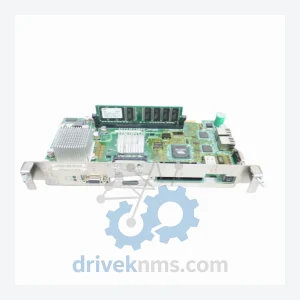
Yaskawa JANCD-NCP01 is listed for PLC Modules RFQ review. Confirm quantity, condition and destination before quotation.