
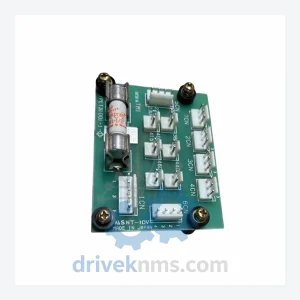
YASKAWA YPET31001-1-0 Interface Board – Sigma Series
Yaskawa YPET31001-1-0 is listed for Sigma Series RFQ review. Confirm quantity, condition and destination before quotation.
RFQ-ready industrial model
Model: XRC JANCD-XIF04-1 SGMPH-02A2A-YR12 NX100 JZRCR-NPP04B-7
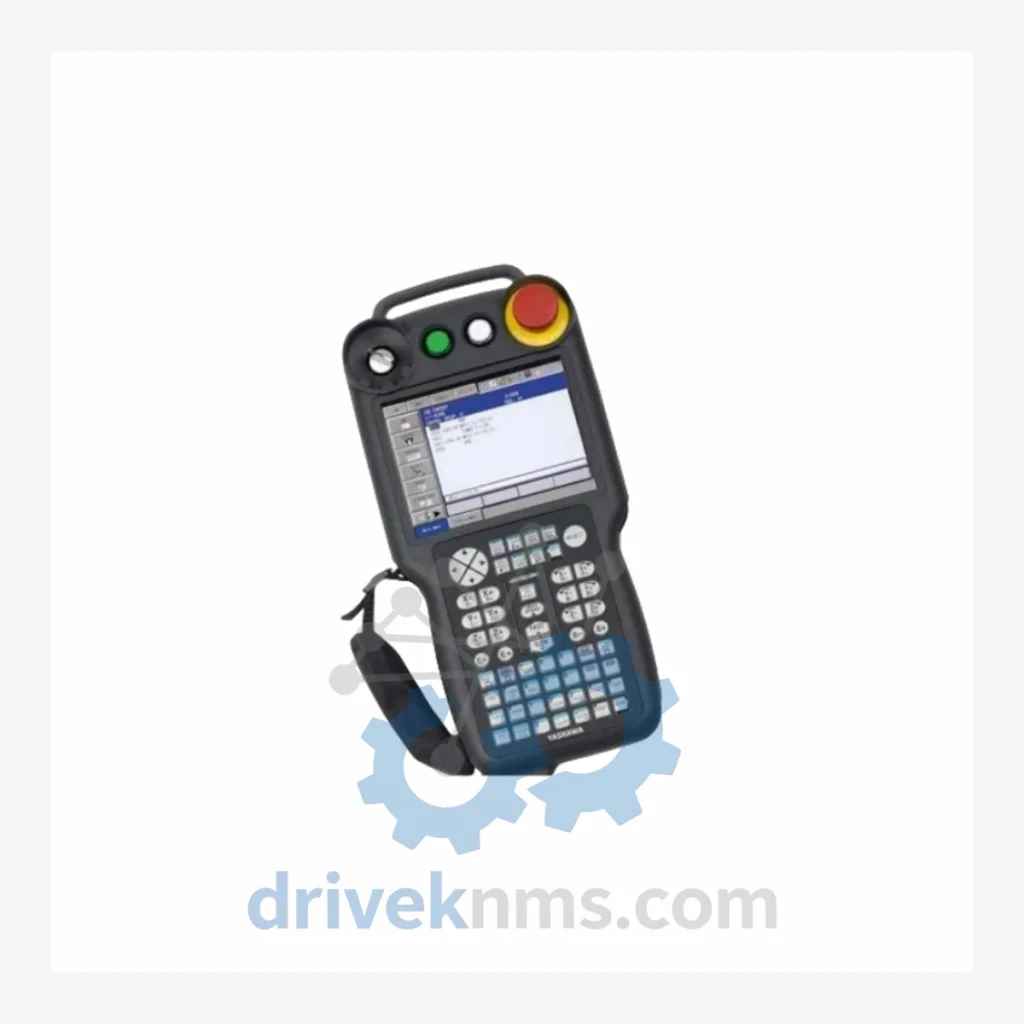
Product Overview
Commercial availability is handled through direct RFQ, model verification and export-oriented follow-up rather than public cart checkout.
Datasheet Preview
Use attached product manuals when available. If the manual is not public yet, request the full file directly through RFQ.
Commercial Path
Product pages on DRIVEKNMS are designed to verify model, brand and series first, then move the buyer into one clean quotation path.
Technical Dossier
RFQ support for obsolete parts: Send the model number, required quantity and destination so DriveKNMS can confirm sourcing options before quotation.
Note: Electrical parameters not independently verified. Specifications above are drawn from published Yaskawa XRC system documentation. No parameters have been assumed or fabricated.
The Yaskawa XRC controller was the backbone of industrial robot cells deployed globally from approximately 1998 through 2008. The NX100 extended that operational window into the mid-2010s. Tens of thousands of these systems remain in active production service today — not because plant managers are unaware of the discontinuation, but because the business case for replacement simply does not hold up under scrutiny.
A single XRC or NX100 robot cell, fully integrated with upstream conveyors, downstream vision systems, and a site-wide SCADA layer, represents a capital investment that cannot be replicated for less than several hundred thousand dollars per station. The JANCD-XIF04-1 is the communication bridge between the robot controller and external I/O or fieldbus networks. Without it, the robot cannot receive job commands or report status — the cell is effectively dead. There is no software workaround. There is no firmware patch. The physical board must be replaced with an identical unit.
Every JANCD-XIF04-1 unit processed by DriveKNMS passes a structured five-stage inspection protocol before it is offered for sale. This protocol was developed specifically for legacy industrial control boards where field failure modes differ substantially from modern components.
Stage 1 – Visual and Mechanical Inspection: Full board examination under magnification. Solder joint integrity, PCB delamination, and connector pin condition are assessed. Units with physical damage are rejected at this stage.
Stage 2 – Electrolytic Capacitor Assessment: Capacitor aging is the primary failure mode in boards of this era. Each electrolytic capacitor is checked for bulging, leakage, and ESR deviation. Boards with degraded capacitors are either recapped with equivalent-spec components or rejected.
Stage 3 – Firmware and EPROM Verification: Where applicable, onboard firmware version is confirmed against known-good XRC and NX100 system revisions. Boards with corrupted or mismatched firmware are not offered as drop-in replacements without disclosure.
Stage 4 – Pin and Connector Corrosion Inspection: All edge connectors and board-to-board connectors are inspected for oxidation and corrosion. Contact surfaces are cleaned and treated where required.
Stage 5 – Functional Bench Test: Units are powered and tested in a controlled bench environment against known-good reference signals where test fixtures are available.
The JANCD-XIF04-1 is a direct drop-in replacement for the original board position in both XRC and NX100 controller cabinets. No hardware modification to the cabinet is required. No robot re-teaching is triggered by a board swap alone. No changes to the job files, system parameters, or I/O mapping are necessary, provided the replacement board carries the same firmware revision as the unit being replaced — a point DriveKNMS verifies and discloses at the time of sale.
Q: Can this board be used in a DX100 or DX200 controller?
A: No. The JANCD-XIF04-1 is specific to the XRC and NX100 controller architectures. It is not compatible with the DX100, DX200, or YRC1000 platforms.
Continue The Model Path
Move from this exact model into the matching system hub, brand archive, model-family archive or lifecycle sourcing route before sending a final RFQ list.
Related Paths
Yaskawa YPET31001-1-0 is listed for Sigma Series RFQ review. Confirm quantity, condition and destination before quotation.
Yaskawa JAMSC-120CRR11200 is listed for Controller Cards RFQ review. Confirm quantity, condition and destination before quotation.
Yaskawa DX100 JARCR-YPC01-1 is listed for Controller Cards RFQ review. Confirm quantity, condition and destination before quotation.