Products / Yaskawa / Motoman Series
Yaskawa Motoman Series

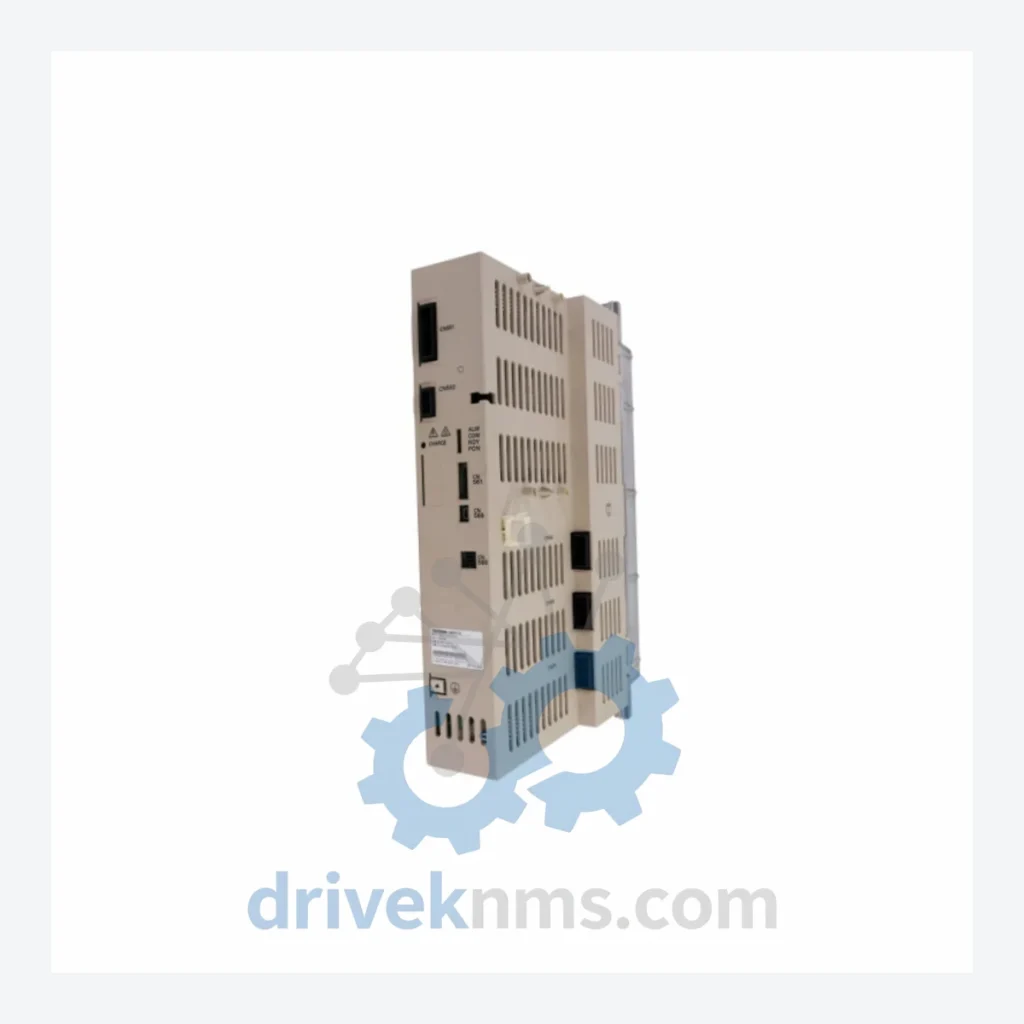
Yaskawa YRC1000 Robot Controller – Obsolete Motoman Series Spare Part

Model: YRC1000

Brand Yaskawa
Series Motoman Series
Model YRC1000
RFQ-ready model route Obsolete and surplus sourcing Export follow-up by model list

Product Overview

Commercial availability is handled through direct RFQ, model verification and export-oriented follow-up rather than public cart checkout.

Datasheet Preview

Datasheet Preview

Use attached product manuals when available. If the manual is not public yet, request the full file directly through RFQ.

Request Full Manual

Commercial Path

Use This Page To Confirm The Model, Then Move To RFQ

Product pages on DRIVEKNMS are designed to verify model, brand and series first, then move the buyer into one clean quotation path.

Technical Dossier

Product Details And Specifications

Yaskawa YRC1000 Robot Controller – Obsolete Motoman Series Spare Part

When a YRC1000 controller fails on the production floor, the clock starts immediately. This unit is the central nervous system of Yaskawa Motoman robotic cells — it manages motion control, I/O coordination, safety interlocks, and teach pendant communication simultaneously. A single failed controller does not just stop one robot; it halts the entire automated cell it governs. For automotive body shops, metal fabrication lines, and electronics assembly facilities running Motoman UP, MA, or HP series robots, sourcing a replacement YRC1000 through standard distribution channels is no longer straightforward. Yaskawa has transitioned its controller platform toward the YRC1000micro and next-generation architectures, leaving legacy YRC1000 installations without a clear OEM replenishment path.

The cost of a full robotic cell upgrade — new controller, new robot arm, re-teaching all motion programs, re-validating safety zones, and retraining operators — routinely exceeds USD $150,000 to $400,000 per cell, before accounting for production downtime. DriveKNMS holds verified physical stock of the YRC1000. Securing one unit now is not a procurement exercise; it is asset protection.

Technical Specifications

Parameter Detail
Manufacturer Yaskawa Electric Corporation
Model / Part Number YRC1000
Series Motoman YRC Series
Country of Origin Japan
OEM Status Discontinued / Obsolete – No longer available through standard Yaskawa distribution
Compatible Robot Series Yaskawa Motoman MA, UP, HP, MPL, MPK series (verify with your robot arm model)
Communication Interface EtherNet/IP, DeviceNet, PROFIBUS (configuration-dependent)
Teach Pendant Compatibility YRC1000 series pendant (DX200 pendant not directly compatible)
Condition Available New Old Stock (NOS) / Professionally Refurbished

Note: Electrical parameters such as input voltage range and axis count capacity vary by sub-configuration. Confirm your exact system requirements before ordering. DriveKNMS will cross-reference your robot arm model to verify compatibility.

Solving the Discontinued Hardware Crisis

The YRC1000 was engineered as a unified controller platform for Yaskawa's mid-generation Motoman robots. Its architecture integrates motion control, safety monitoring, and external device communication into a single cabinet — a design that made it highly capable but also means there is no modular workaround when the controller itself fails. You cannot substitute a DX200 or YRC1000micro without re-engineering the entire cell interface.

Facilities that installed Motoman robotic cells between 2013 and 2020 built production processes, safety validations, and operator training around the YRC1000 platform. Replacing the controller with a current-generation unit requires re-teaching every motion program from scratch, re-validating all safety zones under current machinery directives, and potentially modifying the end-of-arm tooling interface. In regulated industries — automotive Tier 1, aerospace sub-assembly, medical device manufacturing — this re-validation process alone can take three to six months.

The practical strategy for plant engineering teams is straightforward: maintain at least one cold-spare YRC1000 per robot model variant in your facility. The cost of one spare controller is recovered within hours of avoiding a single unplanned shutdown. DriveKNMS specializes in locating and qualifying these units precisely because they are no longer accessible through conventional channels.

How to extend your Motoman robotic cell life by 5–10 years without a full system upgrade:

  • Spare controller inventory: One YRC1000 per cell variant eliminates the single point of failure that forces premature retirement of otherwise functional robot arms.
  • Firmware version locking: Document and preserve the exact firmware version running on your active controllers. Mismatched firmware between a replacement controller and existing motion programs is a common and avoidable commissioning failure.
  • Teach pendant preservation: The YRC1000 pendant is generation-specific. Maintain at least one functional pendant per controller generation in your spare parts inventory.
  • Preventive capacitor replacement: Electrolytic capacitors in the servo amplifier boards have a finite service life. Scheduled replacement at 7–10 year intervals prevents the cascade failures that make controllers unrecoverable.
  • Cable and connector inspection: Encoder cables and I/O harnesses are the most frequent failure point in aging robotic cells. Annual inspection and selective replacement extends controller service life significantly.

A plant that executes this maintenance discipline can realistically operate a YRC1000-based robotic cell for 15–20 years from initial installation — deferring a $300,000+ upgrade decision until it is genuinely justified by production requirements, not forced by parts unavailability.

Condition & Reliability Assurance

Every YRC1000 unit processed by DriveKNMS passes a structured 5-step qualification protocol before it is offered for sale:

  1. Visual and mechanical inspection: Cabinet integrity, connector pin condition, and corrosion assessment on all board-level connectors and bus bars.
  2. Electrolytic capacitor evaluation: Capacitors in the power supply and servo amplifier sections are tested for capacitance retention and ESR. Units with degraded capacitors are either recapped or rejected.
  3. Firmware version verification: The installed firmware version is documented and disclosed. We do not flash or alter firmware without explicit customer instruction.
  4. Functional power-on test: Where test infrastructure permits, units are powered and checked for fault-free initialization and communication response.
  5. Pin and contact integrity check: All I/O connectors, encoder ports, and communication interfaces are inspected for oxidation, bent pins, and mechanical damage.

Units are classified and sold as New Old Stock (NOS) or Professionally Refurbished, with the classification clearly stated on the invoice. We do not mix grades or misrepresent condition.

Key Features for System Maintenance

  • Drop-in replacement: The YRC1000 is a direct hardware replacement for existing YRC1000 installations. No mechanical modification to the robot cell is required.
  • No motion program re-teaching required: Existing INFORM language motion programs can be transferred to a replacement controller via standard backup/restore procedures, preserving years of programming investment.
  • No PLC or safety system re-engineering: The external I/O interface and safety circuit architecture remain identical, avoiding costly control system modifications.
  • Immediate deployment capability: Units ship ready for installation. Lead time for system re-commissioning is measured in hours, not months.
  • Avoids engineering change order (ECO) process: In regulated manufacturing environments, substituting a like-for-like spare part avoids the formal ECO and re-validation cycle that a platform change would trigger.

FAQ

Q: What warranty applies to an obsolete YRC1000 unit?
A: DriveKNMS provides a 90-day functional warranty on all refurbished units and a 30-day warranty on New Old Stock units. Warranty covers functional failure under normal operating conditions and excludes physical damage after delivery.

Q: How do I confirm the unit is genuine Yaskawa and not a counterfeit?
A: All units are sourced from decommissioned industrial facilities or authorized liquidation channels. Serial numbers are intact and traceable. We provide full documentation of unit origin upon request.

Q: Should I buy more than one unit?
A: For facilities operating multiple Motoman cells on the same controller generation, holding two to three spare units is a defensible asset protection strategy. The YRC1000 is not being remanufactured. Current stock in the secondary market is finite and will not replenish. Pricing will increase as availability contracts.

Q: Can DriveKNMS assist with installation or commissioning?
A: We provide technical documentation and remote guidance support. On-site commissioning services can be arranged through our partner network upon request.

Q: What if my robot arm model is not listed in the compatibility table?
A: Contact us with your robot arm model number and current controller serial number. We will confirm compatibility before any order is placed.

© 2026 DriveKNMS. Status: DRAFT

WhatsApp Prefilled Inquiry Email [email protected] Phone +86 18359293191 Top Back To Top