
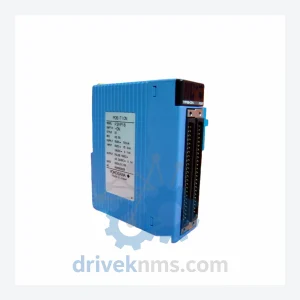
YOKOGAWA FA-M3 F3LE01-5T Ethernet Interface Module
Yokogawa F3LE01-5T is listed for Communication Modules RFQ review. Confirm quantity, condition and destination before quotation.
RFQ-ready industrial model
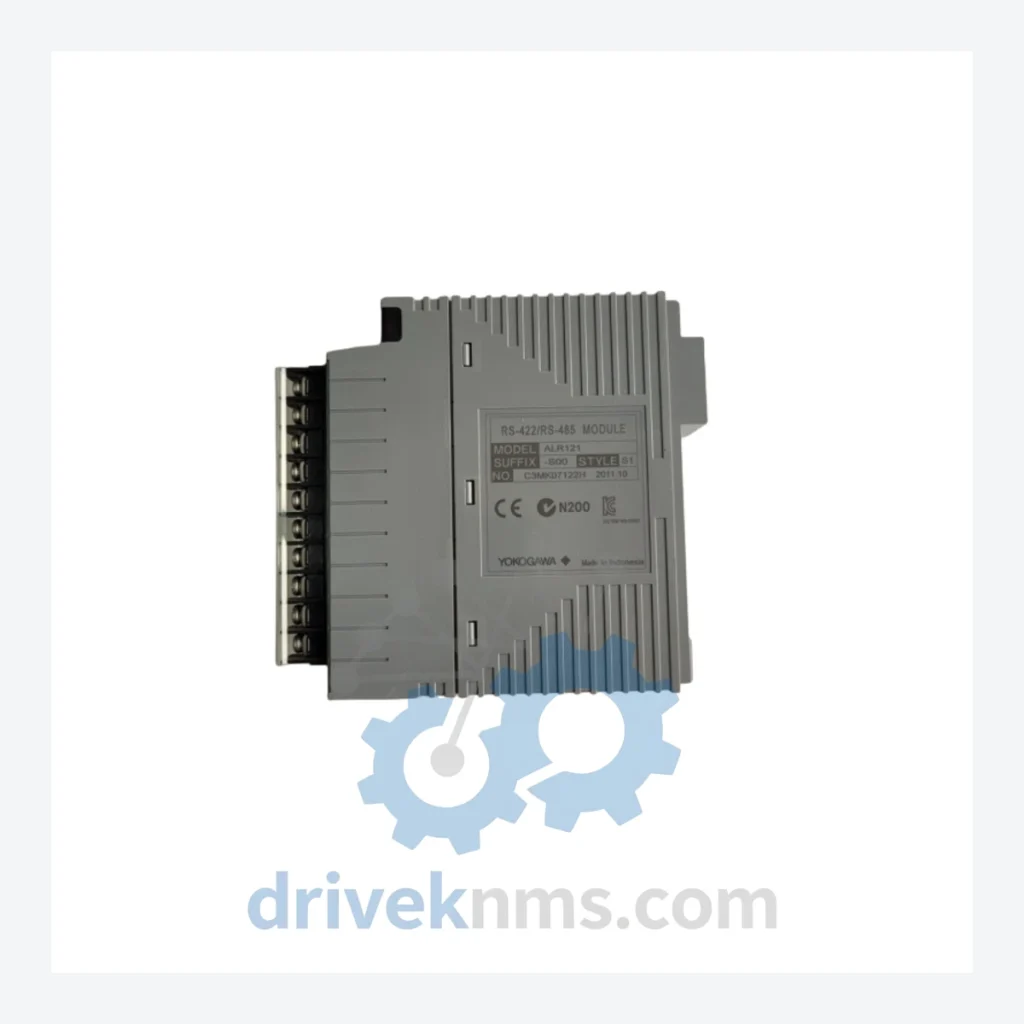
Model: S1 SERIAL COMMUNICATION MODULE
Product Overview
Commercial availability is handled through direct RFQ, model verification and export-oriented follow-up rather than public cart checkout.
Datasheet Preview
Use attached product manuals when available. If the manual is not public yet, request the full file directly through RFQ.
Commercial Path
Product pages on DRIVEKNMS are designed to verify model, brand and series first, then move the buyer into one clean quotation path.
Technical Dossier
The Yokogawa ALR121 series is a line of serial communication interface modules deployed within the Yokogawa CENTUM CS/CS 3000 and CENTUM VP distributed control systems (DCS). These modules occupy a critical position in global heavy industry installations — including petrochemical complexes, nuclear power auxiliary systems, LNG terminals, and crude oil refineries — where reliable serial data exchange between field devices and the process control network is a non-negotiable operational requirement.
The ALR121 family provides RS-232C and RS-422/485 serial communication interfaces, enabling integration of third-party field instruments, analyzers, and legacy subsystems into the CENTUM backbone. Their compact form factor and direct backplane mounting make them a standard component in both greenfield DCS builds and brownfield system expansions across Asia-Pacific, the Middle East, and Europe.
The ALR121 module line traces its lineage to the early CENTUM CS generation, introduced in the mid-1990s, when Yokogawa standardized serial communication as a bridge protocol between the CENTUM field control station (FCS) and non-Vnet/IP subsystems. The original ALR121 variants supported RS-232C point-to-point links at baud rates up to 19,200 bps, sufficient for the analyzer and chromatograph interfaces prevalent in that era.
With the transition to CENTUM CS 3000 (released 1998), Yokogawa extended the ALR121 architecture to support RS-422/485 multi-drop configurations, enabling a single module to address up to 31 slave devices on a single serial bus. This was a significant architectural shift that reduced module count in large installations and lowered per-point wiring costs.
The CENTUM VP platform (introduced 2008) retained backward compatibility with ALR121 hardware, allowing existing installations to migrate software and configuration without hardware replacement — a key factor in the module's longevity in the installed base. However, as CENTUM VP R6 and subsequent releases have progressively emphasized Ethernet-based field device integration (FOUNDATION Fieldbus, HART-IP, OPC-UA), the ALR121 serial interface modules have entered a mature/end-of-active-production lifecycle. Yokogawa no longer lists ALR121 variants as current catalog items; procurement is now exclusively through authorized spare parts channels and specialist distributors.
The following SKUs represent the documented ALR121 series variants and associated CENTUM serial communication modules. Each entry reflects a distinct hardware suffix denoting interface type, isolation specification, or channel configuration.
ALR121-S00: S1 RS-232C serial communication module, single channel, non-isolated, standard baud rate support up to 19,200 bps.
ALR121-S10: RS-232C serial module with enhanced noise immunity, suitable for electrically noisy panel environments.
ALR121-S20: RS-422/485 multi-drop serial module, supports up to 31 slave devices per bus segment.
ALR121-S30: RS-422/485 isolated serial module, galvanic isolation for long-distance field runs exceeding 500 m.
ALR121-S40: Dual-channel RS-232C module, supports two independent serial device connections from a single slot.
ALR121-S50: Dual-channel RS-422/485 module, multi-drop on both channels, used in high-density analyzer integration racks.
ALR121-S60: High-speed serial module supporting baud rates up to 115,200 bps, used with modern gas chromatographs and flow computers.
ALR121-S70: Serial module with integrated protocol conversion for Modbus RTU slave emulation.
ALR121-S80: Extended temperature range serial module for outdoor or non-climate-controlled marshalling cabinet installations.
ALR121-S90: Redundant serial communication module, supports hot-standby configuration for critical single-point-of-failure elimination.
ALR111: Predecessor single-channel RS-232C module from CENTUM CS generation; functionally equivalent baseline for ALR121 comparison.
ALR131: Successor module with integrated Ethernet gateway capability; used in CENTUM VP R5+ hybrid serial/Ethernet architectures.
ALR141: FOUNDATION Fieldbus H1 interface module; often deployed alongside ALR121 in mixed-protocol FCS configurations.
ALR151: PROFIBUS DP master module; used in CENTUM VP installations integrating Siemens or ABB PROFIBUS field devices.
ALR161: DeviceNet master interface module; deployed in CENTUM systems with Rockwell or Omron DeviceNet device networks.
ALR171: HART multiplexer interface module; enables HART pass-through communication for legacy 4–20 mA loops without dedicated HART modems.
The ALR121 module's backplane interface and serial communication bus present specific test requirements that differ from standard I/O module verification. DriveKNMS applies the following test protocol to all ALR121 units processed through its facility:
Backplane continuity verification: Each module is seated in a CENTUM-compatible test rack and backplane signal integrity is confirmed across all connector pins using a calibrated continuity tester referenced to Yokogawa's published pin-out specification.
Serial port loopback test: RS-232C and RS-422/485 ports are subjected to loopback testing at all supported baud rates (1,200 to 115,200 bps where applicable) using a dedicated serial test fixture. Framing errors, parity errors, and buffer overrun conditions are logged and must be zero for a unit to pass.
Isolation resistance measurement: For isolated variants (S30 and above), galvanic isolation resistance between the serial port ground and backplane ground is measured at 500 VDC. Minimum acceptable isolation resistance is 10 MΩ per Yokogawa maintenance specification.
Thermal cycling: Units are subjected to a 4-hour thermal cycle between 0°C and 55°C to identify latent solder joint failures or capacitor degradation common in modules with 10+ years of field service.
Firmware version verification: Where accessible, module firmware revision is read and documented. Units with firmware below the minimum revision required for CENTUM VP R4 compatibility are flagged and disclosed to the buyer prior to shipment.
Continue The Model Path
Move from this exact model into the matching system hub, brand archive, model-family archive or lifecycle sourcing route before sending a final RFQ list.
Related Paths
Yokogawa F3LE01-5T is listed for Communication Modules RFQ review. Confirm quantity, condition and destination before quotation.
Yokogawa RB301 S2 is listed for CENTUM Series RFQ review. Confirm quantity, condition and destination before quotation.
Yokogawa F3RZ81-ON is listed for Communication Modules RFQ review. Confirm quantity, condition and destination before quotation.