
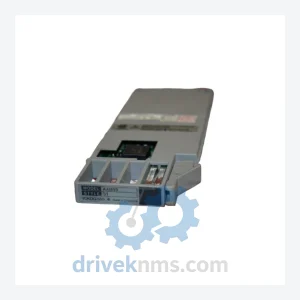
YOKOGAWA STARDOM / CENTUM Series Analog Input Modules: AAM10
Yokogawa AAM10 is listed for STARDOM RFQ review. Confirm quantity, condition and destination before quotation.
RFQ-ready industrial model
Model: ATB5S-00 S2
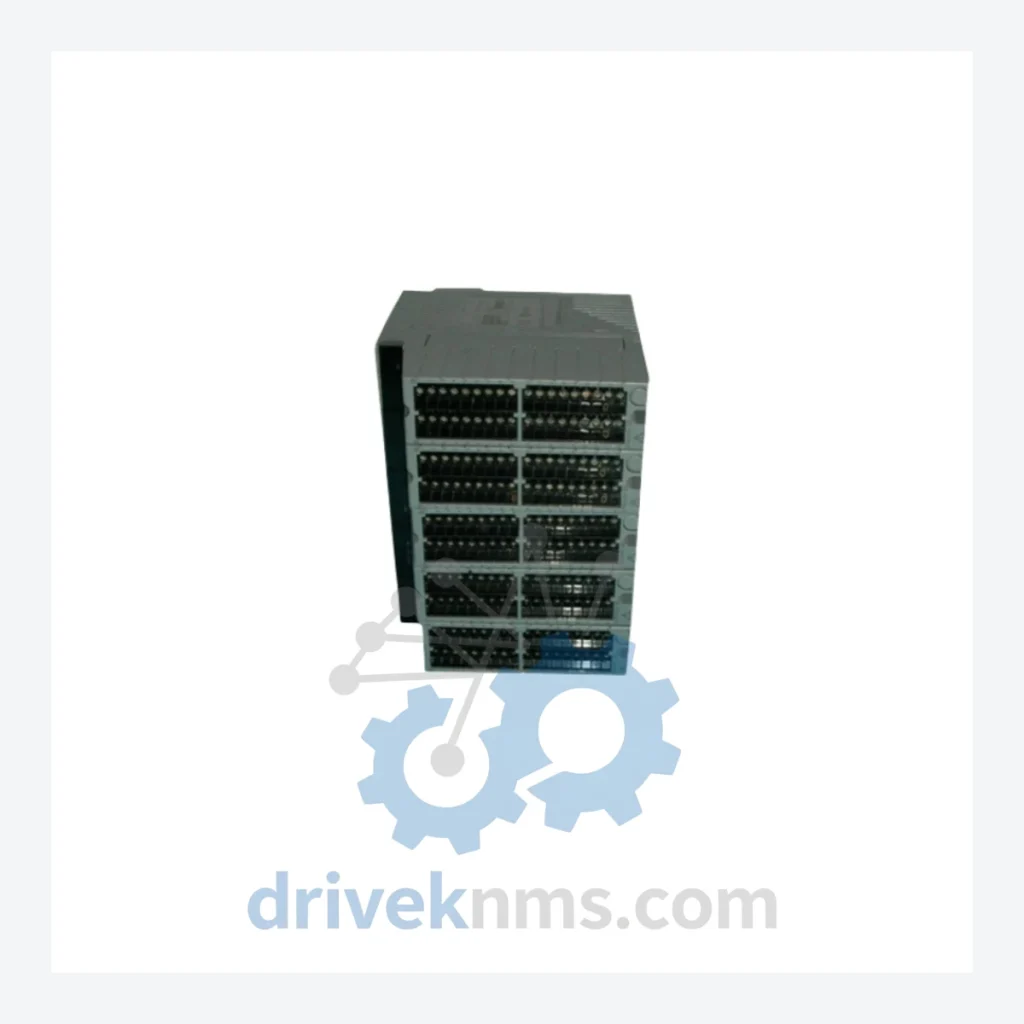
Product Overview
Commercial availability is handled through direct RFQ, model verification and export-oriented follow-up rather than public cart checkout.
Datasheet Preview
Use attached product manuals when available. If the manual is not public yet, request the full file directly through RFQ.
Commercial Path
Product pages on DRIVEKNMS are designed to verify model, brand and series first, then move the buyer into one clean quotation path.
Technical Dossier
The Yokogawa ATB5S series represents a class of digital I/O interface modules deployed within Yokogawa's CENTUM VP and legacy CENTUM CS 3000 distributed control system (DCS) architectures. These modules are installed across critical continuous-process industries including petroleum refining, petrochemical complexes, LNG terminals, nuclear power auxiliary systems, and large-scale chemical manufacturing plants. The ATB5S-00 S2 variant functions as a digital input (DI) module, receiving discrete on/off signals from field instruments such as limit switches, pressure switches, and relay contacts, and transmitting them to the DCS controller via the system bus. The ATB5S series occupies a well-defined position in Yokogawa's I/O subsystem hierarchy: it interfaces between field wiring termination assemblies and the FCS (Field Control Station) node bus, making it a load-bearing component in any CENTUM-based control loop. Installed base counts for this series run into the tens of thousands of units globally, with particularly high concentrations in Middle Eastern refinery complexes, Japanese petrochemical corridors, and Southeast Asian LNG facilities.
The ATB5S series traces its lineage to Yokogawa's CENTUM CS 3000 platform, introduced in the late 1990s as a successor to the CENTUM XL and CENTUM-V systems. The CS 3000 architecture standardized the use of modular I/O cards mounted in field control station (FCS) enclosures, with each card communicating over a proprietary V-net/IP or ESB (Enhanced System Bus) backplane. The ATB5S modules were designed to operate within this backplane environment, conforming to the card-edge connector and bus timing specifications of the CS 3000 I/O nest.
With the release of CENTUM VP (around 2008), Yokogawa maintained backward compatibility for a significant subset of CS 3000 I/O modules, including the ATB5S series, allowing existing installations to migrate to VP-class FCS nodes without full I/O replacement. This compatibility window extended the operational life of ATB5S hardware by approximately one additional platform generation. However, as CENTUM VP R6 and subsequent releases have progressively shifted toward the newer Yokogawa Vnet/IP-based I/O architecture and the CENTUM VP R6 I/O modules (e.g., ADV series, AAI series), the ATB5S series has entered a mature-to-declining lifecycle phase. Yokogawa has formally discontinued active production of several ATB5S variants, transitioning support to the aftermarket and third-party MRO (Maintenance, Repair, and Operations) channel. Plants running CS 3000 or early CENTUM VP installations that cannot justify a full DCS migration must source ATB5S modules through specialist distributors to maintain system integrity.
The following SKUs represent verified models within the Yokogawa ATB5S and closely related ATB-prefix I/O module family used in CENTUM CS 3000 and CENTUM VP FCS nests. Each entry includes a concise functional descriptor:
ATB5S-00 S2: 32-channel digital input module, 24 VDC field voltage, isolated.
ATB5S-01 S2: 32-channel digital input module, 48 VDC field voltage variant.
ATB5S-10 S2: 32-channel digital output module, transistor sink type, 24 VDC.
ATB5S-11 S2: 32-channel digital output module, relay contact type, 24/48 VDC.
ATB5S-20 S2: 16-channel digital input, high-density, NAMUR sensor compatible.
ATB5S-30 S2: 16-channel digital output, relay type, for high-current field devices.
ATB5S-40 S2: 32-channel DI module with SOE (Sequence of Events) timestamping.
ATB5S-50 S2: 32-channel DO module, solid-state output, 24 VDC load.
ATB5S-60 S2: Mixed DI/DO module, 16 DI + 16 DO, 24 VDC, general purpose.
ATB5S-70 S2: Pulse input module, 8-channel, for flow totalizer and encoder signals.
ATB5S-80 S2: Digital input module with built-in signal conditioning for dry contacts.
ATB5S-90 S2: Digital output module with diagnostics feedback loop, 24 VDC.
ATB5S-00 S1: Earlier S1 revision of the 32-ch DI module; predecessor to S2 hardware revision.
ATB5S-10 S1: Earlier S1 revision of the 32-ch DO transistor module.
ATB5S-11 S1: Earlier S1 revision of the relay output module; relay contact ratings differ from S2.
ATB5S-40 S1: SOE-capable DI module, S1 hardware revision, 1 ms timestamping resolution.
ATB5S-60 S1: Mixed DI/DO S1 revision; backplane connector pinout identical to S2.
Note: S1 and S2 designations indicate hardware revision levels. S2 modules incorporate revised ASIC firmware and improved EMC shielding. In most CENTUM CS 3000 and VP installations, S1 and S2 variants are functionally interchangeable at the system level, but Yokogawa recommends using matched revisions within a single FCS nest to avoid diagnostic flag discrepancies.
The ATB5S series presents specific quality verification challenges due to its backplane-dependent architecture. Unlike standalone instruments, ATB5S modules derive power and communicate exclusively through the FCS nest backplane connector. Standard bench power-up testing is therefore insufficient to validate full module functionality. DriveKNMS employs a dedicated CENTUM CS 3000-compatible test nest that replicates the backplane electrical environment, allowing each ATB5S module to be powered, addressed, and exercised under conditions equivalent to live plant installation.
Continue The Model Path
Move from this exact model into the matching system hub, brand archive, model-family archive or lifecycle sourcing route before sending a final RFQ list.
Related Paths
Yokogawa AAM10 is listed for STARDOM RFQ review. Confirm quantity, condition and destination before quotation.
Yokogawa AAM50 is listed for CENTUM VP RFQ review. Confirm quantity, condition and destination before quotation.
Yokogawa AAI141-S00 is listed for CENTUM VP RFQ review. Confirm quantity, condition and destination before quotation.