
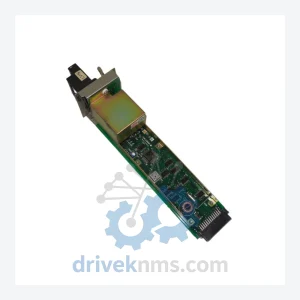
YOKOGAWA AIP512 RIO Bus Connection Module – CENTUM Series
Yokogawa AIP512 is listed for CENTUM Series RFQ review. Confirm quantity, condition and destination before quotation.
RFQ-ready industrial model
Model: KS1*B
Product Overview
Commercial availability is handled through direct RFQ, model verification and export-oriented follow-up rather than public cart checkout.
Datasheet Preview
Use attached product manuals when available. If the manual is not public yet, request the full file directly through RFQ.
Commercial Path
Product pages on DRIVEKNMS are designed to verify model, brand and series first, then move the buyer into one clean quotation path.
Technical Dossier
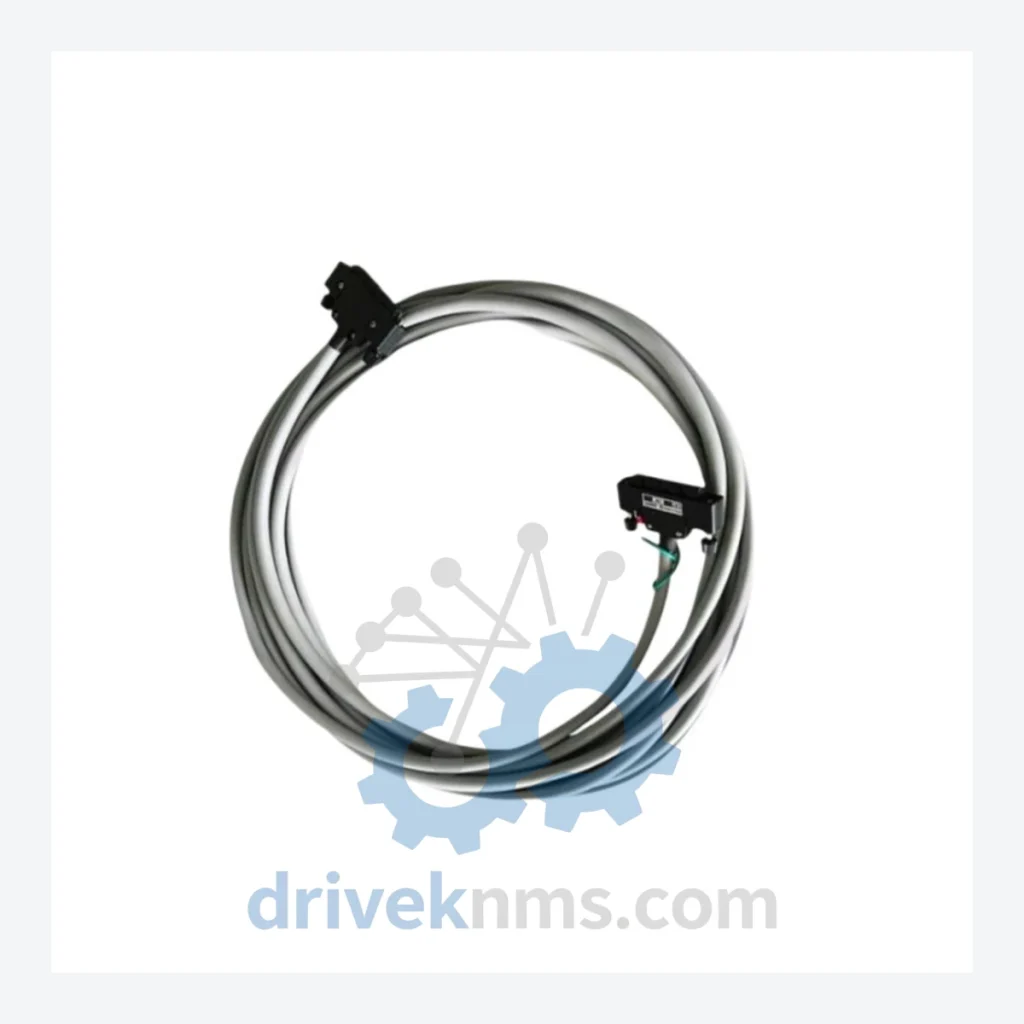
The YOKOGAWA KS1 series signal cables are purpose-engineered interconnect solutions for YOKOGAWA's distributed control system (DCS) and field instrumentation platforms, including the CENTUM VP, CENTUM CS 3000, and EJX/EJA transmitter families. These cables are deployed across global heavy industry sectors — petrochemical complexes, nuclear power generation facilities, crude oil refineries, LNG terminals, and continuous process manufacturing plants — where signal integrity, EMI shielding, and long-term mechanical reliability are non-negotiable operational requirements. The KS1 series defines the physical layer of YOKOGAWA's field wiring architecture, providing standardized, pre-terminated cable assemblies that reduce installation error and support IEC 61511 functional safety compliance in SIL-rated loops.
The KS1 cable series was introduced alongside YOKOGAWA's transition from analog panel-based instrumentation to fully digital DCS field wiring in the late 1990s. Early variants were designed to interface with the CENTUM CS platform, providing fixed-length, shielded twisted-pair assemblies with proprietary YOKOGAWA connectors on one or both termination ends. As the CENTUM CS 3000 platform matured through the 2000s and CENTUM VP was introduced in 2008, the KS1 series was extended to accommodate new I/O module form factors, higher channel-density marshalling cabinets, and FOUNDATION Fieldbus / HART-compatible signal paths.
The suffix notation in KS1 part numbers encodes critical configuration data: cable length (in meters), connector type (field-side vs. cabinet-side), shielding configuration, and number of pairs. The asterisk (*) in the base model designation KS1*B represents a variable length or configuration parameter that must be specified at time of order. Compatibility spans YOKOGAWA's FIO (Field I/O), ADV (Analog Input), AAI (Analog I/O), and AAT (Analog Transmitter) module families. Installers migrating from CENTUM CS 3000 to CENTUM VP must verify connector pinout compatibility, as certain KS1 sub-variants are not cross-compatible between generations without adapter harnesses.
The following SKUs represent the verified KS1 series signal cable range. Each entry is classified by function and application context within YOKOGAWA DCS and field instrumentation architectures.
Signal Cable Assemblies — Field-to-Cabinet
Multi-Pair Cable Assemblies — High-Density I/O
Fieldbus & HART Signal Cables
Thermocouple & RTD Extension Cables
Power & Intrinsic Safety Cables
Continue The Model Path
Move from this exact model into the matching system hub, brand archive, model-family archive or lifecycle sourcing route before sending a final RFQ list.
Related Paths
Yokogawa AIP512 is listed for CENTUM Series RFQ review. Confirm quantity, condition and destination before quotation.
Yokogawa SR1B-045N-1KC is listed for CENTUM Series RFQ review. Confirm quantity, condition and destination before quotation.
Yokogawa AFV10D S2 is listed for AFV Series RFQ review. Confirm quantity, condition and destination before quotation.