A drive cabinet drawing may say only “INTERBUS,” while the installed option uses fiber-optic connections. That small omission can send the purchasing team toward a familiar-looking electrical interface that cannot restore the same network segment. For older MOVIDRIVE installations, the fieldbus option deserves its own identity record rather than being treated as an incidental accessory to the inverter.
The important distinction is physical, not just protocol
SEW-EURODRIVE’s DFI21B INTERBUS manual identifies the DFI21B as a fiber-optic interface and distinguishes it from the DFI11B RS-485 option. The document also describes mixed electrical and optical segments. These are established engineering references, not a new product announcement or evidence of a newly declared supply shortage.
A buyer therefore needs more than the word INTERBUS and the motor power. The enquiry for a SEW DFI21B INTERBUS interface module should capture the actual option label, the host drive identification and the incoming and outgoing connection arrangement. Preserve the exact option code even when an old asset database abbreviates it to “DFI card.”
This is not a recommendation to convert optical sections to copper, or vice versa. A physical-medium change is an engineering modification with implications beyond the replacement card. The goal of the spare enquiry is to retain the approved installation, with any proposed change clearly separated and reviewed.
Read the cabinet as a chain of connections
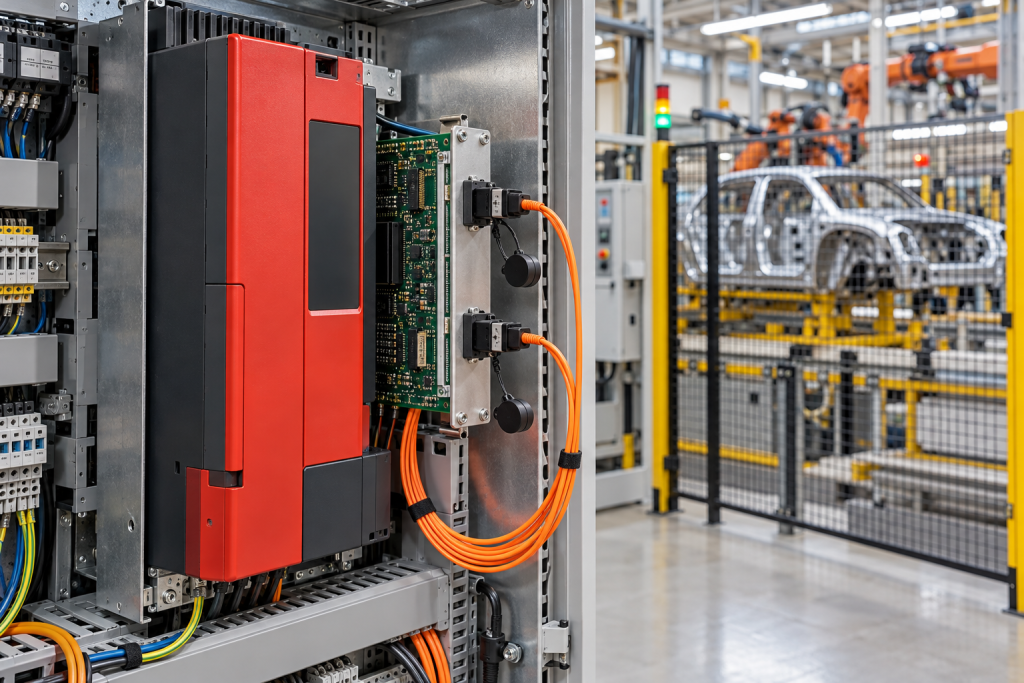
Before disturbing anything, collect photographs and existing drawings that show what enters the option and where the outgoing connection goes. Use the plant’s equipment tags rather than inventing new names during an outage. Include the adjacent participants and any media-conversion equipment shown in the approved design. A photograph of the card alone may omit the very component that determines the connection type.
Mark direction and connector position in the record. Cable color can help locate a route, but should not be treated as a technical specification. A replacement lead needs the actual fiber and connector requirements from the equipment documentation. Likewise, a cable that fits mechanically has not demonstrated the required optical performance or suitability for its installed environment.
Keep this record distinct from the Ethernet patching plan. Similar cabinet locations and generic network labels make it easy for a storeroom to group incompatible leads together. Dedicated labels and protective caps are practical measures that make the intended assembly easier to identify without claiming that visual inspection certifies an optical link.
Order the option and the host as separate line items
The drive and its fieldbus option are different purchasing objects. A quotation for a MOVIDRIVE MDX61B0110-5A3-4-0T drive should explicitly say whether a communication option is included. Mentioning this drive alongside DFI21B is not an automatic approval of a particular assembly: the complete host variant, slot arrangement and approved option combination must still be checked against the installation and OEM documentation.
A useful RFQ separates the requested bare option, any host drive, connectors and leads, and the proposed test evidence. It should also distinguish the shipped items from equipment used only during the supplier’s test. Otherwise a photograph of a populated cabinet can quietly become the buyer’s assumption that every visible component is included.
For used or repaired options, ask for clear identification photographs and a description of what was actually tested. A generic “powered on” statement is much weaker than a report identifying the test host and the communication function exercised. Neither automatically proves compatibility with the customer’s network configuration. Put that limitation into the acceptance plan rather than discovering it after delivery.
Preserve diagnostics before disconnecting the segment
A network interruption can affect more than the drive nearest an alarm. Have the authorized controls team preserve the master diagnostics, participant status and relevant timing information before removing equipment. This helps distinguish an option fault from an upstream connection problem or an unrelated participant outage. The purchasing team does not need to diagnose the network, but it should know whether the failed component has actually been isolated.
Any physical inspection or replacement belongs under the machine’s isolation and stored-energy procedure. Do not look into optical ports, bypass interlocks, or reconnect a stopped axis solely to see whether a fault clears. The site needs an approved commissioning plan that checks the relevant network and machine behavior after the intended assembly is restored.
Record the final installed identity and update the spare register after acceptance. Retain the configuration baseline and the dated test result, including any deviation that engineering approved. When a future shift opens the cabinet, it should find the same information in the asset record, the spare label and the recovery procedure. That agreement is more valuable than another vaguely named network card on the shelf.
Questions from maintenance and purchasing
Can DFI11B replace DFI21B because both use INTERBUS?
Not on the basis of protocol alone. The cited SEW manual distinguishes the RS-485 and fiber-optic options. Replacing one with the other changes the physical connection requirement and needs engineering review; it is not a routine like-for-like spare substitution.
Does a complete inverter quotation include its fieldbus option?
Only when the scope says so. Ask the supplier to identify each included option and its condition. A drive model description or a stock photograph does not establish which communication hardware will arrive in the package.
Should we buy spare optical cables with the option?
Consider them when the installed cable assembly is a credible recovery dependency. First establish its exact requirements and routing constraints. Do not select a lead by color, length or connector appearance alone, and do not replace an approved specification with an unverified generic alternative.
Does a communication bench test guarantee a successful restart?
No. It can provide evidence about the tested hardware and setup, but the plant still owns application compatibility and safe commissioning. Ask for a precise test description and keep site acceptance separate from the supplier’s bench result.
Build an enquiry that preserves the installed network
Share the DFI21B label, full host-drive code, connection photographs, quantity and destination with DriveKNMS. State whether you need an option only or a defined drive assembly. A clearly scoped request makes it possible to discuss the relevant spare without turning an optical-network problem into an unnecessary whole-drive purchase.
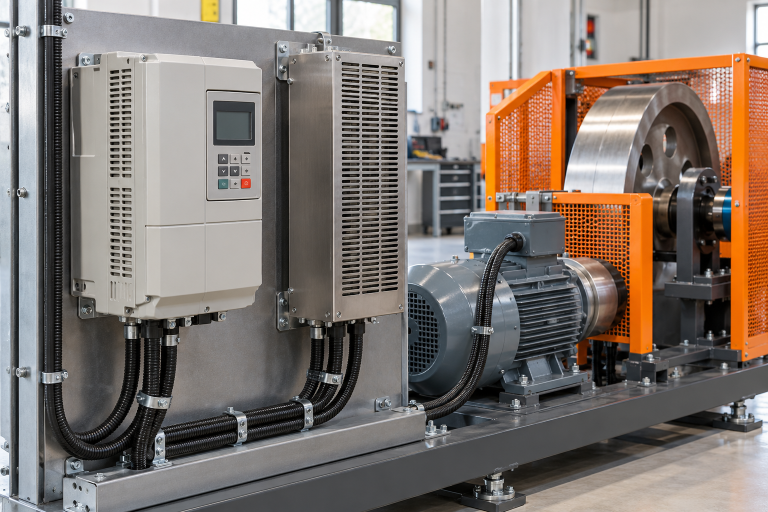
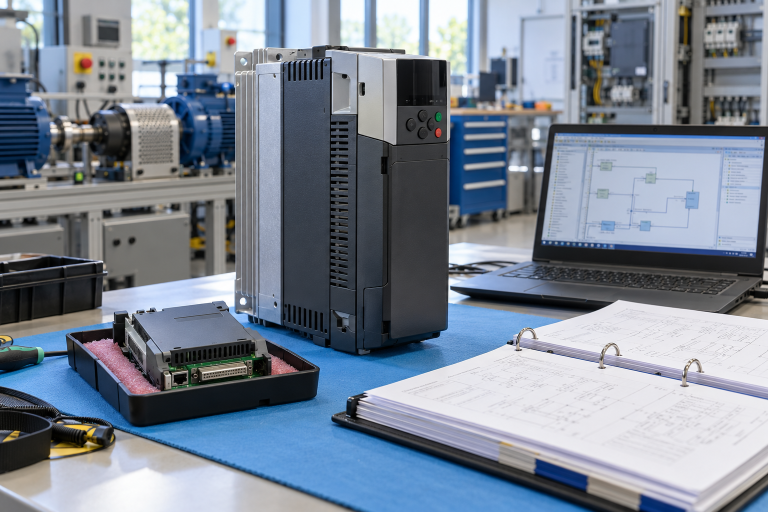
Image: AI-generated editorial illustration, not an exact product photograph or installation reference.
© 2026 DriveKNMS. All rights reserved. Official Website: https://driveknms.com Inquiry: sale@driveknms.com | WhatsApp/Tel: +86 18359293191