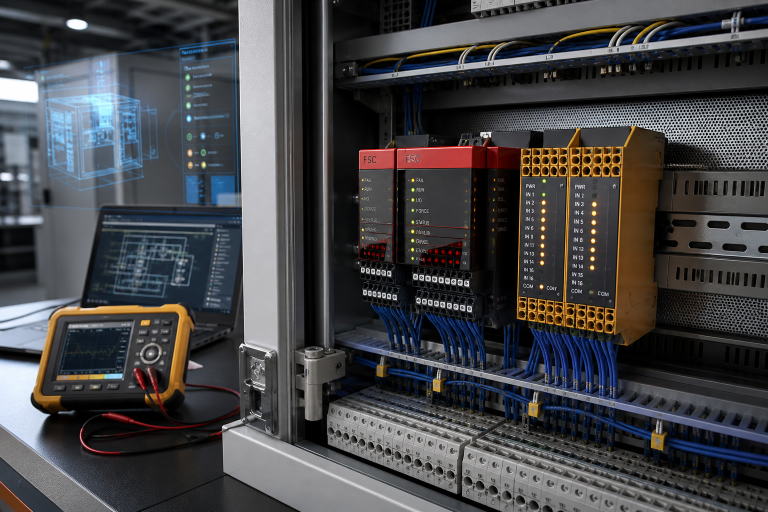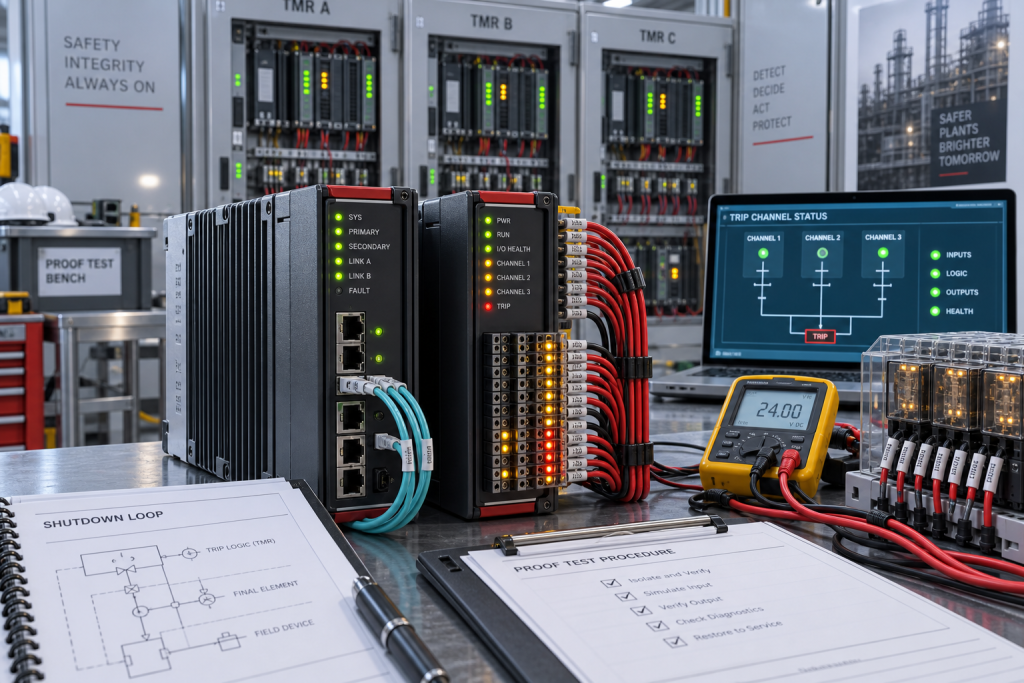
A Triconex proof test is not the moment to discover that a communication module, digital output, termination detail, or final element load was never documented. TMR spare planning should make the installed safety function visible before purchasing compares stock.
DriveKNMS readers support safety systems where downtime pressure and validation discipline collide. The right spare is not just the right nameplate; it is the item that can pass site acceptance without weakening the proof-test record.
Connect The Spare To The Safety Function
Record chassis location, module role, TMR status, communication path, output load, termination, field device, bypass state, diagnostic messages, and the safety instrumented function affected.
For this site, the live product evidence points to Triconex CM3201 Communication Module – Safety System Series. It is not inserted as a shopping shortcut; it gives maintenance and purchasing a concrete published reference for labels, connector faces, condition expectations, and the language used in the RFQ.
A second relevant published reference is Triconex SDO3411 Digital Output Module – Tricon Safety System. Comparing both items before the article is written keeps the post grounded in real inventory pages instead of inventing links after the technical story is finished.
Proof Tests Punish Vague Purchasing
A safety spare can be physically correct but unacceptable if output behavior, communication diagnostics, termination, load current, or validation evidence is incomplete.
Ask suppliers for actual photos, condition, test status, connector and terminal evidence, accessory scope, and any revision concern before shipment.
The useful question is not whether the family name looks familiar. The useful question is whether the spare can be accepted by the plant under the same electrical, mechanical, diagnostic, and documentation constraints as the installed part. That is where many urgent purchases fail: a quote arrives quickly, but the engineering evidence is too thin to install with confidence.
Acceptance Should Protect The SIF
After replacement, verify module recognition, TMR diagnostics, communication status, output response, final element behavior, bypass removal, alarm state, and proof-test signoff.
If the loop fails validation, review termination, field load, power, chassis seating, communication settings, diagnostics, and application logic before rejecting the part.
A good acceptance plan should also name the rollback path. If the spare does not pass inspection or startup checks, the team should know whether to reinstall the original item, isolate a noncritical function, move to a repaired exchange, borrow from a sister line, or escalate to a controlled migration decision.
How To Turn The Topic Into A Better RFQ
Start with installed evidence. Send the complete model number, front and side labels, rack or cabinet position, connected accessories, terminal photos, cable tags, and the process or machine function that is affected. A buyer can search faster when the engineering file is not reduced to one copied part number.
State the condition requirement in practical language. New surplus, refurbished, repaired exchange, tested used, and untested used stock are not the same risk. For critical equipment, ask for photos of the actual item, inspection notes, test scope, packaging condition, and shipment limits before the order is released.
Make the difference between hardware readiness and system readiness explicit. The supplier can help confirm part identity, condition, test evidence, and logistics. The plant still owns project backup, parameter transfer, firmware review, loop checks, network validation, proof testing, and final operating approval.
Use photos as engineering data. Connector faces, terminal screws, power groups, rack slots, status LEDs, battery compartments, memory cards, daughter boards, cable shields, and adjacent modules often reveal compatibility details that do not appear in a spreadsheet.
Document what has not been verified. If firmware, backup files, calibration, licenses, communication schedules, safety validation, or field proof tests are unknown, write that clearly. Nobody should mistake a delivered module for a recovered system.
Separate emergency recovery from inventory planning. A downtime purchase may accept a narrower test window and faster freight. A stores purchase should have cleaner records because the part may sit for months before anybody remembers why it was bought.
For older PLC, DCS, SIS, HMI, motion, robot, and machinery-protection systems, substitution risk rises as official support narrows. Similar-looking modules can differ by suffix, memory, interface, termination, firmware, cabinet depth, channel isolation, or supported project version.
For multisite groups, keep the RFQ format standardized while allowing local acceptance rules. A turbine controller, a safety output, a robot axis, a batch HMI, and a remote I/O station do not carry identical operating risk, but they all benefit from the same evidence discipline.
Receiving inspection should repeat the same checks used during sourcing. Compare approved photos with the delivered part, inspect ports and terminal areas, record serial and revision data, confirm included accessories, and decide whether the spare is ready for shelf stock, bench test, or immediate installation.
The final record is worth keeping. A small file with photos, product URL, supplier evidence, test notes, and acceptance status becomes useful the next time the same platform fails, when another site asks for support, or when management questions why a modernization budget is needed.
This is also how a daily industry note becomes commercially useful without sounding like a sales pitch. The article starts with a real maintenance risk, connects it to existing published products only where relevant, and gives the reader enough field logic to prepare a clearer inquiry.
If a plant is under pressure, the best message to a supplier is short but complete: brand, full model, quantity, acceptable condition, photos, installed role, failure symptom, deadline, delivery country, and the acceptance test that will decide whether the part solved the problem.
FAQ
What must match on a Triconex spare?
Match the module identity, chassis role, TMR status, termination, firmware or revision concern, diagnostics, and proof-test method.
Why include final element load evidence?
Digital output acceptance depends on the real field load and trip path, not only on the module number.
What should procurement send?
Send module labels, chassis photos, termination details, SIF role, condition requirement, deadline, and destination.
What proves recovery?
Healthy TMR diagnostics, correct communication, verified output action, cleared alarms, and approved proof-test documentation.
Send DriveKNMS the Triconex labels, chassis photos, termination evidence, final-element details, proof-test window, and deadline. We can help prepare a practical SIS spare RFQ.
© 2026 DriveKNMS. All rights reserved. Official Website: https://driveknms.com Inquiry: sale@driveknms.com | WhatsApp/Tel: +86 18359293191