AI can summarize a drive fault quickly. It cannot recover an event record that nobody saved. That is the practical maintenance question behind ABB’s October 28, 2026 news item about the Startup Challenge China winner and AI-assisted automation engineering: what evidence will the assistant actually receive from a legacy drive?
For an ACS800 installation, the first improvement is often a better fault package, not a new diagnosis tool. A message copied without its sequence, hardware context or operating condition can lead a person or a model toward the wrong spare. The discussion below concerns evidence preparation and procurement decisions. It does not imply that a newly announced AI solution supports every ACS800 application or approves replacement hardware.
Preserve the record before simplifying the story
The ACS800 Standard Control Program firmware manual describes fault-history entries containing faults, warnings and resets, with event order and power-on time. It also distinguishes warning appearance from disappearance. Those details matter because a list containing only the fault names can erase the sequence that an engineer needs to interpret.
Keep the original record alongside any summary. A typed transcription should preserve signs, codes, ordering and the meaning of the displayed time. Do not silently convert accumulated operating time into a calendar timestamp. If a calendar correlation is necessary, identify the supporting plant record and mark any uncertainty. A confident but incorrectly aligned timeline can make unrelated events look causal.
The same manual warns that a reset can lead to immediate starting when an external start command remains active. Evidence collection must not become an excuse for repeated resets, uncontrolled energization or operation outside the site’s safety procedure. Qualified personnel should decide how to obtain information without exposing people or equipment to an unexpected start.
Give the diagnostic question a hardware address
Before asking what to buy, identify what produced the event. Record the drive designation, its application program, available firmware information, the relevant control hardware and the machine duty. Where the installation contains multiple converter sections or an application-specific program, preserve that distinction. A family-level troubleshooting answer is not automatically applicable to each section.
A label showing an RMIO-01C control board should be transcribed as that exact item, not described loosely as an Ethernet card or any interchangeable ACS board. The associated control assembly, option boards and wiring responsibilities should be recorded separately. A product listing is a starting point for an identification request; it is not a finding that the board caused the event.
Ask the maintenance team to retain three different statements: what was observed, what was measured under an approved procedure, and what is suspected. This is especially valuable when several shifts contribute to a work order. Without that separation, an early hypothesis can become an apparent fact simply because it is repeated in a purchasing request.
Use AI for organization, not permission to swap hardware
A useful assistant can organize a long event record, identify missing context and draft questions for the equipment specialist. It should not be allowed to convert a fault name into an automatic component order. Ask it to identify which conclusion follows directly from supplied evidence and which remains a hypothesis requiring investigation.
Consider a hypothetical report containing a drive trip followed by several reset entries. A poor summary says the drive has a recurring internal defect. A better summary preserves the sequence, identifies the missing operating conditions and asks whether the cause was addressed before each reset. The latter does not diagnose the machine, but it prevents the record from claiming more than it establishes.
Use only approved systems for sharing plant data. Remove unnecessary personal information and commercially sensitive process details. Retain enough engineering context for the question to remain meaningful, and have a responsible engineer review the resulting summary. An attractive answer format is not a substitute for technical accountability.
Translate the evidence into a bounded spare request
If the investigation supports a control-unit requirement, state whether the request covers a board, an assembled unit or an option-equipped assembly. ABB’s ACS800 multidrive catalog illustrates an RDCU-12C assembly containing an RMIO-12 control unit. That is a useful reminder that board identity and assembly identity are different purchasing levels.
For an RDCU-12C drive control unit quotation, provide the installed assembly and board labels, application context and required included items. Do not infer compatibility with the earlier RMIO example merely because both belong to ABB drive control. Catalog wording such as obsolete also does not establish a manufacturer support deadline for the complete installation.
Separate commercial acceptance from return-to-service approval. Procurement can confirm identity, condition, traceability, delivery contents and the agreed supplier test. The plant must still own configuration, restoration and functional acceptance. Keeping those responsibilities explicit helps avoid a dispute in which a correctly supplied component is expected to solve an unconfirmed machine fault.
After the work, add the actual finding to the original evidence package. Record whether the replacement resolved the observed condition and what else changed. Do not erase contradictory evidence to produce a cleaner success story. That disciplined closeout improves future troubleshooting more than an expanding collection of unverified fault-to-part associations.
Practical questions
Can an AI tool select the failed ACS800 board from a fault code?
Not reliably from the code alone. Use it to structure evidence and questions, then have qualified personnel assess the hardware and application context before authorizing a purchase.
Should we clear the history before sending the drive for repair?
Preserve the original record first and agree the handover requirements with the repair provider. Do not remove useful evidence merely to make the display look normal.
Are RMIO and RDCU descriptions interchangeable on a purchase order?
No. Identify the specific board or assembly and its delivery contents. Require an explicit compatibility review for any alternative, including application and revision considerations.
What information makes an urgent spare enquiry useful?
Provide clear labels, the original event record, relevant application details, the investigation conclusion and the requested supply scope. State what remains uncertain so the supplier does not mistake a hypothesis for an approved requirement.
Send DriveKNMS your ACS800 control-hardware identification and required quantity for a scoped quotation. We can help clarify the requested item and delivery contents without presenting a spare purchase as a substitute for fault diagnosis.
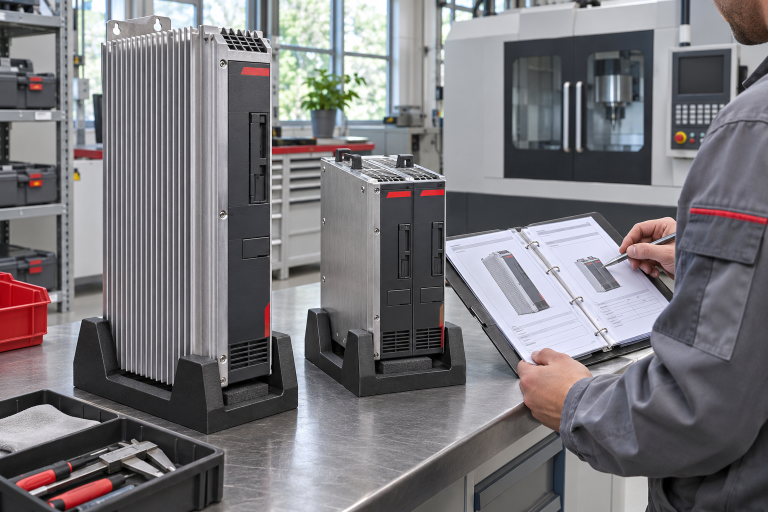
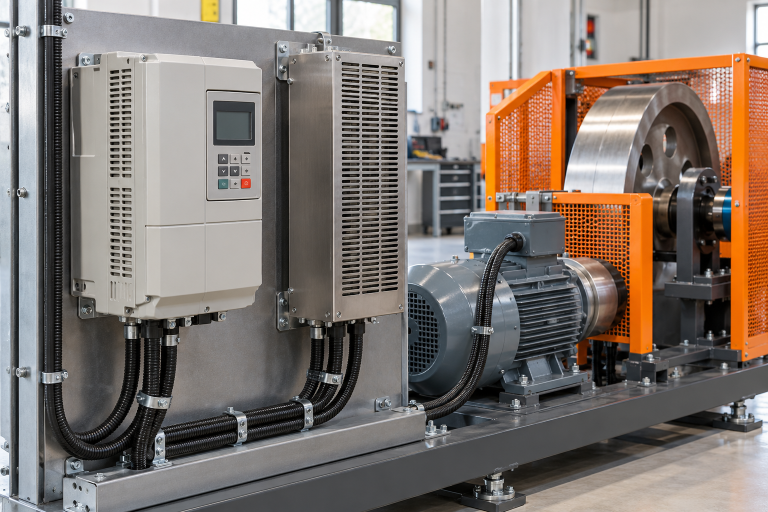
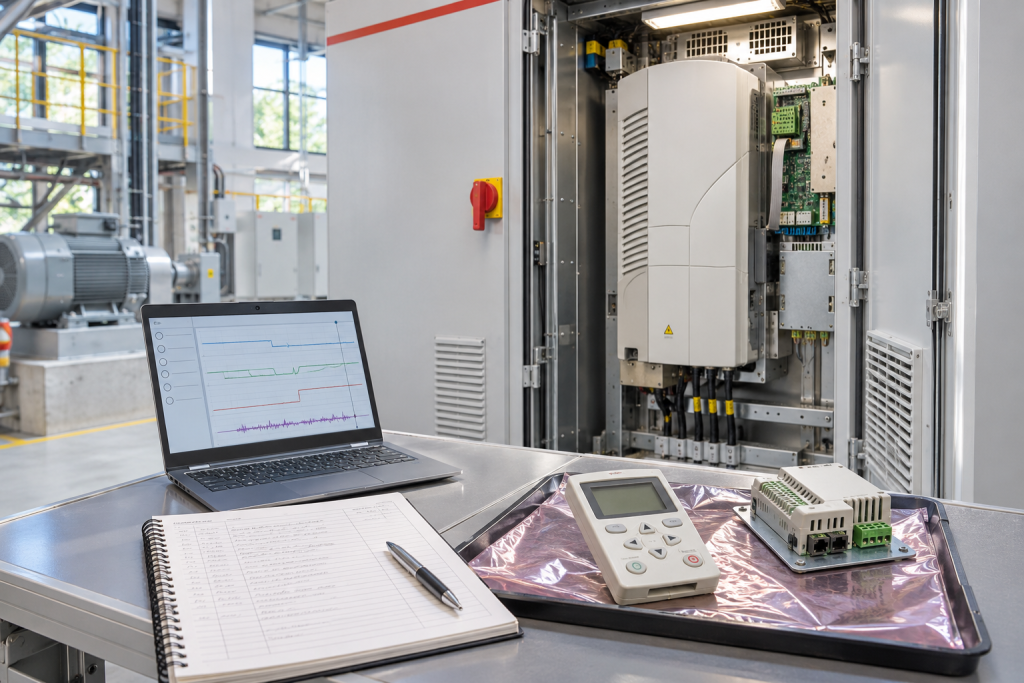
Image: AI-generated editorial illustration, not an exact product photograph or installation reference.
© 2026 DriveKNMS. All rights reserved. Official Website: https://driveknms.com Inquiry: sale@driveknms.com | WhatsApp/Tel: +86 18359293191